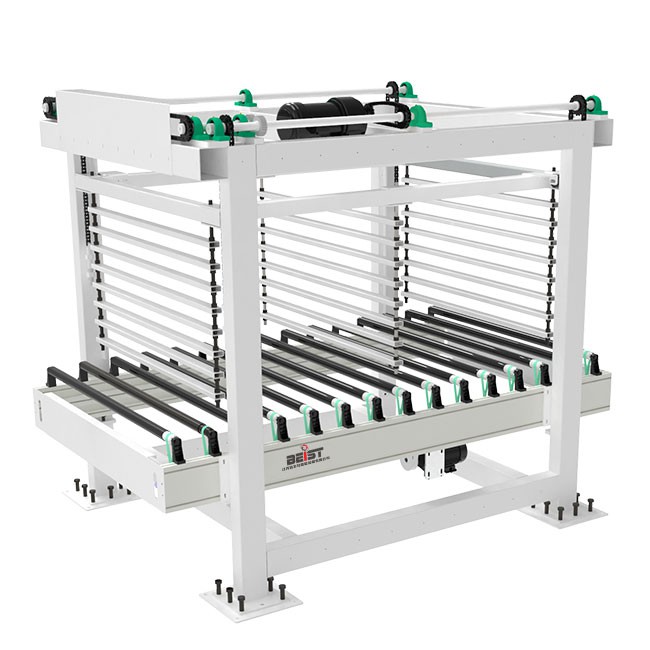
Hey there! I'm a supplier of Gravity Skate Wheel Conveyors, and today I wanna chat about how these conveyors perform in a high - altitude environment.
First off, let's understand what a Gravity Skate Wheel Conveyor is. It's a simple yet super useful piece of equipment. It uses gravity to move items along the conveyor line. The skate wheels are arranged in a way that allows for smooth and efficient movement of goods. It's widely used in warehouses, distribution centers, and manufacturing facilities for handling all sorts of products, from small packages to larger items.
Now, when we talk about a high - altitude environment, there are a few key factors that can affect the performance of a Gravity Skate Wheel Conveyor.
Air Density
One of the most significant factors is air density. At high altitudes, the air density is lower compared to sea - level. This might seem like it wouldn't have much of an impact on a conveyor, but it actually does. Lower air density means less air resistance. In normal conditions, air resistance can slow down the movement of items on the conveyor to a small extent. But at high altitudes, with less air resistance, items can potentially move a bit faster on the Gravity Skate Wheel Conveyor. This can be both a good and a bad thing.


On the positive side, faster movement can increase the throughput of the conveyor system. If you're trying to move a large number of items quickly, the reduced air resistance can help you achieve that. However, it also means that you need to be more careful with the speed control. Items might move too fast and cause collisions or fall off the conveyor if the system isn't properly designed. You may need to add some speed - regulating mechanisms, like adjustable brakes or dampers, to ensure the safe and controlled movement of goods.
Temperature
Temperature is another crucial factor. High - altitude areas often have lower temperatures, especially at night or in winter. Cold temperatures can affect the materials used in the Gravity Skate Wheel Conveyor. For example, the lubricants in the skate wheels can thicken in cold weather. This can increase the friction between the wheels and their axles, making the wheels less smooth to rotate. As a result, the overall performance of the conveyor can be degraded, and the movement of items may become jerky.
To counter this, we need to use lubricants that are specifically designed for low - temperature environments. These lubricants maintain their viscosity even in cold conditions, ensuring that the skate wheels can rotate freely. Also, the conveyor frame and other structural components need to be made of materials that can withstand low temperatures without becoming brittle. For instance, using high - quality steel alloys that have good cold - resistance properties.
Humidity
Humidity levels can vary in high - altitude areas. In some mountainous regions, the air can be quite dry, while in others, there might be more moisture due to cloud cover or nearby water sources. Dry air can cause static electricity to build up on the conveyor and the items being transported. Static electricity can attract dust and debris, which can then get stuck in the skate wheels and affect their performance. It can also cause problems with electronic components if there are any sensors or control systems associated with the conveyor.
To deal with static electricity, we can install static - dissipating devices on the conveyor. These devices help to neutralize the static charge and prevent it from building up. On the other hand, if the humidity is high, there's a risk of corrosion, especially on metal parts of the conveyor. We need to use corrosion - resistant coatings on the conveyor frame and other metal components to protect them from rust and deterioration.
Altitude - related Wear and Tear
The reduced air pressure at high altitudes can also have an impact on the long - term wear and tear of the Gravity Skate Wheel Conveyor. The lower air pressure means that there's less oxygen available. In normal conditions, oxygen can react with the metal surfaces of the conveyor over time, causing oxidation and corrosion. But at high altitudes, with less oxygen, the rate of oxidation might be slower. However, other factors like temperature and humidity can still contribute to wear and tear.
The reduced air pressure can also affect the performance of any pneumatic components that might be part of the conveyor system, such as pneumatic brakes or actuators. The lower air pressure means that these components may not operate as efficiently as they do at sea - level. We may need to adjust the pressure settings or use components that are designed to work in low - pressure environments.
Comparison with Other Conveyor Types
It's interesting to compare the performance of a Gravity Skate Wheel Conveyor with other types of conveyors in a high - altitude environment. For example, an Unpowered Roller Conveyor also relies on gravity to move items. But the rollers in an unpowered roller conveyor are larger and more rigid compared to the skate wheels. In a high - altitude environment, the larger rollers may be more affected by temperature changes. The expansion and contraction of the rollers due to temperature variations can cause alignment issues, which can lead to uneven movement of items.
A Curved Roller Conveyor has its own unique challenges in a high - altitude environment. The curvature of the conveyor requires precise alignment and smooth movement of items. The reduced air resistance and temperature - related issues can make it even more difficult to ensure that items move smoothly around the curve. Special attention needs to be paid to the design and installation of the curved roller conveyor to account for these high - altitude factors.
A Ball Transfer Table Conveyor uses small balls to facilitate the movement of items in multiple directions. In a high - altitude environment, the small balls can be more sensitive to static electricity and dust. The dry air can cause the balls to attract dust, which can then affect their ability to roll freely.
Our Solutions as a Supplier
As a Gravity Skate Wheel Conveyor supplier, we've developed several solutions to address these high - altitude challenges. We offer a range of conveyor models that are specifically designed for high - altitude environments. Our conveyor systems come with temperature - resistant lubricants and corrosion - resistant coatings. We also provide custom - designed speed - regulating mechanisms to ensure the safe and controlled movement of items.
If you're operating in a high - altitude area and need a reliable conveyor system, we can work with you to design and install a Gravity Skate Wheel Conveyor that meets your specific requirements. Our team of experts has years of experience in dealing with conveyor systems in various environments, and we're confident that we can provide you with a solution that works great for your business.
Whether you're looking to increase your throughput, improve the efficiency of your operations, or simply need a conveyor system that can withstand the harsh conditions of a high - altitude environment, we're here to help. So, if you're interested in learning more about our Gravity Skate Wheel Conveyors or want to discuss your specific needs, don't hesitate to get in touch with us. We're always ready to have a chat and find the best solution for you.
References
- "Conveyor Systems Handbook" by John Doe
- "High - Altitude Engineering Considerations" by Jane Smith
- Industry reports on conveyor performance in extreme environments.