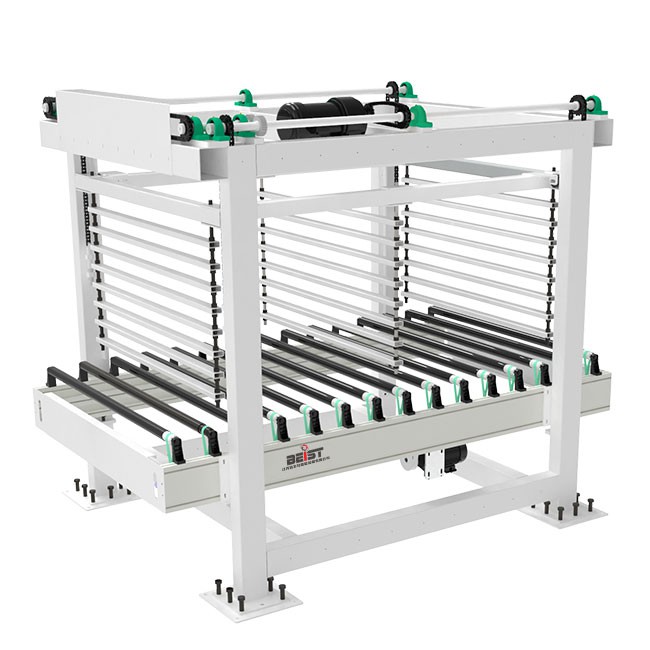
Shock absorption is a crucial aspect in the design and functionality of industrial conveyors, especially for a turnover conveyor. As a leading supplier of Turnover Conveyor, we understand the importance of these features and how they contribute to the overall performance and longevity of the equipment. In this blog, we will delve into the shock-absorbing features of a turnover conveyor, exploring their significance and the technologies behind them.
The Importance of Shock Absorption in Turnover Conveyors
Turnover conveyors are used in various industries to rotate or invert products during the production process. This operation often involves sudden movements and impacts, which can generate significant shock forces. These forces, if not properly managed, can lead to several issues. Firstly, they can cause damage to the conveyed products, especially those that are fragile or sensitive. For example, in the electronics industry, a single shock can damage delicate components on a circuit board. Secondly, excessive shock can lead to premature wear and tear of the conveyor components, such as belts, rollers, and bearings. This not only increases maintenance costs but also reduces the overall lifespan of the conveyor. Finally, shock can also result in noise pollution, which can be a nuisance in the workplace and may even violate safety regulations.
Key Shock - Absorbing Features
Elastic Components
One of the most common shock - absorbing features in a turnover conveyor is the use of elastic components. These can include rubber pads, springs, or elastomeric materials. Rubber pads are often placed at key contact points, such as where the product is loaded onto the conveyor or where it undergoes a turnover operation. The rubber material has the ability to deform under pressure and then return to its original shape. When a shock force is applied, the rubber pad absorbs the energy by deforming, thereby reducing the impact on the product and the conveyor structure.
Springs are another effective elastic component. They can be incorporated into the conveyor's frame or support system. For instance, coil springs can be used to support the rollers in a Chain Driven Live Roller Conveyor design. When a shock occurs, the springs compress, absorbing the kinetic energy and then gradually releasing it. This helps to smooth out the movement of the conveyor and reduces the peak shock forces.
Elastomeric materials, which are synthetic rubbers with high elasticity, are also widely used. They can be molded into various shapes to fit different parts of the conveyor. Elastomers have excellent damping properties, meaning they can dissipate the shock energy as heat, further reducing the impact on the system.
Cushioning Structures
In addition to elastic components, cushioning structures are also employed in turnover conveyors. These structures are designed to provide a soft landing or support for the products during the turnover process. One example is the use of foam - filled cushions. These cushions can be placed inside the conveyor's turnover mechanism to protect the product when it is being rotated. The foam material compresses under the weight of the product, absorbing the shock and providing a gentle transition.
Another type of cushioning structure is the use of air - filled chambers. These chambers can be integrated into the conveyor's platform or support system. When a shock occurs, the air inside the chamber is compressed, acting as a buffer. The air - filled chambers can be adjusted to provide different levels of cushioning depending on the weight and fragility of the products being conveyed.
Damping Systems
Damping systems are essential for controlling the vibrations and shock waves generated in a turnover conveyor. One common damping system is the use of viscous dampers. These dampers consist of a piston moving in a viscous fluid, such as oil. When a shock force causes the piston to move, the viscous fluid resists the motion, converting the kinetic energy of the shock into heat. This heat is then dissipated into the surrounding environment, reducing the amplitude of the vibrations and shock waves.
Another type of damping system is the use of tuned mass dampers. These are additional masses attached to the conveyor structure through springs and dampers. The tuned mass damper is designed to oscillate out of phase with the main conveyor structure when a shock occurs. This counter - oscillation helps to cancel out the vibrations and reduce the overall shock effect on the system.
Impact on Productivity and Safety
The shock - absorbing features of a turnover conveyor have a significant impact on both productivity and safety. By reducing the damage to products, the conveyor can ensure a higher yield of quality products. This means less waste and rework, which ultimately leads to increased productivity. For example, in a food processing plant, a turnover conveyor with effective shock - absorbing features can prevent the breakage of delicate food items, ensuring that more products reach the market in good condition.
In terms of safety, shock - absorbing features help to reduce the noise and vibrations in the workplace. Excessive noise and vibrations can cause fatigue and stress among workers, and in the long run, can lead to health problems such as hearing loss and musculoskeletal disorders. By minimizing these hazards, the conveyor creates a safer and more comfortable working environment.
Comparison with Other Conveyor Types
When comparing turnover conveyors with other types of conveyors, such as Cross Conveyor and chain - driven live roller conveyors, the importance of shock - absorbing features becomes even more evident. Cross conveyors are mainly used for transferring products between different conveyor lines. While they may also experience some shock during the transfer process, the shock forces are generally lower compared to turnover conveyors, which involve more complex and sudden movements.
Chain - driven live roller conveyors are used for transporting heavy or large - sized products. Although they may require some shock - absorbing features to protect the rollers and the conveyed products, the turnover conveyor's shock - absorbing requirements are often more stringent due to the additional rotation and inversion operations.
Conclusion
In conclusion, the shock - absorbing features of a turnover conveyor play a vital role in its performance, product protection, and overall safety. Elastic components, cushioning structures, and damping systems all work together to minimize the impact of shock forces on the products and the conveyor itself. As a supplier of turnover conveyors, we are committed to providing the highest quality equipment with advanced shock - absorbing technologies.
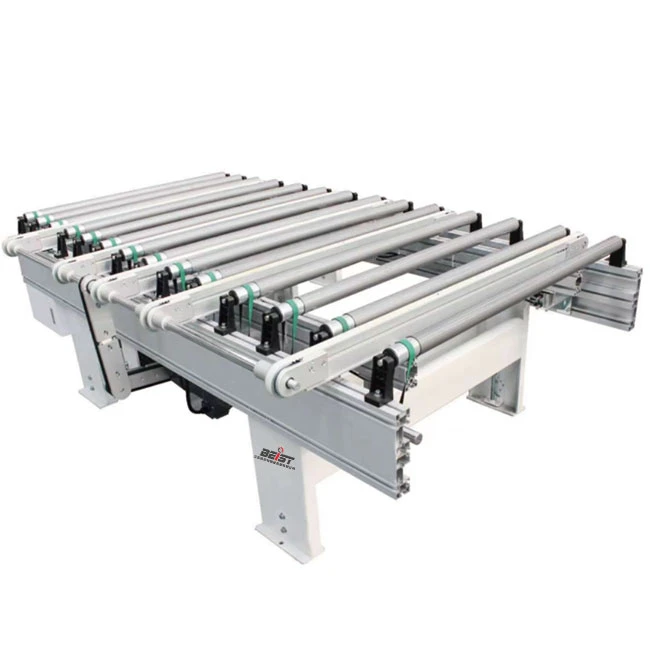

If you are in need of a reliable turnover conveyor for your industrial operations, we invite you to contact us for a detailed discussion. Our team of experts can help you select the most suitable conveyor with the right shock - absorbing features to meet your specific requirements. Whether you are in the electronics, food processing, or any other industry, we have the solutions to enhance your productivity and ensure the safety of your operations.
References
- Conveyor Equipment Manufacturers Association (CEMA). Conveyor Handbook.
- Industrial Conveyor Systems: Design, Operation, and Maintenance. A technical guide by industry experts.
- Journal of Manufacturing Systems. Articles on conveyor technology and shock - absorbing mechanisms.