

Hey there! As a supplier of Automatic Flip Machines, I often get asked if these nifty devices can be used for textile products. Well, let's dive right into this topic and find out.
First off, let's understand what an Automatic Flip Machine is. It's a piece of equipment designed to flip items over automatically. It's got all sorts of applications in different industries, but when it comes to textiles, there are some unique aspects to consider.
One of the key things about textile products is their variety. We're talking about everything from delicate silk fabrics to heavy-duty denim. The texture, weight, and flexibility of these materials vary widely. So, can an Automatic Flip Machine handle them all?
Let's start with the positives. For larger textile pieces like bedsheets, tablecloths, or large bolts of fabric, an Automatic Flip Machine can be a real game - changer. These machines are usually equipped with adjustable settings that can be tailored to the specific needs of the textile. For example, the speed of the flip can be adjusted. If you're dealing with a lightweight, delicate fabric, you can set the machine to flip it more gently to avoid any tearing or damage.
When it comes to the process of manufacturing or finishing textiles, an Automatic Flip Machine can save a ton of time and labor. In a textile factory, workers often have to manually flip large pieces of fabric during various stages of production, like when applying a second coat of dye or when inspecting both sides for quality control. With an Automatic Flip Machine, this process becomes much faster and more efficient. Workers can focus on other important tasks, and the overall productivity of the factory can increase significantly.
Another advantage is the consistency that an Automatic Flip Machine offers. When flipping textiles manually, there's always a chance of uneven flips or accidental creasing. But an Automatic Flip Machine ensures that each flip is done in the same way, every time. This is especially important in industries where a high level of precision and uniformity is required, such as in the production of high - end fashion fabrics or technical textiles.

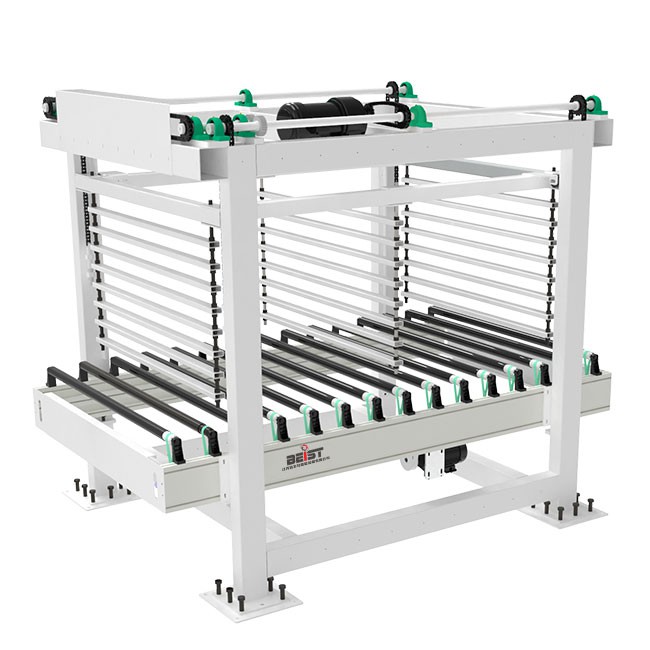
Now, let's talk about some of the challenges. Smaller textile items, like socks or handkerchiefs, might be a bit tricky for an Automatic Flip Machine. These items are often too small and light, and they can easily get caught in the machine or not be flipped properly. However, some advanced models of Automatic Flip Machines are designed with special mechanisms to handle smaller items more effectively. They might have adjustable grippers or suction cups that can hold these small textiles securely during the flipping process.
The material of the textile also plays a role. Fabrics with a very loose weave or those that are extremely stretchy can pose problems. The machine might not be able to grip the fabric properly, or the fabric might stretch too much during the flip, causing it to lose its shape. But again, with the right settings and some experimentation, it's often possible to find a way to make the machine work with these types of fabrics.
In addition to the Automatic Flip Machine itself, there are other related pieces of equipment that can be used in conjunction with it in a textile production line. For example, a Panel Storage Machine can be used to store large panels of fabric before and after they are flipped. This helps in organizing the production process and ensures that the fabric is stored safely without getting wrinkled or damaged.
A Cross Conveyor with Rotation Function can be used to move the textile products around the factory floor and into the Automatic Flip Machine. It can also rotate the fabric to the correct orientation before the flip, which is very useful in a large - scale production environment.
And a Cross Conveyor Bi - Directional can be used to transport the flipped textile products to the next stage of the production process, whether it's for further processing or for packaging.
So, in conclusion, an Automatic Flip Machine can definitely be used for textile products, but it's important to choose the right machine for the specific type of textile you're working with. There are some challenges, but with the right technology and a bit of creativity, these challenges can be overcome.
If you're in the textile industry and are looking to improve your production efficiency, I highly recommend considering an Automatic Flip Machine. It can revolutionize the way you handle your textile products and give you a competitive edge in the market. If you're interested in learning more about our Automatic Flip Machines or want to discuss how they can be customized to fit your specific needs, don't hesitate to reach out. We're always happy to have a chat and help you find the best solution for your business.
References
- General knowledge of textile manufacturing processes and industrial machinery applications.
- Industry reports on the use of automation in the textile industry.


