Hey there! As a supplier of unpowered roller conveyors, I often get asked about the different types of rollers used in these systems. In this blog post, I'm gonna break down the various roller types, their features, and where they're best used. So, let's dive right in!
Gravity Rollers
Gravity rollers are the most common type of rollers used in unpowered roller conveyors. They rely on gravity to move the materials along the conveyor. These rollers are usually made of steel, aluminum, or plastic, and they come in different diameters and lengths.
Steel gravity rollers are known for their durability and strength. They can handle heavy loads and are resistant to wear and tear. They're great for industrial applications where you need to move large, heavy items like pallets or crates. Aluminum gravity rollers, on the other hand, are lighter and more corrosion-resistant. They're a good choice for applications where weight is a concern, like in the food and beverage industry. Plastic gravity rollers are lightweight, quiet, and resistant to chemicals. They're often used in cleanroom environments or for handling delicate products.
One of the key advantages of gravity rollers is their simplicity. They don't require any external power source, which means lower operating costs and less maintenance. However, they do require a slight incline to work effectively, so you need to make sure the conveyor is installed at the right angle.
Ball Transfer Units
Ball transfer units are another type of roller used in unpowered roller conveyors. These units consist of a series of small balls housed in a socket. The balls can rotate in any direction, allowing the materials to move smoothly and easily in multiple directions.
Ball transfer units are great for applications where you need to change the direction of the materials quickly and easily. They're often used in sorting systems, assembly lines, and workstations. They can also be used to create a low-friction surface for moving heavy or awkwardly shaped items.
One of the benefits of ball transfer units is their flexibility. They can be arranged in different patterns to suit your specific needs. For example, you can use them to create a curved path or to transfer materials between different conveyors. However, they're not as suitable for handling very heavy loads as gravity rollers.
Skate Wheel Conveyors
Skate wheel conveyors use small, wheel-like rollers called skate wheels. These wheels are mounted on axles and are free to rotate. Skate wheel conveyors are lightweight, inexpensive, and easy to install.
They're ideal for handling lightweight items like boxes, cartons, and envelopes. Skate wheel conveyors can be used in a variety of applications, including shipping and receiving areas, order picking systems, and packaging lines.
One of the advantages of skate wheel conveyors is their low friction. This allows the materials to move smoothly and easily, even with a small incline. They're also relatively quiet, which makes them a good choice for noise-sensitive environments. However, they're not as strong as gravity rollers or ball transfer units, so they're not suitable for handling heavy loads.
Specialized Rollers
In addition to the standard roller types, there are also some specialized rollers that are used in specific applications. For example, Air Flotation Table Conveyor uses air to create a cushion between the materials and the conveyor surface. This reduces friction and allows the materials to move smoothly and easily. Air flotation table conveyors are often used in applications where you need to handle delicate or sensitive materials, like electronic components or glass sheets.
Curved Roller Conveyor is designed to change the direction of the materials along a curved path. These conveyors use specially designed rollers that are angled to guide the materials around the curve. Curved roller conveyors are commonly used in warehouses, distribution centers, and manufacturing plants to optimize the layout of the conveyor system.
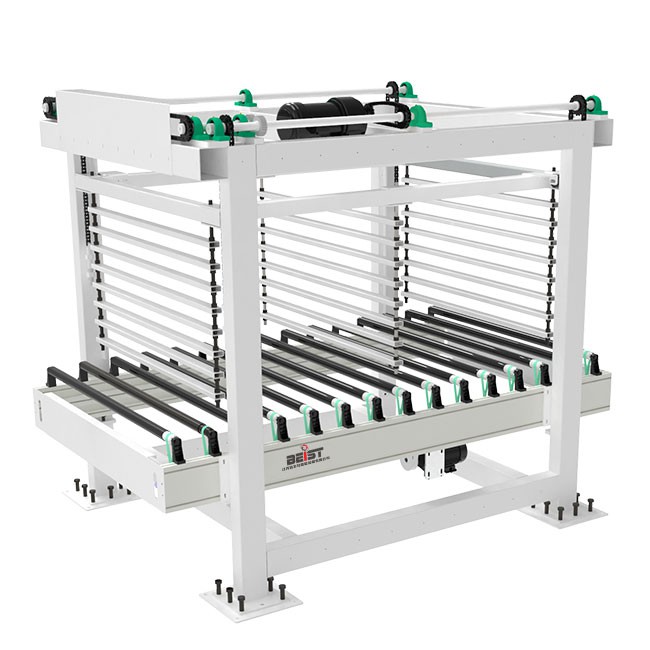
Conveyor Platform for Cold Press is a specialized conveyor that is used in conjunction with a cold press. It is designed to transport the materials to and from the cold press safely and efficiently. These conveyors often use heavy-duty rollers and a robust frame to withstand the high pressure and forces exerted by the cold press.
Choosing the Right Roller Type
When choosing the right roller type for your unpowered roller conveyor, there are several factors you need to consider. First, you need to think about the type of materials you'll be handling. If you're dealing with heavy, large items, you'll probably need gravity rollers or specialized heavy-duty rollers. If you're handling lightweight, small items, skate wheel conveyors or ball transfer units might be a better choice.
You also need to consider the layout of your conveyor system. If you need to change the direction of the materials or transfer them between different conveyors, ball transfer units or curved roller conveyors might be necessary. If you have a long, straight conveyor, gravity rollers might be the most cost-effective option.


Another important factor is the environment in which the conveyor will be used. If you're working in a cleanroom or a food processing facility, you'll need to choose rollers that are resistant to chemicals and easy to clean. If you're working in a harsh industrial environment, you'll need rollers that are durable and can withstand wear and tear.
Conclusion
As you can see, there are many different types of rollers used in unpowered roller conveyors, each with its own unique features and advantages. By understanding the different roller types and how they work, you can choose the right conveyor system for your specific needs.
If you're interested in learning more about unpowered roller conveyors or need help choosing the right roller type for your application, don't hesitate to get in touch. We're here to assist you with all your conveyor needs and can provide you with expert advice and high-quality products.
References
- Conveyor Equipment Manufacturers Association (CEMA) Handbook
- Industrial Conveyor Design Guidebooks
- Technical Papers on Material Handling Systems