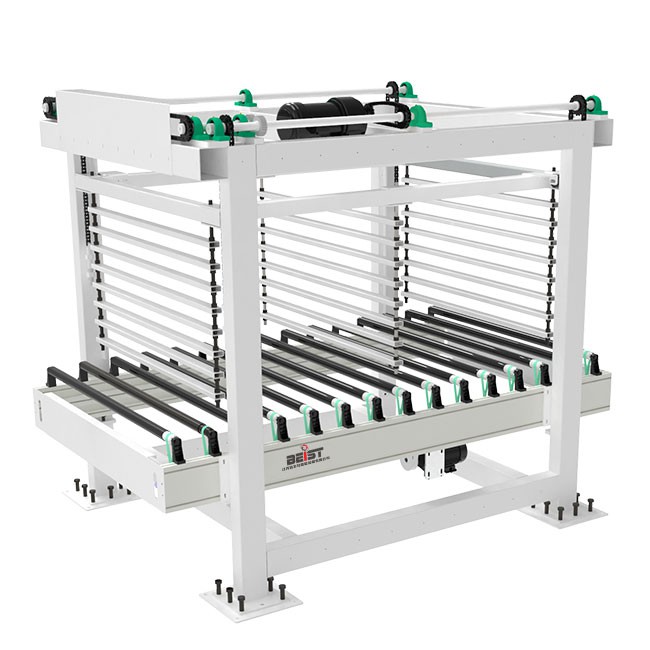
When it comes to material handling in industrial settings, roller conveyor carts play a pivotal role. As a supplier of Roller Conveyor Carts, I've encountered numerous inquiries regarding the minimum width of these essential pieces of equipment. In this blog post, I'll delve into the factors that determine the minimum width of a roller conveyor cart, providing you with valuable insights to make informed decisions for your material handling needs.
Understanding the Basics of Roller Conveyor Carts
Before we discuss the minimum width, let's briefly understand what a roller conveyor cart is. A Roller Conveyor Cart is a mobile platform equipped with rollers that facilitate the movement of goods from one location to another. These carts are widely used in warehouses, manufacturing plants, and distribution centers due to their versatility and ease of use.
Factors Influencing the Minimum Width
Several factors come into play when determining the minimum width of a roller conveyor cart. Let's explore each of these factors in detail.
1. Load Size and Dimensions
The size and dimensions of the loads that the roller conveyor cart will carry are perhaps the most significant factors influencing its minimum width. You need to ensure that the width of the cart is sufficient to accommodate the widest part of the load. For example, if you're transporting rectangular boxes, the width of the cart should be at least equal to the width of the largest box. If the load is irregularly shaped, you'll need to consider the maximum width across the entire load.
2. Roller Spacing
Roller spacing refers to the distance between adjacent rollers on the conveyor cart. A narrower roller spacing is generally required for smaller or lighter loads, as it provides better support and prevents the load from sagging between the rollers. On the other hand, larger or heavier loads can tolerate a wider roller spacing. When determining the minimum width of the cart, you need to consider the appropriate roller spacing based on the load characteristics.
3. Conveyor Capacity
The conveyor capacity, which is the maximum weight that the roller conveyor cart can carry, also affects its minimum width. A higher capacity cart typically requires a wider width to distribute the weight evenly across the rollers and prevent overloading. You need to ensure that the width of the cart is sufficient to support the maximum expected load without compromising its structural integrity.
4. Operational Requirements
The operational requirements of your facility, such as the speed of the conveyor, the frequency of use, and the available space, can also influence the minimum width of the roller conveyor cart. For example, if you need to move loads quickly through a narrow aisle, you may need a narrower cart to ensure maneuverability. On the other hand, if you have a large open space and require high throughput, a wider cart may be more suitable.
Calculating the Minimum Width
To calculate the minimum width of a roller conveyor cart, you need to consider all the factors mentioned above. Here's a step-by-step guide to help you with the calculation:
- Determine the maximum width of the load: Measure the widest part of the load that the cart will carry. This will give you a baseline for the minimum width of the cart.
- Consider the roller spacing: Based on the load characteristics, select an appropriate roller spacing. Add the width of the rollers and the roller spacing to the maximum width of the load to determine the minimum width required for the rollers.
- Account for the conveyor capacity: If you're using a high-capacity cart, you may need to increase the width to distribute the weight evenly. Consult the manufacturer's specifications to determine the appropriate width based on the conveyor capacity.
- Factor in the operational requirements: Consider the speed of the conveyor, the frequency of use, and the available space in your facility. Adjust the width of the cart accordingly to ensure optimal performance.
Examples of Minimum Width Calculation
Let's look at a couple of examples to illustrate how to calculate the minimum width of a roller conveyor cart.
Example 1: Transporting Rectangular Boxes
Suppose you're transporting rectangular boxes with a maximum width of 24 inches. You've selected a roller spacing of 3 inches, and the width of each roller is 1 inch. The minimum width required for the rollers can be calculated as follows:
Minimum width for rollers = Maximum width of load + (Number of rollers - 1) x Roller spacing
Number of rollers = (Maximum width of load / Roller spacing) + 1
Number of rollers = (24 / 3) + 1 = 9
Minimum width for rollers = 24 + (9 - 1) x 3 = 48 inches
If you're using a high-capacity cart, you may need to increase the width to distribute the weight evenly. Let's say you need to increase the width by 6 inches to account for the conveyor capacity. The minimum width of the roller conveyor cart would be 48 + 6 = 54 inches.
Example 2: Transporting Irregularly Shaped Loads
Suppose you're transporting irregularly shaped loads with a maximum width of 30 inches. You've selected a roller spacing of 4 inches, and the width of each roller is 1.5 inches. The minimum width required for the rollers can be calculated as follows:
Minimum width for rollers = Maximum width of load + (Number of rollers - 1) x Roller spacing
Number of rollers = (Maximum width of load / Roller spacing) + 1
Number of rollers = (30 / 4) + 1 = 8.5 (round up to 9)
Minimum width for rollers = 30 + (9 - 1) x 4 = 62 inches
If you have limited space in your facility and need to reduce the width of the cart, you may need to adjust the roller spacing or the width of the rollers. However, you need to ensure that the cart can still support the load without compromising its performance.
Importance of Choosing the Right Width
Choosing the right width for your roller conveyor cart is crucial for several reasons. Firstly, it ensures that the load is properly supported and transported without any issues. A cart that is too narrow may cause the load to tip over or fall off, while a cart that is too wide may be inefficient and take up unnecessary space.
Secondly, the right width can improve the efficiency of your material handling operations. A properly sized cart allows for smooth and continuous movement of goods, reducing the time and effort required for loading and unloading. It also minimizes the risk of damage to the load and the conveyor system.


Finally, choosing the right width can help you save costs in the long run. By selecting a cart that is appropriately sized for your needs, you can avoid overspending on unnecessary features or equipment. You can also reduce maintenance and repair costs by ensuring that the cart is not overloaded or subjected to excessive wear and tear.
Other Considerations
In addition to the minimum width, there are several other factors that you need to consider when choosing a roller conveyor cart. These include the type of rollers (e.g., gravity rollers, powered rollers), the material of the cart (e.g., steel, aluminum), the presence of additional features (e.g., brakes, adjustable height), and the compatibility with other equipment in your facility.
If you're unsure about which roller conveyor cart is right for you, don't hesitate to contact us. As a leading supplier of Roller Conveyor Carts, we have the expertise and experience to help you select the most suitable cart for your specific needs. We can also provide you with detailed information about our products, including specifications, pricing, and delivery options.
Related Products
In addition to roller conveyor carts, we also offer a range of other material handling equipment, including Conveyor Crossover Bridge and Pneumatic Roller Conveyor. These products are designed to work seamlessly with our roller conveyor carts, providing you with a comprehensive solution for your material handling needs.
Contact Us for Purchase and Consultation
If you're interested in purchasing a roller conveyor cart or have any questions about our products, please feel free to reach out to us. Our team of experts is ready to assist you with your material handling requirements. Whether you need help with product selection, sizing, or installation, we're here to provide you with the support and guidance you need.
References
- "Material Handling Equipment Handbook" by John A. White
- "Conveyor Systems Design Manual" by CEMA (Conveyor Equipment Manufacturers Association)