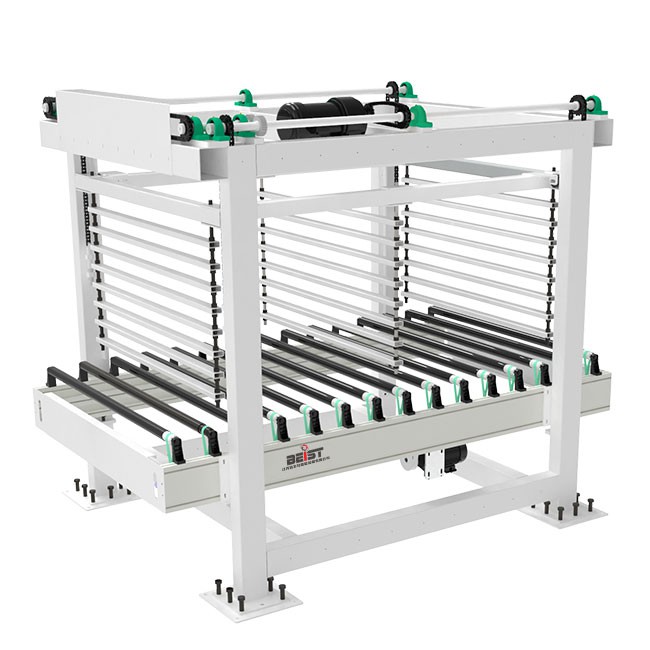
As a supplier of hydraulic lift tables, I often get asked about the maximum tilt angle these machines can withstand. It's a crucial question, especially for industries that rely on these tables for various material - handling tasks. In this blog, I'll break down what factors influence the maximum tilt angle and share some insights based on my experience in the industry.
Factors Affecting the Maximum Tilt Angle
Structural Design
The design of the hydraulic lift table plays a huge role in determining its maximum tilt angle. For instance, our Conveyor Top Hydraulic Lift Table is engineered with a sturdy frame and a well - balanced structure. The conveyor top is integrated in a way that doesn't compromise the stability of the table when it tilts. The base of the lift table is wide and heavy - duty, providing a solid foundation. This design allows for a relatively larger tilt angle compared to some less - well - designed models.
On the other hand, our E Shape Lift Table has a unique E - shaped frame. This shape distributes the weight evenly across the table, enhancing its stability. The geometry of the E - shape gives it a better center of gravity, which is essential when the table is tilted. However, due to its specific use cases and the nature of its design, the maximum tilt angle might be different from other models.
Hydraulic System
The hydraulic system is the heart of a hydraulic lift table. The power and control of the hydraulic cylinders determine how much the table can tilt. A high - quality hydraulic system with well - calibrated cylinders can provide smooth and precise tilting motion. For example, in our Conveyor Lifting Table with Forklift, the hydraulic cylinders are designed to handle heavy loads while maintaining a consistent tilt rate.
The pressure and flow rate of the hydraulic fluid also matter. If the pressure is too low, the table might not be able to tilt to its maximum capacity. On the other hand, if the flow rate is too high, it could cause the table to tilt too quickly, leading to instability. Our technicians carefully adjust these parameters during the manufacturing process to ensure optimal performance.
Load Capacity and Distribution
The weight and distribution of the load on the lift table are critical factors. A heavier load will generally reduce the maximum tilt angle. When a load is unevenly distributed, it can create an imbalance, making the table more likely to tip over at a lower tilt angle.
Let's say you're using a hydraulic lift table to move a large crate. If the crate is placed towards one side of the table, the center of gravity shifts, and the table becomes less stable. To maximize the tilt angle, it's important to evenly distribute the load across the table surface. Our lift tables are designed with load - bearing capacity in mind, but it's still up to the users to handle the loads properly.
Typical Maximum Tilt Angles
In general, most standard hydraulic lift tables can tilt up to around 15 - 20 degrees. However, this can vary widely depending on the factors mentioned above. Some specialized lift tables, designed for specific applications, can tilt up to 45 degrees or even more.
For example, our Conveyor Top Hydraulic Lift Table, which is often used in assembly lines and material - handling processes, usually has a maximum tilt angle of around 18 degrees. This angle is sufficient for smoothly transferring materials from the table to a conveyor or another workstation.
The E Shape Lift Table, with its unique design for more precise positioning, can typically tilt up to 22 degrees. This extra tilt allows for better access to parts during assembly or maintenance tasks.
Our Conveyor Lifting Table with Forklift, which is used for heavy - duty lifting and moving, has a maximum tilt angle of around 16 degrees. This is because of the heavy loads it's designed to carry, and the need to maintain stability during the tilting process.


Safety Considerations
When dealing with the maximum tilt angle of a hydraulic lift table, safety should always be the top priority. Exceeding the recommended tilt angle can lead to serious accidents, such as the table tipping over, causing damage to the equipment and potentially injuring workers.
We always provide clear instructions to our customers about the maximum tilt angle for each of our lift tables. It's important for operators to be trained on how to use the lift tables safely, including proper load distribution and how to control the tilt angle. Regular maintenance of the lift tables is also crucial to ensure that all components are in good working condition.
Testing and Certification
Before our lift tables leave the factory, they undergo rigorous testing to determine their maximum tilt angle and overall safety. We use advanced testing equipment to simulate different load conditions and tilt angles. This helps us ensure that our products meet or exceed industry standards.
We also obtain relevant certifications for our lift tables. These certifications are a testament to the quality and safety of our products. Customers can have peace of mind knowing that they are using a certified hydraulic lift table that has been thoroughly tested.
Conclusion
The maximum tilt angle of a hydraulic lift table is influenced by several factors, including structural design, the hydraulic system, load capacity, and distribution. As a supplier, we strive to design and manufacture lift tables that offer the best combination of tilt angle, stability, and safety.
If you're in the market for a hydraulic lift table and have specific requirements regarding the tilt angle, we'd love to hear from you. Whether you need a Conveyor Top Hydraulic Lift Table, an E Shape Lift Table, or a Conveyor Lifting Table with Forklift, we can provide you with the right solution. Contact us to discuss your needs and start a procurement negotiation. We're here to help you find the perfect lift table for your business.
References
- Hydraulic Lift Table Industry Standards Handbook
- Engineering Manuals for Hydraulic Systems
- Internal Testing Reports from Our Manufacturing Facility