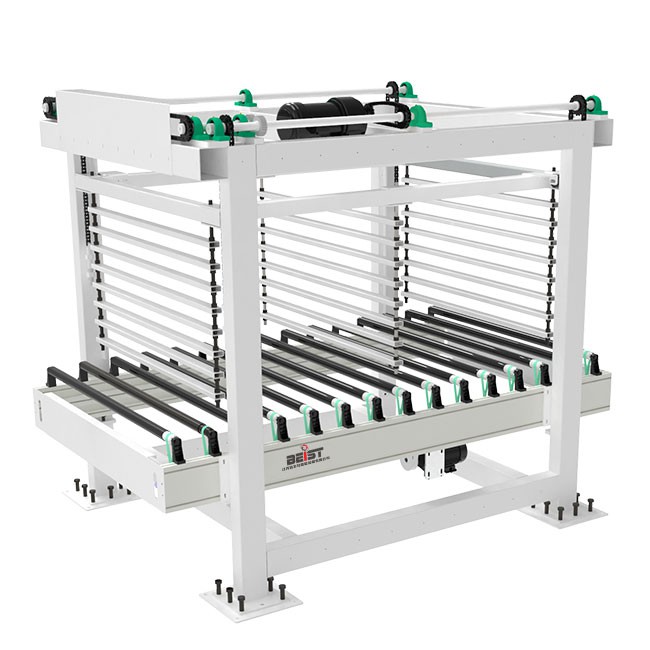
In the modern manufacturing and logistics industries, the adoption of advanced machinery has become a pivotal factor in enhancing efficiency and productivity. As a supplier of Panel Storage Machines, I have witnessed firsthand the profound impact these machines have on labor requirements. This blog post aims to explore the multifaceted influence of Panel Storage Machines on labor, shedding light on both the challenges and opportunities they present.
Reducing Manual Labor in Storage and Retrieval
One of the most significant impacts of Panel Storage Machines is the reduction of manual labor in the storage and retrieval processes. Traditional storage methods often rely on workers to manually place and retrieve panels, which is not only time - consuming but also physically demanding. Panel Storage Machines, on the other hand, automate these tasks. They are equipped with advanced control systems that can precisely position panels in the storage racks and retrieve them as needed.
For instance, the use of automated cranes or robotic arms in Panel Storage Machines can handle panels with great accuracy and speed. Workers no longer need to climb ladders or use forklifts to reach high - level storage areas. This not only reduces the risk of workplace injuries but also allows workers to focus on more value - added tasks. According to a study by the International Journal of Advanced Manufacturing Technology, in a manufacturing facility that implemented a Panel Storage Machine, the time spent on manual storage and retrieval tasks decreased by up to 60%.
Streamlining Inventory Management
Panel Storage Machines also play a crucial role in streamlining inventory management, which in turn affects labor requirements. These machines are integrated with inventory management software that can track the location, quantity, and status of each panel in real - time. Workers no longer need to conduct manual inventory checks, which are often prone to errors and can be extremely time - consuming.
The software can generate reports on inventory levels, usage patterns, and reorder points. This enables managers to make informed decisions about inventory replenishment and resource allocation. As a result, the number of workers dedicated to inventory management can be significantly reduced. For example, in a large - scale panel manufacturing plant, the implementation of a Panel Storage Machine with integrated inventory management software led to a 30% reduction in the number of employees required for inventory control tasks.
Enhancing Quality Control
Quality control is an essential aspect of the panel manufacturing and storage process. Panel Storage Machines can contribute to improving quality control, which has implications for labor requirements. These machines are designed to handle panels gently, reducing the risk of damage during storage and retrieval. They can also be equipped with sensors that detect any defects or irregularities in the panels.
When a defect is detected, the machine can automatically isolate the panel for further inspection. This reduces the need for manual inspection of every single panel, saving labor time. Moreover, by ensuring that only high - quality panels are used in the production process, the overall quality of the final product is improved, which can reduce the number of rework and repair tasks. A research paper in the Journal of Manufacturing Systems found that in a panel production line with a Panel Storage Machine, the number of panels requiring rework due to handling damage decreased by 40%.
Skill - Shift in the Workforce
While Panel Storage Machines reduce the need for some types of manual labor, they also create a demand for a different set of skills in the workforce. Workers are now required to have a basic understanding of machine operation, maintenance, and troubleshooting. They need to be able to operate the control systems of the Panel Storage Machines, perform routine maintenance tasks, and identify and resolve minor technical issues.
To meet this demand, companies need to invest in training programs for their employees. This shift in skill requirements can be seen as an opportunity for workers to upskill and move into more specialized and higher - paying roles. For example, workers who were previously engaged in manual storage and retrieval tasks can be trained to become machine operators or maintenance technicians. According to a report by the World Economic Forum, the adoption of advanced manufacturing technologies like Panel Storage Machines is expected to create new job opportunities in areas such as automation engineering and technical support.
Integration with Other Conveyor Systems
Panel Storage Machines often work in conjunction with other conveyor systems, such as the Automatic Flip Machine, Chain Driven Live Roller Conveyor, and Powered Roller Conveyor - Gap. The integration of these systems further enhances the efficiency of the overall production and storage process.


When these conveyor systems are integrated with a Panel Storage Machine, the flow of panels through the facility becomes more seamless. Workers no longer need to manually transfer panels between different stages of the process. For example, the Automatic Flip Machine can be used to flip panels for further processing, and the Chain Driven Live Roller Conveyor can transport panels to different storage or production areas. This integration reduces the number of manual handling tasks and improves the overall throughput of the facility.
Challenges and Considerations
Despite the many benefits of Panel Storage Machines, there are also some challenges and considerations that need to be addressed. One of the main challenges is the initial investment cost. Purchasing and installing a Panel Storage Machine can be expensive, especially for small and medium - sized enterprises. However, it is important to consider the long - term cost savings in terms of labor and increased productivity.
Another challenge is the need for regular maintenance and technical support. Panel Storage Machines are complex pieces of equipment that require regular servicing to ensure optimal performance. Companies need to have a team of trained technicians or contract with a reliable maintenance service provider. Additionally, there may be resistance from some workers to the adoption of new technology. Managers need to communicate the benefits of the Panel Storage Machine clearly and involve workers in the implementation process to overcome this resistance.
Conclusion
In conclusion, Panel Storage Machines have a profound impact on labor requirements in the manufacturing and logistics industries. They reduce the need for manual labor in storage, retrieval, and inventory management tasks, while also enhancing quality control. At the same time, they create a demand for a different set of skills in the workforce, presenting an opportunity for workers to upskill.
The integration of Panel Storage Machines with other conveyor systems further improves the efficiency of the production process. However, companies need to be aware of the challenges associated with these machines, such as the initial investment cost and the need for maintenance.
If you are interested in exploring how a Panel Storage Machine can transform your manufacturing or logistics operations and reduce labor requirements, I encourage you to reach out for a detailed discussion. We can provide you with customized solutions based on your specific needs and requirements.
References
- International Journal of Advanced Manufacturing Technology. "Impact of Automated Storage Systems on Manufacturing Efficiency."
- Journal of Manufacturing Systems. "Quality Improvement in Panel Production with Automated Storage Solutions."
- World Economic Forum. "The Future of Jobs Report."
- Journal of Manufacturing Systems. "Integration of Conveyor Systems in Panel Manufacturing Facilities."