In the realm of industrial material handling, conveyor systems play a pivotal role in streamlining operations and enhancing efficiency. Among the various types of conveyors available, the carbon steel belt conveyor stands out for its robustness, durability, and versatility. As a leading supplier of carbon steel belt conveyors, I am often asked about the conveyor flexibility of these systems. In this blog post, I will delve into the concept of conveyor flexibility, explore the factors that contribute to it, and discuss how carbon steel belt conveyors excel in this aspect.
Understanding Conveyor Flexibility
Conveyor flexibility refers to the ability of a conveyor system to adapt to changing production requirements, handle a variety of products, and integrate seamlessly with other equipment in the production line. A flexible conveyor system can be easily reconfigured, adjusted, or expanded to accommodate different product sizes, shapes, weights, and flow rates. It can also be customized to meet specific application needs, such as incline or decline conveying, sorting, merging, and diverting.
The flexibility of a conveyor system is crucial for industries that experience frequent product changes, seasonal fluctuations, or rapid growth. It allows companies to optimize their production processes, reduce downtime, and increase productivity. A flexible conveyor system can also help companies to improve their competitiveness by enabling them to respond quickly to market demands and customer requirements.
Factors Affecting Conveyor Flexibility
Several factors contribute to the conveyor flexibility of a carbon steel belt conveyor. These factors include:
Belt Design: The design of the belt plays a crucial role in determining the flexibility of the conveyor. Carbon steel belts can be designed with different surface textures, patterns, and materials to suit various applications. For example, smooth belts are ideal for conveying flat or round products, while cleated belts are suitable for incline or decline conveying. The width and thickness of the belt can also be customized to meet specific product requirements.
Drive System: The drive system of the conveyor is another important factor that affects its flexibility. Carbon steel belt conveyors can be equipped with different types of drive systems, such as electric motors, hydraulic motors, or pneumatic motors. The drive system can be adjusted to control the speed, direction, and torque of the conveyor, allowing it to handle different product loads and flow rates.
Frame Structure: The frame structure of the conveyor is also a key factor in determining its flexibility. Carbon steel belt conveyors can be designed with different frame structures, such as modular frames, adjustable frames, or collapsible frames. The frame structure can be easily reconfigured or adjusted to accommodate different production layouts and space requirements.
Control System: The control system of the conveyor is essential for ensuring its flexibility and efficiency. Carbon steel belt conveyors can be equipped with different types of control systems, such as programmable logic controllers (PLCs), variable frequency drives (VFDs), or sensors. The control system can be used to monitor and control the operation of the conveyor, adjust the speed and direction of the belt, and detect and prevent faults or malfunctions.
Advantages of Carbon Steel Belt Conveyors in Terms of Flexibility
Carbon steel belt conveyors offer several advantages in terms of flexibility compared to other types of conveyors. These advantages include:
Versatility: Carbon steel belt conveyors can be used to handle a wide range of products, including heavy, bulky, or irregularly shaped items. They can also be used in various industries, such as mining, automotive, food processing, and logistics.
Customizability: Carbon steel belt conveyors can be customized to meet specific application needs. They can be designed with different belt widths, lengths, and incline angles, as well as different types of belt materials and surface textures. They can also be equipped with various accessories, such as sensors, guides, and guards, to enhance their functionality and safety.
Easy Installation and Maintenance: Carbon steel belt conveyors are relatively easy to install and maintain. They can be assembled on-site using standard tools and equipment, and they require minimal maintenance compared to other types of conveyors. They also have a long service life, which reduces the need for frequent replacements.
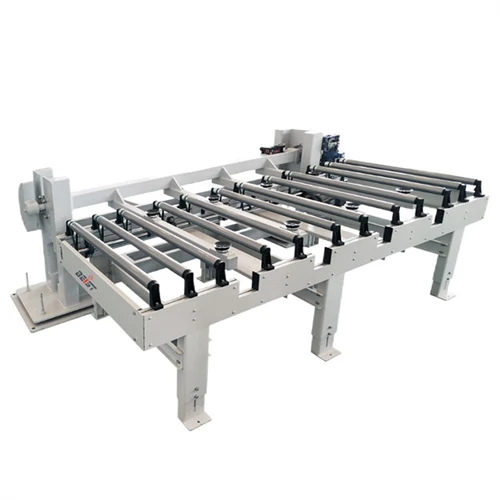
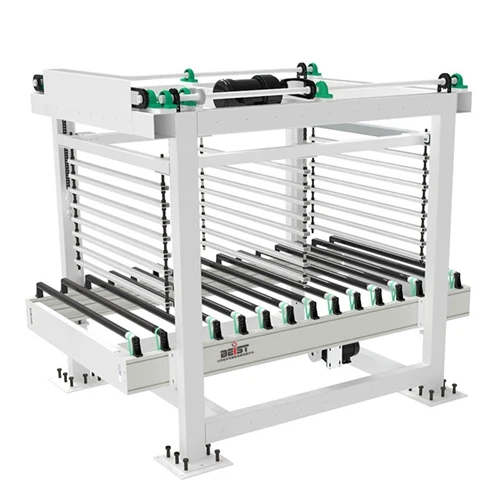
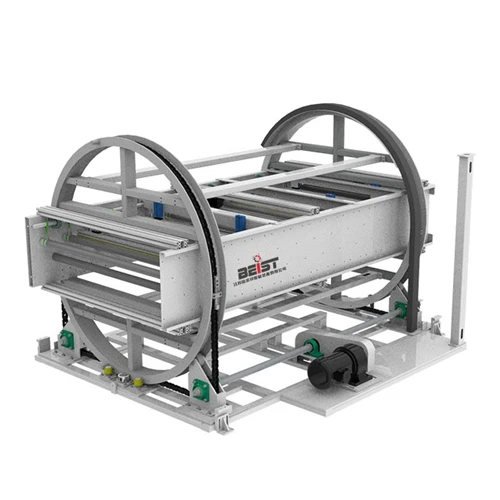
Compatibility with Other Equipment: Carbon steel belt conveyors can be easily integrated with other equipment in the production line, such as Cross Conveyor with Rotation Function, Powered Roller Conveyor - Gap, and Cross Conveyor. They can be used to transfer products between different stages of the production process, or to sort and divert products to different destinations.

Applications of Carbon Steel Belt Conveyors
Carbon steel belt conveyors are widely used in various industries for a variety of applications. Some of the common applications of carbon steel belt conveyors include:
Material Handling: Carbon steel belt conveyors are used to transport materials from one location to another in factories, warehouses, and distribution centers. They can be used to handle a wide range of materials, such as raw materials, finished products, and waste materials.
Assembly Lines: Carbon steel belt conveyors are used in assembly lines to move products along the production process. They can be used to transport products between different workstations, or to position products for assembly or inspection.
Sorting and Diverting: Carbon steel belt conveyors can be used to sort and divert products based on their size, shape, weight, or other characteristics. They can be equipped with sensors and controls to detect and separate products, and to direct them to different destinations.
Packaging and Shipping: Carbon steel belt conveyors are used in packaging and shipping operations to move products from the production line to the packaging area, and then to the shipping area. They can be used to handle a wide range of products, such as boxes, bags, and pallets.
Conclusion
In conclusion, the conveyor flexibility of a carbon steel belt conveyor is a crucial factor in its performance and suitability for various applications. Carbon steel belt conveyors offer several advantages in terms of flexibility, including versatility, customizability, easy installation and maintenance, and compatibility with other equipment. They are widely used in various industries for a variety of applications, such as material handling, assembly lines, sorting and diverting, and packaging and shipping.
If you are looking for a flexible and reliable conveyor system for your industrial application, I encourage you to consider a carbon steel belt conveyor. As a leading supplier of carbon steel belt conveyors, we have the expertise and experience to provide you with a customized solution that meets your specific requirements. Contact us today to learn more about our products and services, and to discuss your conveyor needs.