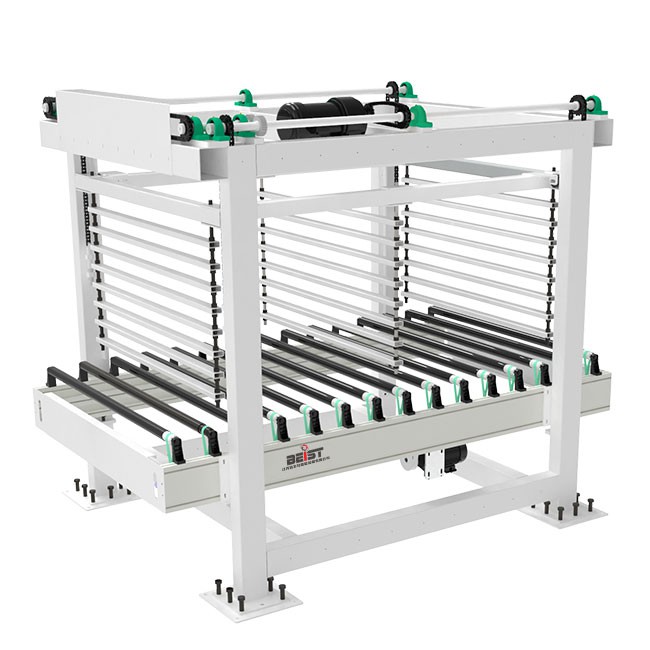
Hey there! As a supplier of Sorting Roller Conveyors, I've seen firsthand how crucial it is to understand the sorting performance metrics of these systems. In this blog post, I'm gonna break down the key factors that determine how well a sorting roller conveyor works and why they matter.
Throughput
One of the most important metrics for any sorting system is throughput. This refers to the number of items that the conveyor can sort within a given time frame, usually measured in items per hour (IPH). A high throughput means that the conveyor can handle a large volume of products quickly, which is essential for meeting the demands of high - volume production and distribution centers.
To achieve a high throughput, several factors come into play. First, the speed of the rollers is critical. Faster - moving rollers can transport items more quickly, but there's a balance to strike. If the rollers are too fast, it can lead to items being jumbled or misaligned, which can cause sorting errors.


Another factor is the design of the sorting mechanism. Whether it's a divertor, a pusher, or some other type of device, it needs to be able to operate quickly and accurately. For example, a well - designed divertor can smoothly redirect items to the correct chute or lane without causing any delays.
Accuracy
Accuracy is another vital metric. It measures how often the sorting roller conveyor correctly sorts items into their designated destinations. High accuracy is essential to ensure that products end up in the right place, whether it's a specific storage location, a shipping container, or a different production line.
There are several things that can affect sorting accuracy. The quality of the sensors used to detect the items is crucial. These sensors need to be able to accurately identify the size, shape, and position of each item. Any errors in sensor readings can lead to incorrect sorting.
The programming of the sorting system also plays a big role. The software needs to be able to make quick and accurate decisions based on the information provided by the sensors. For instance, if an item is supposed to go to a particular lane based on its barcode or RFID tag, the system needs to process that information correctly and activate the appropriate sorting mechanism.
Flexibility
Flexibility is becoming increasingly important in modern sorting systems. A flexible sorting roller conveyor can handle a wide variety of item sizes, shapes, and weights. This is important because companies often deal with different types of products, and they need a conveyor that can adapt to these changes.
One way to achieve flexibility is through adjustable roller spacing. This allows the conveyor to accommodate items of different sizes. For example, if you're sorting small, lightweight items one day and large, heavy items the next, adjustable roller spacing can ensure that all items are transported and sorted smoothly.
Another aspect of flexibility is the ability to change the sorting destinations easily. A good sorting system should be able to be reconfigured quickly to meet changing production or distribution needs. For example, if a new product line is introduced, the conveyor should be able to be adjusted to sort those items to the appropriate locations.
Durability
Durability is an often - overlooked but extremely important metric. A sorting roller conveyor needs to be able to withstand the rigors of continuous operation. It's going to be handling a large number of items day in and day out, and it needs to be built to last.
The quality of the materials used in the construction of the conveyor is crucial. High - quality rollers, frames, and sorting mechanisms are less likely to break down or wear out quickly. For example, rollers made from durable materials like steel or high - density plastic can resist damage from heavy items and constant use.
Regular maintenance is also essential for ensuring the durability of the conveyor. This includes things like lubricating the moving parts, checking the alignment of the rollers, and replacing worn - out components. A well - maintained sorting roller conveyor can have a much longer lifespan and provide reliable performance over time.
Energy Efficiency
In today's environmentally - conscious world, energy efficiency is a key consideration. An energy - efficient sorting roller conveyor can help companies reduce their operating costs and their carbon footprint.
There are several ways to improve the energy efficiency of a sorting roller conveyor. Using energy - efficient motors is a good start. These motors consume less power while still providing the necessary torque to drive the rollers.
Another approach is to use smart control systems. These systems can adjust the speed of the rollers based on the load. For example, if there are only a few items on the conveyor, the rollers can run at a slower speed, saving energy. When more items are added, the speed can be increased as needed.
Integration
Finally, integration is an important metric. A sorting roller conveyor needs to be able to integrate seamlessly with other parts of the production or distribution system. This includes other conveyors, storage systems, and software applications.
For example, if the sorting roller conveyor is part of a larger warehouse automation system, it needs to be able to communicate with the warehouse management software. This allows for real - time tracking of items and efficient coordination of the entire system.
It also needs to be able to work well with other types of conveyors. For instance, it should be able to smoothly transfer items to and from a Transfer Cart with Turntable or a Roller Transfer Cart On Rail. Similarly, it can be integrated with a Conveyor Platform for Cold Press in a manufacturing environment.
In conclusion, when evaluating a sorting roller conveyor, it's important to consider these key performance metrics: throughput, accuracy, flexibility, durability, energy efficiency, and integration. By understanding these metrics and how they interact, you can make an informed decision when choosing a sorting system for your business.
If you're interested in learning more about our Sorting Roller Conveyors or have any questions about how they can meet your specific needs, don't hesitate to reach out. We're here to help you find the perfect solution for your sorting requirements.
References
- "Conveyor Systems Handbook" by Michael J. Campanella
- Industry whitepapers on sorting technologies and conveyor performance.