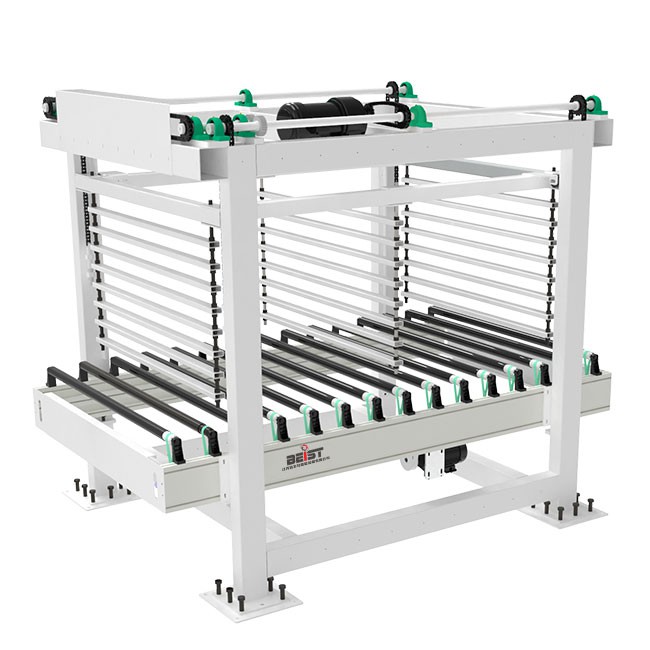
In the realm of material handling and logistics, cross conveyors play a pivotal role in efficiently moving goods across various points in a facility. As a seasoned cross conveyor supplier, I've witnessed firsthand the diverse needs of industries and the importance of choosing the right type of cross conveyor. One of the fundamental decisions that businesses face is whether to opt for a single - lane or a multi - lane cross conveyor. In this blog, I'll delve into the key differences between these two types, helping you make an informed choice for your operations.
Structural Design
The most obvious difference between single - lane and multi - lane cross conveyors lies in their structural design. A single - lane cross conveyor, as the name suggests, consists of a single path for product movement. This simplicity in design makes it a straightforward solution for applications where the volume of goods is relatively low or where products need to be processed one at a time. The conveyor belt or rollers are arranged in a single line, and the product moves along this solitary path from the input point to the output point.
On the other hand, a multi - lane cross conveyor is designed with multiple parallel lanes. These lanes can operate independently or in synchronization, depending on the specific requirements of the application. The presence of multiple lanes allows for simultaneous movement of different products or batches, significantly increasing the throughput capacity of the conveyor system. This design is ideal for high - volume operations where there is a need to handle a large number of products quickly and efficiently.


Throughput Capacity
Throughput capacity is a critical factor in determining the suitability of a cross conveyor for a particular application. A single - lane cross conveyor has a limited throughput capacity due to its single - path design. It can only handle one product or a small group of products at a time, which means that the overall rate of product movement is relatively slow. This makes it more suitable for applications with low to medium product volumes, such as small - scale manufacturing or assembly lines where products are processed individually.
In contrast, multi - lane cross conveyors offer a much higher throughput capacity. By having multiple lanes, they can handle several products simultaneously, allowing for a significant increase in the number of products that can be moved within a given time frame. This makes them an excellent choice for large - scale distribution centers, warehouses, and high - volume manufacturing facilities where there is a constant flow of products that need to be transported quickly. For example, in a large e - commerce fulfillment center, a multi - lane cross conveyor can efficiently sort and distribute thousands of packages per hour, ensuring that orders are processed and shipped out in a timely manner.
Flexibility and Adaptability
Flexibility and adaptability are important considerations when choosing a cross conveyor. Single - lane cross conveyors are relatively inflexible in terms of product handling. They are typically designed to handle a specific type or size of product, and any changes in the product dimensions or characteristics may require significant modifications to the conveyor system. This lack of flexibility can be a limitation in industries where product variety is high or where there are frequent changes in product specifications.
Multi - lane cross conveyors, on the other hand, offer greater flexibility and adaptability. Each lane can be customized to handle different types of products, allowing for the simultaneous processing of a wide range of items. For example, one lane can be configured to handle small, lightweight packages, while another lane can be designed to handle larger, heavier items. Additionally, multi - lane conveyors can be easily reconfigured or expanded to accommodate changes in production volume or product mix. This makes them a more future - proof solution for businesses that anticipate growth or changes in their operations.
Space Utilization
Space utilization is another factor that differentiates single - lane and multi - lane cross conveyors. Single - lane cross conveyors generally require less floor space compared to multi - lane conveyors. Their compact design makes them a suitable choice for facilities with limited space or where space is at a premium. They can be easily integrated into existing production lines or small - scale operations without taking up too much room.
However, multi - lane cross conveyors, while requiring more floor space, can make more efficient use of the available area in terms of throughput. By handling multiple products simultaneously, they can achieve a higher level of productivity per square foot of floor space. In large facilities, the increased throughput capacity of multi - lane conveyors can offset the additional space requirements, making them a more cost - effective solution in the long run.
Cost Considerations
Cost is always a significant factor in any purchasing decision. Single - lane cross conveyors are generally less expensive to purchase and install compared to multi - lane conveyors. Their simpler design and lower complexity result in lower manufacturing and installation costs. Additionally, they typically require less maintenance and have lower operating costs, making them a more budget - friendly option for small businesses or operations with limited financial resources.
Multi - lane cross conveyors, on the other hand, come with a higher upfront cost due to their more complex design and increased functionality. The cost of manufacturing, installing, and maintaining a multi - lane conveyor system is generally higher than that of a single - lane conveyor. However, when considering the long - term benefits, such as increased throughput capacity and flexibility, the higher initial investment in a multi - lane conveyor can often be justified. In high - volume operations, the increased productivity and efficiency provided by a multi - lane conveyor can lead to significant cost savings over time.
Integration with Other Equipment
Both single - lane and multi - lane cross conveyors need to be integrated with other equipment in the material handling system, such as sorting machines, packing stations, and storage systems. Single - lane cross conveyors are relatively easy to integrate with other equipment due to their simple design. They can be easily connected to existing production lines or other conveyor systems without requiring major modifications.
Multi - lane cross conveyors, while more complex, offer greater integration capabilities. They can be integrated with a wider range of equipment, such as Automatic Flip Machine, Powered Roller Conveyor, and Chain Driven Live Roller Conveyor, to create a comprehensive and efficient material handling system. The ability to integrate multiple lanes with different types of equipment allows for more advanced sorting, routing, and processing of products, enhancing the overall functionality of the system.
Conclusion
In conclusion, the choice between a single - lane and a multi - lane cross conveyor depends on several factors, including throughput capacity, flexibility, space utilization, cost, and integration requirements. Single - lane cross conveyors are a suitable choice for low - to medium - volume applications where simplicity, low cost, and limited space are the main considerations. They offer a straightforward and cost - effective solution for handling products one at a time.
On the other hand, multi - lane cross conveyors are ideal for high - volume operations that require high throughput, flexibility, and advanced integration capabilities. They can handle a large number of products simultaneously, adapt to different product types, and be integrated with a variety of equipment to create a comprehensive material handling system.
As a cross conveyor supplier, I understand the unique needs of each customer and can provide customized solutions based on their specific requirements. Whether you need a single - lane cross conveyor for a small - scale operation or a multi - lane conveyor for a large - scale facility, I'm here to help you make the right choice. If you're interested in learning more about our cross conveyor products or would like to discuss your specific needs, please don't hesitate to contact me for a procurement consultation. I look forward to working with you to optimize your material handling operations.
References
- Groover, M. P. (2010). Automation, Production Systems, and Computer - Integrated Manufacturing. Prentice Hall.
- Tompkins, J. A., White, J. A., Bozer, Y. A., & Tanchoco, J. M. A. (2010). Facilities Planning. Wiley.