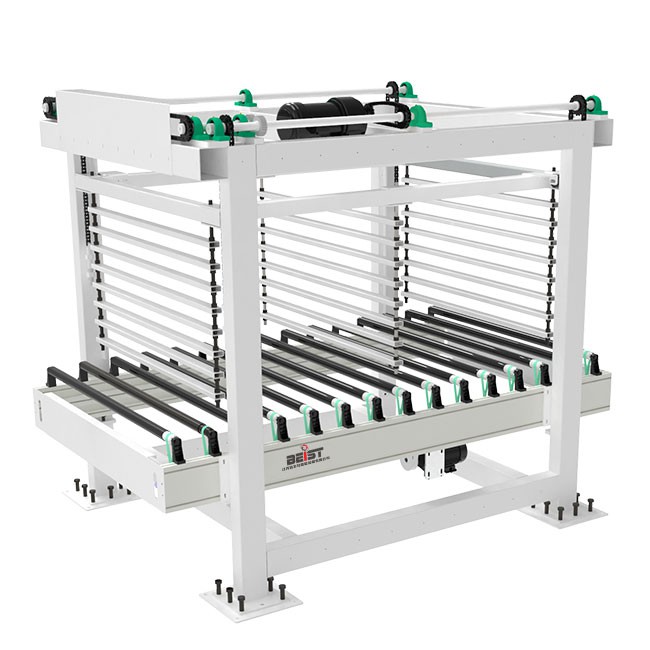
Selecting the right powered roller conveyor gap for a new conveyor system is a crucial decision that can significantly impact the efficiency, productivity, and overall performance of your material handling operations. As a dedicated powered roller conveyor - gap supplier, I understand the complexities involved in this process and am here to guide you through the key considerations.
Understanding the Basics of Powered Roller Conveyor Gaps
Before delving into the selection process, it's essential to understand what a powered roller conveyor gap is and why it matters. A powered roller conveyor gap refers to the space between adjacent rollers on a conveyor system. This gap plays a vital role in determining how well the conveyor can handle different types of products, including their size, shape, and weight.
The size of the gap affects several aspects of conveyor performance. For instance, a smaller gap is generally better for handling small or irregularly shaped items as it provides more support and reduces the risk of items falling through. On the other hand, a larger gap may be suitable for larger items or those with a flat bottom, as it allows for better air circulation and can reduce friction.
Factors to Consider When Selecting the Right Powered Roller Conveyor Gap
Product Characteristics
The first and most important factor to consider is the nature of the products that will be transported on the conveyor. You need to evaluate the size, shape, weight, and surface characteristics of your products. For example, if you are handling small, delicate items such as electronic components, a narrow gap of around 1 - 2 inches may be necessary to ensure stable transportation. In contrast, if you are dealing with large, heavy pallets, a wider gap of 4 - 6 inches or more might be appropriate.
The shape of the products also matters. Irregularly shaped items may require a smaller gap to prevent them from getting stuck or tipping over. Products with a smooth surface may need a different gap compared to those with a rough or textured surface, as the friction between the product and the rollers can vary.
Conveyor Speed
The speed at which the conveyor operates is another critical factor. Higher conveyor speeds generally require a smaller gap to maintain product stability. When the conveyor moves quickly, items are more likely to bounce or shift, and a narrow gap helps to keep them in place. Conversely, for slower - moving conveyors, a slightly larger gap may be acceptable.
Load Capacity
The weight of the products being transported determines the load capacity requirements of the conveyor. Heavier loads may need a stronger conveyor structure and a more appropriate gap size. A larger gap can sometimes reduce the overall support for heavy items, leading to potential damage to the products or the conveyor itself. Therefore, when dealing with high - load applications, it's important to choose a gap size that can distribute the weight evenly across the rollers.
Conveyor Layout
The layout of the conveyor system, including its length, width, and any curves or inclines, can influence the choice of gap size. In curved sections, a smaller gap may be needed to ensure that products can smoothly navigate the turn without getting caught. In inclined or declined conveyors, the gap size should be selected to prevent products from sliding or rolling uncontrollably.
Compatibility with Other Equipment
If your conveyor system is part of a larger material handling setup, you need to ensure that the powered roller conveyor gap is compatible with other equipment. For example, if you are using an Automatic Flip Machine or a Fully Automatic Gantry Manipulator in conjunction with the conveyor, the gap size should allow for seamless integration and smooth transfer of products between different machines.
Types of Powered Roller Conveyor Gaps and Their Applications
Narrow Gaps (1 - 2 inches)
Narrow gaps are ideal for handling small, lightweight, and irregularly shaped items. They are commonly used in industries such as electronics manufacturing, where precision and stability are crucial. In a printed circuit board assembly line, for example, a narrow - gap powered roller conveyor can safely transport delicate PCBs without causing any damage.
Medium Gaps (2 - 4 inches)
Medium gaps strike a balance between handling a variety of product sizes and providing sufficient support. They are suitable for a wide range of applications, including the food and beverage industry, where products of different shapes and sizes are often transported. In a bakery, a medium - gap conveyor can handle bread loaves, pastries, and other baked goods with ease.
Wide Gaps (4 - 6 inches or more)
Wide gaps are typically used for large, heavy items such as pallets and crates. They are commonly found in distribution centers and warehouses, where the focus is on moving large volumes of bulk goods efficiently. A wide - gap conveyor can also be beneficial in applications where air circulation is important, such as in the drying or cooling of products.
Customizing the Powered Roller Conveyor Gap
In many cases, standard gap sizes may not fully meet the specific requirements of your application. That's where customization comes in. As a powered roller conveyor - gap supplier, we offer the option to customize the gap size according to your unique needs. Our team of experts can work closely with you to understand your product characteristics, conveyor requirements, and overall operational goals.
We use advanced manufacturing techniques and high - quality materials to ensure that the customized conveyor gaps are durable, reliable, and precise. Whether you need a slightly different gap size or a completely unique design, we can deliver a solution that meets your exact specifications.
Maintenance and Safety Considerations
Once you have selected the right powered roller conveyor gap for your system, it's important to consider maintenance and safety. Regular maintenance, such as cleaning the rollers, checking for wear and tear, and lubricating moving parts, is essential to ensure the long - term performance of the conveyor.


Safety is also a top priority. The gap size should be chosen in a way that minimizes the risk of operators getting their fingers or clothing caught in the conveyor. Guarding and safety devices should be installed as needed to protect workers from potential hazards.
Making the Right Choice
Selecting the right powered roller conveyor gap is a multi - faceted decision that requires careful consideration of various factors. By understanding your product characteristics, conveyor speed, load capacity, layout, and compatibility with other equipment, you can make an informed choice that will optimize the performance of your conveyor system.
As a trusted powered roller conveyor - gap supplier, we are committed to providing you with the best solutions for your material handling needs. Our extensive experience and expertise in the industry allow us to offer high - quality products and personalized service.
If you are in the process of setting up a new conveyor system or looking to upgrade your existing one, we encourage you to contact us for a consultation. Our team will be happy to discuss your requirements in detail and help you select the perfect powered roller conveyor gap for your application. We look forward to the opportunity to work with you and contribute to the success of your business.
References
- Groover, M. P. (2010). Automation, Production Systems, and Computer - Integrated Manufacturing. Prentice Hall.
- Bahr, D. (2015). Conveyor Equipment and Technology Handbook. Industrial Press Inc.