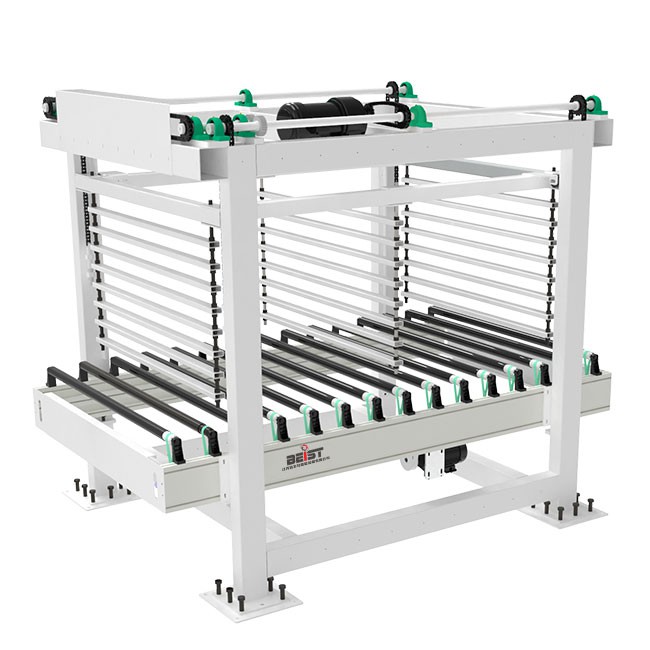
Hey there! As a supplier of Gravity Roller Conveyors, I've seen firsthand how a well - optimized conveyor layout can make a world of difference in a warehouse. In this blog, I'm gonna share some tips on how to optimize the layout of a gravity roller conveyor in a warehouse.
Understanding the Basics of Gravity Roller Conveyors
Before we dive into layout optimization, let's quickly go over what gravity roller conveyors are. These conveyors use gravity to move goods from one point to another. They're made up of a series of rollers mounted in a frame, and the slope of the conveyor allows items to roll down. They're super cost - effective and low - maintenance, which is why they're so popular in warehouses.
Analyze Your Warehouse Space
The first step in optimizing the layout is to have a good look at your warehouse. Measure the available space, take note of any obstacles like columns, doors, or existing equipment. You also need to consider the flow of goods in and out of the warehouse. Where do the shipments come in? Where are they supposed to go? Mapping out the entire process will give you a clear picture of how the conveyor should be laid out.
For example, if your warehouse receives a lot of inbound goods on one side and ships them out from the other, you might want to design a conveyor system that runs in a straight line from the receiving area to the shipping area. This minimizes the distance the goods have to travel and reduces the chances of congestion.


Determine the Load Requirements
Not all goods are created equal. Some are heavy, some are light, and some are oddly shaped. You need to know what kind of loads your conveyor will be handling. This will help you decide on the size, spacing, and material of the rollers.
If you're dealing with heavy loads, you'll need larger and more robust rollers with closer spacing. On the other hand, if the loads are light, you can get away with smaller rollers and wider spacing. This not only ensures the smooth movement of goods but also extends the lifespan of the conveyor.
Consider the Flow of Goods
The flow of goods is crucial in a warehouse. You want to make sure that the conveyor layout promotes a smooth and efficient flow. One way to do this is by using a combination of straight sections and curves. Curves can be used to change the direction of the conveyor without taking up too much space.
Another important aspect is the speed of the goods. You don't want the goods to move too fast or too slow. If they move too fast, there's a risk of damage. If they move too slow, it can cause bottlenecks. You can control the speed by adjusting the slope of the conveyor. A steeper slope will make the goods move faster, while a shallower slope will slow them down.
Incorporate Additional Equipment
Sometimes, a simple gravity roller conveyor isn't enough. You might need to incorporate additional equipment to enhance its functionality. For instance, you can use a Ball Transfer Table Conveyor at intersections or transfer points. These tables allow the goods to change direction easily and smoothly.
A Transfer Cart with Turntable can also be a great addition. It can be used to move goods between different levels or areas of the warehouse. This is especially useful in large warehouses where the conveyor system might not cover every corner.
Safety First
Safety should always be a top priority when designing a conveyor layout. Make sure there are enough safety guards around the conveyor to prevent workers from getting injured. Also, ensure that the conveyor is properly grounded to avoid static electricity build - up, which can be a fire hazard.
Mark the conveyor clearly with warning signs, especially at curves and intersections. This will help workers be more aware of the potential dangers and take necessary precautions.
Flexibility and Expandability
Warehouses are dynamic places. Your business might grow, or your product range might change. That's why it's important to design a conveyor layout that's flexible and expandable.
Choose a modular conveyor system that can be easily reconfigured or extended. This way, you won't have to tear down the entire conveyor system every time you need to make a change.
Maintenance Accessibility
Regular maintenance is essential to keep the conveyor running smoothly. When designing the layout, make sure there's enough space around the conveyor for maintenance workers to access it. This includes space for removing and replacing rollers, lubricating moving parts, and checking for any signs of wear and tear.
Cost - Benefit Analysis
Finally, don't forget to do a cost - benefit analysis. While it's important to have an optimized conveyor layout, you also need to make sure it's cost - effective. Consider the initial cost of the conveyor system, installation costs, maintenance costs, and the potential savings in terms of increased efficiency and reduced labor costs.
Conclusion
Optimizing the layout of a gravity roller conveyor in a warehouse is a complex but rewarding process. By following these tips, you can create a conveyor system that's efficient, safe, and cost - effective.
If you're interested in learning more about Unpowered Roller Conveyor or need help with designing a custom conveyor layout for your warehouse, don't hesitate to reach out. We're here to help you make the most of your warehouse space and improve your operations.
References
- "Warehouse Design and Management" by John A. Tompkins
- "Material Handling Handbook" by Arthur W. Halasz