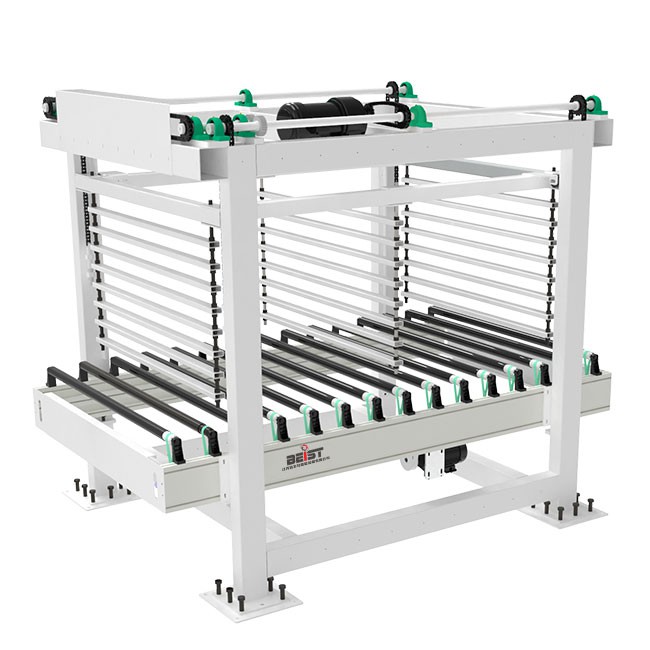
Hey there! As a supplier of Curved Roller Conveyors, I've seen firsthand how crucial it is to choose the right conveyor width. It can make or break the efficiency of your material handling system. So, let's dive into how you can pick the perfect width for your curved roller conveyor.
Understanding Your Needs
First things first, you gotta figure out what you're gonna use the conveyor for. What kind of products are you moving? Are they small, lightweight items like electronic components, or heavy, bulky stuff like large machinery parts? The size and weight of your products play a huge role in determining the conveyor width.
If you're dealing with small items, a narrower conveyor might do the trick. It'll save you space and keep the products in line. But if you're moving big, heavy items, you'll need a wider conveyor to provide enough support and stability. You don't want your products tipping over or getting stuck on the way.
Considering the Flow Rate
Another important factor is the flow rate. How many products do you need to move per minute or hour? If you have a high flow rate, you'll probably need a wider conveyor to accommodate all the products. A narrow conveyor might get congested, causing delays and inefficiencies.
On the other hand, if your flow rate is low, a narrower conveyor could be sufficient. It'll be more cost - effective and take up less space in your facility. You can also adjust the speed of the conveyor to match your flow rate, but the width still matters.
Space Constraints
Let's talk about the space you have available. You might have a limited area in your warehouse or production line where the conveyor needs to fit. In this case, you have to be smart about choosing the width. You don't want to pick a conveyor that's too wide and ends up blocking walkways or other equipment.
Measure the available space carefully and consider any obstacles or clearance requirements. You might need to go for a narrower conveyor if space is tight, even if it means sacrificing a bit of flow rate. But don't worry, there are often ways to optimize the design to make the most of the space you have.
Compatibility with Other Equipment
Your curved roller conveyor won't work in isolation. It'll need to be connected to other equipment like Ball Transfer Table Conveyor, straight conveyors, or Transfer Cart with Turntable. The width of the conveyor should be compatible with these other pieces of equipment.
For example, if you're connecting the curved conveyor to a straight conveyor, the widths should match as closely as possible to ensure a smooth transfer of products. Otherwise, you might have issues with products getting stuck or falling off at the connection point.


Product Stability and Alignment
When products are moving on a curved roller conveyor, they need to stay stable and properly aligned. A wider conveyor can provide more support for larger products, reducing the risk of tipping or misalignment. However, if the conveyor is too wide for the products, they might shift around and cause problems.
You need to find the right balance. Consider the shape and center of gravity of your products. For irregularly shaped products, you might need a wider conveyor or additional guides to keep them in place.
Cost - Benefit Analysis
Of course, cost is always a factor. A wider conveyor generally costs more than a narrower one. You need to weigh the benefits of a wider conveyor, such as increased flow rate and better product support, against the additional cost.
Think about the long - term savings and efficiency gains. If a wider conveyor can help you increase productivity and reduce downtime, it might be worth the extra investment. But if you can achieve your goals with a narrower conveyor at a lower cost, that's a great option too.
Testing and Prototyping
Before making a final decision, it's a good idea to do some testing and prototyping. You can build a small - scale model of the conveyor system with different widths and see how your products perform. This will give you a real - world idea of what works best.
You can also simulate the conveyor operation using software. This can help you analyze the flow of products, identify potential bottlenecks, and make adjustments to the width and other parameters.
Conclusion
Choosing the right conveyor width for a curved roller conveyor is a complex but important decision. You need to consider factors like the size and weight of your products, the flow rate, space constraints, compatibility with other equipment, product stability, and cost.
If you're still not sure which width is right for your application, don't hesitate to reach out. As a Curved Roller Conveyor supplier, we have the expertise and experience to help you make the best choice. You can check out our Curved Roller Conveyor options and get in touch with us to discuss your specific needs. We're here to assist you in creating an efficient and reliable material handling system.
References
- Material Handling Handbook: This comprehensive guide provides in - depth information on conveyor systems, including factors to consider when choosing conveyor widths.
- Industry research reports on material handling equipment: These reports offer insights into the latest trends and best practices in conveyor design and selection.