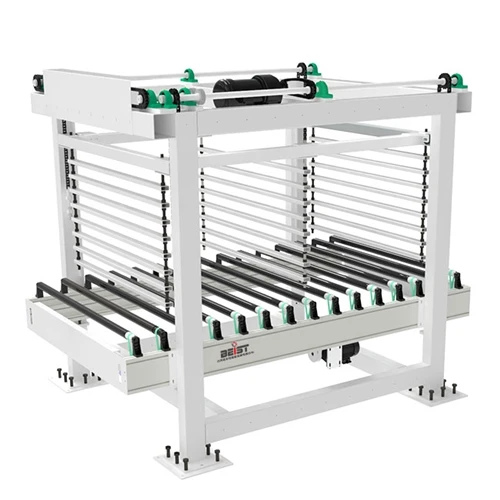
As a supplier of Gravity Roller Conveyors, I often get asked whether our conveyors can be used for textile product transportation. In this blog post, I'll explore this question in detail, discussing the features of gravity roller conveyors, the requirements of textile product transportation, and how well the two match up.
Understanding Gravity Roller Conveyors
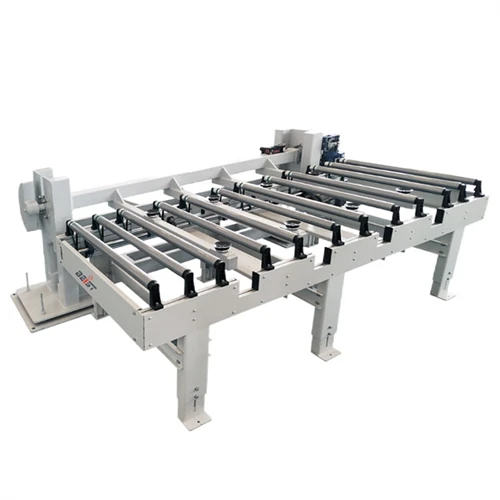
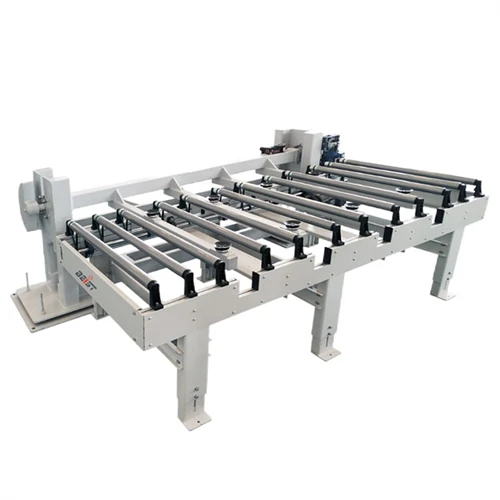
Gravity roller conveyors are a type of material handling equipment that rely on gravity to move items along a path. They consist of a series of rollers mounted on a frame, and the slope of the conveyor allows products to roll from one end to the other without the need for external power sources. This simplicity makes them cost - effective, easy to install, and low - maintenance.
One of the key advantages of gravity roller conveyors is their flexibility. They can be customized in terms of length, width, roller spacing, and slope to suit different applications. For instance, if you need to move large, heavy items, you can choose a conveyor with wider rollers and closer spacing. On the other hand, for smaller, lighter products, a conveyor with narrower rollers and wider spacing might be more appropriate.
Requirements for Textile Product Transportation
Textile products, such as fabrics, garments, and yarns, have unique characteristics that need to be considered during transportation. Firstly, textiles are often delicate and can be easily damaged by rough handling. They may snag on sharp edges, get wrinkled, or have their colors rubbed off. Therefore, any transportation system used for textiles must be gentle on the products.
Secondly, textiles come in various shapes and sizes. Some may be long, flat bolts of fabric, while others may be folded garments or skeins of yarn. The conveyor system should be able to accommodate these different forms without causing jams or disruptions.
Thirdly, in a textile manufacturing or distribution environment, there may be a need for a conveyor system that can handle high - volume throughput. This means that the conveyor should be able to move a large number of textile products efficiently within a given time frame.


Can Gravity Roller Conveyors Meet the Requirements?
Gentle Handling
Gravity roller conveyors can be designed to provide gentle handling of textile products. The smooth surface of the rollers minimizes the risk of snagging. By choosing rollers with a soft coating or using non - abrasive materials, the potential for damage to the textiles can be further reduced. Additionally, the slow and steady movement of products on a gravity roller conveyor helps prevent excessive jostling and wrinkling.
Accommodating Different Shapes and Sizes
The flexibility of gravity roller conveyors allows them to handle a wide range of textile product shapes and sizes. For long bolts of fabric, a conveyor with a long and narrow design can be used. Folded garments can be transported on conveyors with appropriate roller spacing to prevent them from getting caught. Even skeins of yarn can be moved smoothly if the conveyor is set up correctly.
If you need to change the direction of the textile products' movement, a Curved Roller Conveyor can be incorporated into the system. This type of conveyor allows for smooth turns without causing any damage to the products.
High - Volume Throughput
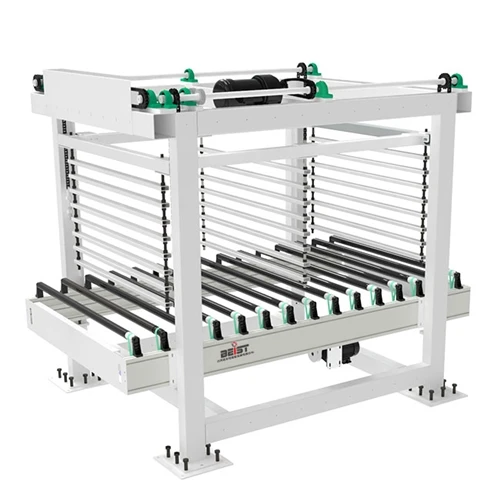
Gravity roller conveyors can be configured to handle high - volume throughput. By increasing the length and width of the conveyor, more products can be placed on it at once. Multiple lanes of conveyors can also be used in parallel to increase the overall capacity. In addition, if there is a need to transfer products between different levels or cross over other conveyor lines, a Conveyor Crossover Bridge can be installed. This ensures a continuous flow of textile products in a large - scale operation.
Case Studies
Let's take a look at some real - world examples of how gravity roller conveyors are used in textile product transportation.
In a textile manufacturing plant, a gravity roller conveyor was used to transport bolts of fabric from the weaving area to the dyeing section. The conveyor was designed with a gentle slope and soft - coated rollers to prevent any damage to the delicate fabrics. The long length of the conveyor allowed for a continuous flow of products, and the wide width could accommodate multiple bolts at once. This increased the efficiency of the production process and reduced the risk of fabric damage.
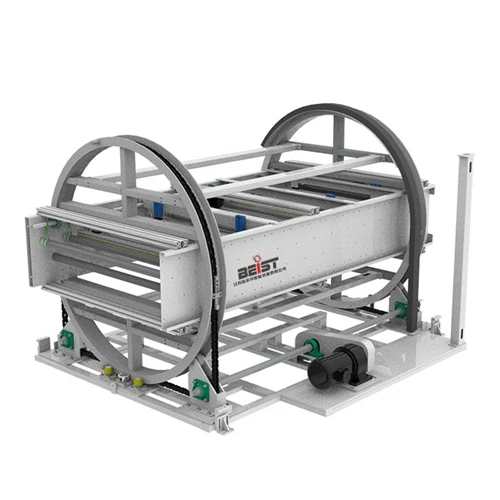
In a garment distribution center, gravity roller conveyors were used to move folded garments from the packing area to the shipping docks. The conveyors were equipped with adjustable roller spacing to handle different sizes of garments. A Roller Transfer Cart On Rail was also used to transfer large batches of garments between different conveyor sections, ensuring a smooth and efficient flow of products.
Limitations and Considerations
While gravity roller conveyors have many advantages for textile product transportation, there are also some limitations. One of the main limitations is that they rely on gravity, so they require a certain slope to function. In some situations, it may not be possible to create the necessary slope due to space constraints or building layout.
Another consideration is that gravity roller conveyors may not be suitable for very lightweight textile products. If the products are too light, they may not have enough momentum to move along the conveyor, especially if there is any friction or resistance.
In addition, in a humid environment, there is a risk of corrosion on the rollers and frames of the conveyor. Therefore, appropriate materials and coatings should be selected to prevent this from happening.
Conclusion
In conclusion, gravity roller conveyors can be an excellent choice for textile product transportation. They offer gentle handling, can accommodate different shapes and sizes of textile products, and can be configured for high - volume throughput. However, it is important to consider the specific requirements of your textile operation, such as space limitations, product weight, and environmental conditions.
If you are in the textile industry and are looking for a reliable and cost - effective solution for transporting your products, I encourage you to consider our gravity roller conveyors. We have a team of experts who can work with you to design a customized conveyor system that meets your exact needs. Contact us to start a discussion about your requirements and explore how our gravity roller conveyors can enhance your textile product transportation process.
References
- "Material Handling Handbook", John A. White, John Wiley & Sons
- "Textile Manufacturing Processes", P. N. Rangarajan, Woodhead Publishing