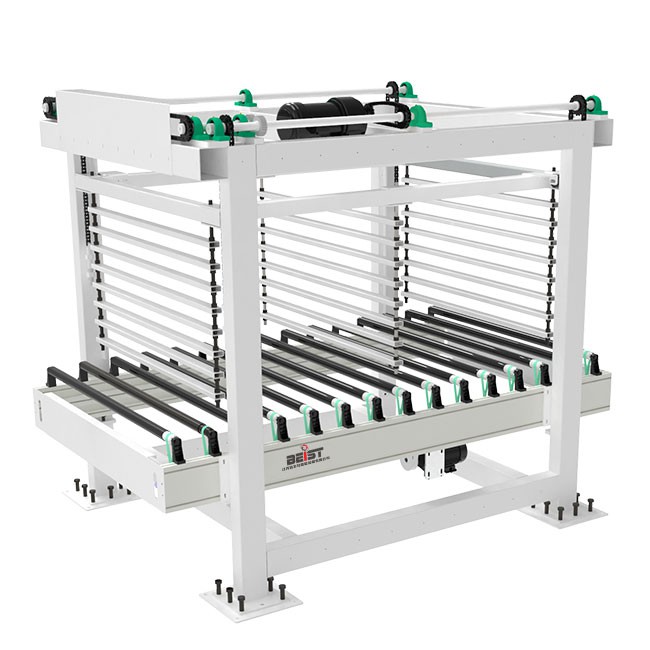
Hey there! As a supplier of unpowered roller conveyors, I often get asked about the cost differences between various types. Well, let me break it down for you.
First off, we need to understand what unpowered roller conveyors are. They're simple yet effective systems that rely on gravity or manual force to move goods along. These conveyors are widely used in warehouses, distribution centers, and manufacturing plants because they're low - maintenance and relatively inexpensive compared to powered conveyors.
Let's start with the basic gravity roller conveyor. This is probably the most common type you'll come across. It's super straightforward, just a series of rollers on a frame. Since it's so simple in design, the cost is relatively low. The materials used are usually standard steel, and the manufacturing process isn't overly complicated. You can get a basic gravity roller conveyor for a pretty decent price, especially if you're looking for a small - scale setup. For example, if you have a small workshop and just need to move light boxes from one point to another, a gravity roller conveyor could be your go - to option.
Now, let's talk about the Pneumatic Roller Conveyor. This type of conveyor uses air pressure to assist in the movement of goods. It's a bit more advanced than the basic gravity conveyor. The pneumatic system adds to the complexity, and hence, the cost. You've got to factor in the cost of the pneumatic components, like the air cylinders and valves, as well as the installation of the air supply system. But the advantage is that it can handle heavier loads and provide a more controlled movement compared to a basic gravity conveyor. If you're dealing with larger or more delicate items that need a bit more of a gentle push, the pneumatic roller conveyor might be worth the extra investment.
Another interesting type is the Air Flotation Table Conveyor. This one works on a different principle. It uses a thin layer of air to float the items on the conveyor surface. This greatly reduces friction, allowing for smooth movement of goods. The technology behind it is quite unique. You need a special chamber to generate the air pressure and a flat surface that can distribute the air evenly. The cost of an air flotation table conveyor is higher due to these specialized components. However, it's ideal for applications where you can't afford any scratches or damage to the products being transported, like in the electronics or glass industries.


Then there's the Conveyor Crossover Bridge. This is designed to allow conveyors to cross over each other in a facility. It's a bit of a niche product, but it can be extremely useful in large warehouses or manufacturing plants where space is at a premium. The cost of a conveyor crossover bridge is influenced by its size, the materials used, and the complexity of the design to ensure smooth transfer of goods across the bridge. Since it often needs to be custom - built to fit the specific layout of the facility, the price can vary quite a bit.
So, what are the factors that really affect the cost of these different types of unpowered roller conveyors?
Materials
The type of materials used plays a huge role. Most conveyors are made of steel, but there are different grades of steel. Higher - quality steel will cost more but will also be more durable and corrosion - resistant. Some conveyors might use aluminum, which is lighter and can be a good option for certain applications, but it also comes at a different price point.
Capacity
The weight capacity of the conveyor is crucial. A conveyor that can handle heavier loads will typically cost more. That's because it needs stronger materials and a more robust design to support the weight without any risk of failure.
Length and Width
Longer and wider conveyors require more materials and more labor to manufacture and install. So, it's no surprise that they'll be more expensive. If you need a conveyor that spans a large area or has a wide surface to accommodate big items, you'll be looking at a higher cost.
Customization
As mentioned earlier, custom - built conveyors cost more. If you need a conveyor with specific features, like a certain angle, a special shape, or unique attachments, the manufacturer will have to put in more time and resources to make it happen. This customization adds to the overall price.
In summary, there are significant differences in the cost of different types of unpowered roller conveyors. The basic gravity roller conveyor is the most budget - friendly option, while more advanced types like the pneumatic roller conveyor, air flotation table conveyor, and conveyor crossover bridge come with a higher price tag due to their specialized features and technology.
If you're in the market for an unpowered roller conveyor, it's important to think about your specific needs. Consider the type of goods you'll be transporting, the volume of traffic, the available space in your facility, and your budget. Don't just go for the cheapest option if it won't meet your requirements. On the other hand, don't overspend on features you don't really need.
If you're interested in learning more about our unpowered roller conveyors or want to get a quote, feel free to reach out. We're here to help you find the best conveyor solution for your business. Whether you're a small startup or a large - scale enterprise, we've got the expertise and the products to meet your needs. Let's have a chat and see how we can work together to improve your material handling processes.
References
- General knowledge of conveyor systems from industry experience
- Technical specifications of unpowered roller conveyors from product development and manufacturing processes