


Selecting a suitable hydraulic scissor lift table is critical to matching your production workflow, improving efficiency, and ensuring long-term safety. This step-by-step guide helps buyers pick the ideal model based on actual working conditions.
1. Confirm Rated Load Capacity
First, define the maximum weight of materials or workpieces you need to lift.
● Calculate the total load including goods, pallets, and accessories.
● Reserve a safety margin: choose a model with a rated capacity 20% higher than your actual working load.
● Common options: 500kg, 1 ton, 2 tons, 3 tons; heavy-duty customized versions up to 5 tons for lumber and large industrial materials.
2. Determine Lifting Height & Platform Size
Match dimensions to your workshop layout and processing machines.
● Lifting Height: Measure the required vertical distance between ground and your working station. Select standard or high-lift double scissor models accordingly.
● Platform Size: Customize length and width based on your workpieces, such as wood panels, pallets and bulk materials. Avoid oversized or undersized platforms that affect operation.
● Note: Keep enough overhead clearance to prevent safety hazards when fully lifted.
3. Select Structure Type (Fixed or Mobile)
Choose the type according to mobility demands:
● Fixed scissor lift table: Best for fixed workstations, production lines and long-term matching with woodworking machines. Features higher stability and larger load capacity.
● Mobile scissor lift table: Equipped with universal wheels and brakes. Ideal for multi-station material turnover, temporary operation and small workshops needing flexible movement.
4. Check Stability & Anti-Shake Performance
Stability is essential for fragile materials like wood panels and precision processing.
● Prioritize models with shaking angle ≤0.5° for high-precision production.
● Double scissor structure offers better balance than single scissor design, recommended for frequent heavy-load use.
● Anti-slip platform surface is a must to prevent workpiece sliding during lifting.
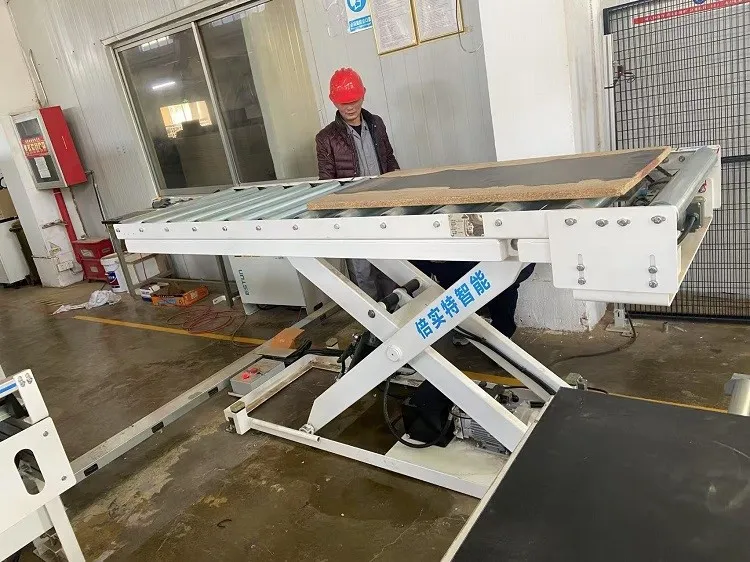

5. Evaluate Hydraulic System & Durability
The hydraulic system decides service life and failure rate.
● Look for double-loop overload protection valves and 40MPa high-pressure hoses to resist overload and leakage.
● Oil temperature control system is necessary for 24/7 non-stop continuous operation.
● Adopt thickened steel plates and robotic welding for scissor arms to guarantee structural durability.
6. Match Control & Safety Configurations
Select control modes and safety devices based on automation level and local regulations.
● Basic use: Foot pedal + emergency stop button, compliant with OSHA standards.
● Automated production lines: Choose infrared sensors and optional PLC control for automatic height adjustment and line linkage.
● For special environments: Add explosion-proof configuration (ATEX) for chemical workshops.
7. Consider Working Environment & Material
Adjust specifications for different workshop conditions:
● Humid/dusty workshops (woodworking): Epoxy resin anti-rust coating is required to avoid corrosion.
● Harsh industrial areas: Upgrade to thicker steel and wear-resistant components.
● Food & pharmaceutical industries: Select stainless steel parts and easy-to-clean structure.
8. Review Customization & After-Sales Service
● If you have special size, height or function demands, pick a supplier with high customization capability.
● Verify certification (CE, UL, ISO9001) for cross-border trade.
● Confirm warranty period, maintenance policy and after-sales response speed, especially for overseas projects.
https://www.jsbeist.com/hydraulic-lift-table/


