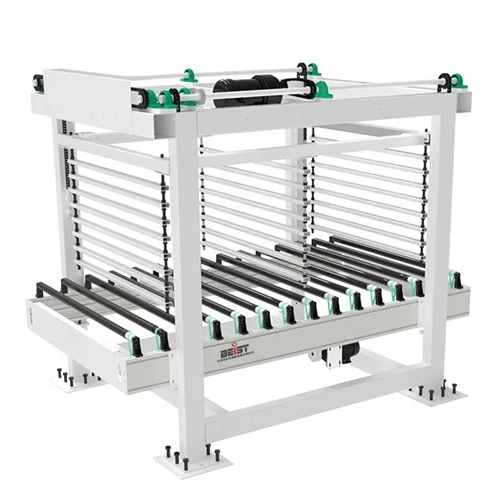
When it comes to industrial equipment, safety is of paramount importance. As a supplier of lift tables with conveyor tops, I understand the critical role that safety features play in ensuring the well - being of workers and the smooth operation of businesses. In this blog post, I will discuss the essential safety features that a lift table with a conveyor top should have.
1. Overload Protection
One of the most fundamental safety features for a lift table with a conveyor top is overload protection. Overloading a lift table can lead to serious accidents, including structural failure, tipping, and damage to the equipment. Our Conveyor Top Hydraulic Lift Table is equipped with advanced overload protection systems. These systems use sensors to detect when the weight on the lift table exceeds its rated capacity. Once an overload is detected, the system immediately stops the lifting or lowering operation, preventing any potential damage or safety hazards. This not only protects the equipment but also ensures the safety of the operators and the surrounding environment.
2. Emergency Stop Button
An emergency stop button is a must - have safety feature for any industrial equipment, and lift tables with conveyor tops are no exception. In case of an emergency, such as a malfunction, a worker getting caught in the conveyor, or any other dangerous situation, the operator can quickly press the emergency stop button. This will immediately halt all operations of the lift table and the conveyor, preventing further harm. Our lift tables are designed with highly visible and easily accessible emergency stop buttons. They are located in multiple positions around the lift table, ensuring that the operator can reach them quickly from any angle.
3. Safety Rails
Safety rails are essential for preventing workers from accidentally falling off the lift table. They act as a physical barrier, providing a safe working area for the operators. Our lift tables are equipped with sturdy safety rails that are designed to meet or exceed industry standards. The rails are made of high - quality materials and are securely attached to the lift table. They are also adjustable in some models, allowing for customization based on the specific needs of the application. For example, in some work environments where large items need to be loaded or unloaded, the safety rails can be adjusted to provide more space while still maintaining a high level of safety.
4. Anti - Slip Surface
The surface of the lift table and the conveyor top should have an anti - slip feature. Workers often need to walk on the lift table or stand near the conveyor while loading or unloading materials. A slippery surface can lead to slips, trips, and falls, which can cause serious injuries. Our lift tables are designed with an anti - slip surface that provides excellent traction. This surface is resistant to oil, grease, and other contaminants, ensuring that it remains effective even in harsh industrial environments. Whether it's a wet or dirty work area, the anti - slip surface helps to keep the workers safe.
5. Limit Switches
Limit switches are used to control the maximum and minimum height of the lift table. They prevent the lift table from going beyond its designed operating range, which can cause damage to the equipment and pose a safety risk. Our lift tables are equipped with precision limit switches that are calibrated to ensure accurate height control. When the lift table reaches its maximum or minimum height, the limit switch will automatically stop the lifting or lowering operation. This feature is crucial for maintaining the structural integrity of the lift table and preventing any potential accidents.
6. Conveyor Safety Guards
The conveyor on the lift table is a moving part that can pose a significant safety hazard. Conveyor safety guards are used to protect workers from getting caught in the conveyor belts, rollers, or other moving components. Our Conveyor Lifting Table with Forklift is designed with comprehensive conveyor safety guards. These guards are made of strong materials and are designed to cover all the exposed moving parts of the conveyor. They are also easy to remove for maintenance purposes, but they are securely in place during normal operation to ensure maximum safety.
7. Locking Mechanisms
Locking mechanisms are important for keeping the lift table in a stable position when it is not in use or when it is at a specific height. Our lift tables are equipped with reliable locking mechanisms that prevent the lift table from accidentally moving or lowering. This is especially important when workers are loading or unloading heavy materials on the lift table. The locking mechanisms ensure that the lift table remains stationary, providing a safe and stable working platform.
8. Safety Interlocks
Safety interlocks are used to ensure that certain operations can only be carried out under specific conditions. For example, the conveyor may be interlocked with the lift table so that the conveyor can only operate when the lift table is at a certain height or in a specific position. This helps to prevent dangerous situations where the conveyor may start moving when the lift table is not properly positioned. Our lift tables are designed with advanced safety interlock systems that are carefully engineered to provide maximum safety and operational efficiency.
9. Warning Labels and Signage
Clear and visible warning labels and signage are essential for communicating important safety information to the operators. Our lift tables are marked with a variety of warning labels, including information about the maximum load capacity, the proper operating procedures, and potential safety hazards. These labels are made of durable materials and are designed to withstand the harsh industrial environment. They are also placed in prominent positions on the lift table, ensuring that the operators can easily see and understand them.


10. Hydraulic Safety Valves
Since many lift tables with conveyor tops are hydraulic - operated, hydraulic safety valves are crucial for maintaining the safety of the system. Hydraulic safety valves are designed to prevent over - pressurization of the hydraulic system. In case of a sudden increase in pressure, the safety valve will open and release the excess pressure, preventing damage to the hydraulic components and the lift table. Our lift tables are equipped with high - quality hydraulic safety valves that are regularly tested to ensure their reliability.
In conclusion, a lift table with a conveyor top should be equipped with a comprehensive set of safety features to ensure the safety of the workers and the proper functioning of the equipment. As a supplier, we are committed to providing high - quality lift tables that meet or exceed industry safety standards. If you are in the market for a lift table with a conveyor top, we invite you to contact us for more information. Our team of experts can help you choose the right lift table for your specific needs and ensure that it is equipped with all the necessary safety features.
References
- Industrial Safety Standards for Lift Tables and Conveyors. Occupational Safety and Health Administration (OSHA).
- Best Practices for Safety in Material Handling Equipment. Material Handling Industry of America (MHIA).