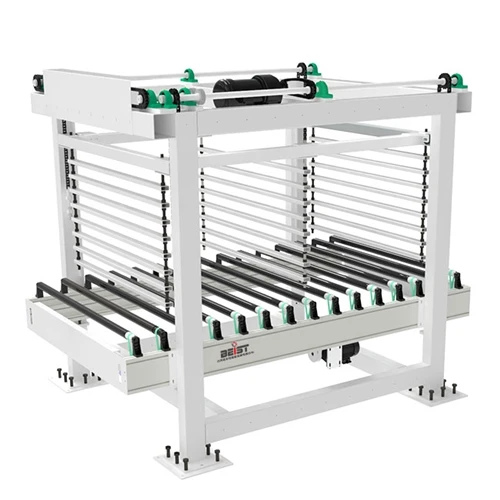
As a supplier of Lift Table with Conveyor Top, I often get asked about the precision of the conveyor movement on these nifty pieces of equipment. It's not just a random question; the precision of conveyor movement is crucial for a whole bunch of industries that rely on these lift tables to move goods efficiently and safely.
Let's start by understanding what we mean by "precision" in the context of a conveyor on a lift table. Precision here refers to how accurately the conveyor can move items at a set speed, stop at the right position, and maintain a consistent path. In a manufacturing or distribution setting, even a small deviation in these aspects can lead to big problems. For example, if the conveyor moves too fast or too slow, it can cause products to collide, get damaged, or even fall off the table. And if it doesn't stop precisely at the loading or unloading point, it can disrupt the entire workflow.
So, what factors affect the precision of the conveyor movement on a lift table? Well, there are quite a few, and I'll break them down for you.
Motor and Drive System
The motor and drive system are like the heart and soul of the conveyor. They're what make it move, and their quality and design have a huge impact on precision. A high - quality motor with good torque control can ensure that the conveyor starts and stops smoothly, without any sudden jerks. Variable frequency drives (VFDs) are often used in modern lift tables with conveyor tops. These drives allow you to adjust the speed of the conveyor precisely, which is great for different types of products and processes. For instance, if you're moving fragile items, you can set the conveyor to a slow and steady speed. On the other hand, for more robust products, you can increase the speed to boost productivity.
Conveyor Belt or Roller Design
The type of conveyor belt or rollers used also plays a significant role in precision. A well - made conveyor belt with a high coefficient of friction can grip the products better, preventing them from slipping during movement. This is especially important when the lift table is at an angle or when the conveyor is accelerating or decelerating. Rollers, on the other hand, need to be evenly spaced and have a smooth surface. Any unevenness in the roller spacing or surface can cause the products to wobble or veer off course.
Control System
The control system is the brain of the operation. It's responsible for coordinating the movement of the lift table and the conveyor. A good control system will have sensors that can detect the position of the products on the conveyor, the height of the lift table, and other important parameters. Based on this information, it can make real - time adjustments to the conveyor speed and direction. For example, if the sensor detects that a product is approaching the end of the conveyor, it can slow down the conveyor to ensure a smooth stop.
Mechanical Alignment
Proper mechanical alignment is essential for precise conveyor movement. The conveyor needs to be aligned correctly with the lift table and any other equipment it's connected to. If the conveyor is misaligned, it can cause uneven wear on the belt or rollers, and the products may not move in a straight line. Regular maintenance and calibration are necessary to keep the mechanical alignment in check.
Now, let's talk about how we, as a supplier of Lift Table with Conveyor Top, ensure high precision in our products.
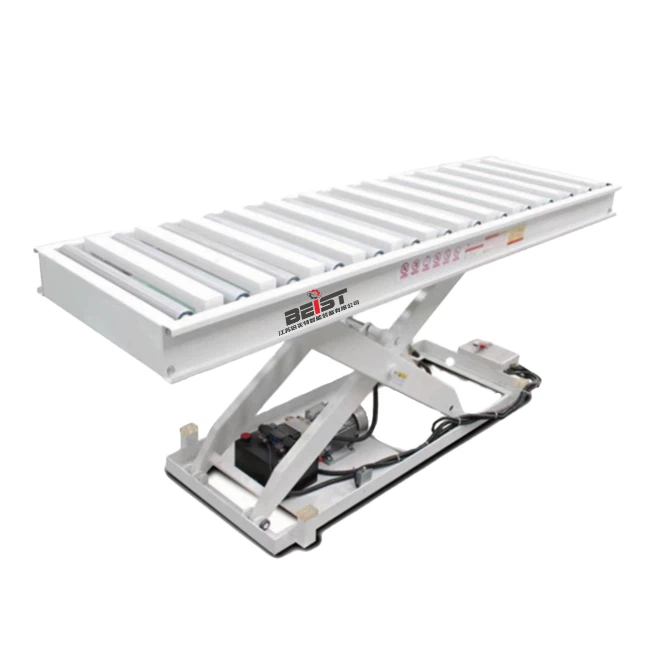

We use only top - of - the - line motors and drive systems. Our motors are carefully selected for their reliability and torque control capabilities. The VFDs we install allow for fine - tuning of the conveyor speed, giving our customers the flexibility they need for different applications.
When it comes to the conveyor belt or rollers, we source high - quality materials. Our belts are designed to have the right amount of flexibility and friction, and our rollers are machined to exacting standards. This ensures that the products move smoothly and accurately on the conveyor.
Our control systems are state - of - the - art. They're programmed to handle a wide range of scenarios and can be customized to meet the specific needs of our customers. The sensors we use are highly sensitive and accurate, providing real - time data for precise control.
And of course, we pay close attention to mechanical alignment during the manufacturing process. Our technicians use advanced tools and techniques to ensure that every lift table with a conveyor top is perfectly aligned before it leaves our factory.
But don't just take my word for it. We have customers in various industries, from food processing to automotive manufacturing, who have seen the benefits of our high - precision lift tables with conveyor tops. For example, in the food processing industry, where hygiene and precision are of the utmost importance, our Lifting Table with Roller Conveyor has been a game - changer. It allows for gentle handling of food products, reducing the risk of damage and contamination.
In the automotive industry, our Conveyor Lifting Table with Forklift has helped streamline the assembly process. The precise movement of the conveyor ensures that parts are delivered exactly where they need to be, when they need to be there.
If you're in the market for a Lift Table with Conveyor Top, you need to consider the precision of the conveyor movement. It's not just a nice - to - have feature; it's a necessity for efficient and safe operations. And if you're looking for a supplier that can deliver high - precision products, look no further. We've got the experience, the technology, and the commitment to quality to meet your needs.
Whether you're a small business just starting out or a large corporation looking to upgrade your equipment, we can work with you to find the right solution. We offer a range of customization options, so you can get a lift table with a conveyor top that's tailored to your specific requirements.
So, if you're ready to take your operations to the next level with a high - precision Lift Table with Conveyor Top, don't hesitate to get in touch. We'd love to have a chat with you about your needs and show you how our products can make a difference.
References
- Industry standards for conveyor movement precision
- Case studies of successful implementations of lift tables with conveyor tops in various industries
- Technical specifications of motors, drive systems, conveyor belts, and rollers used in lift tables with conveyor tops