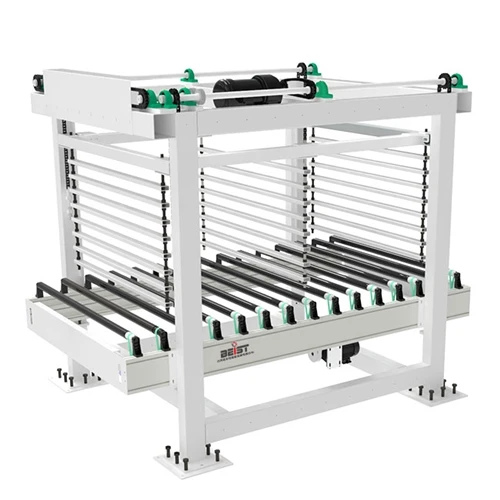
Calculating the required powered roller conveyor gap for a specific application is a crucial step in ensuring the efficient and reliable operation of your material handling system. As a powered roller conveyor - gap supplier, I understand the importance of getting this calculation right. In this blog post, I'll guide you through the key factors and steps involved in calculating the appropriate conveyor gap for your needs.
Understanding the Basics of Powered Roller Conveyor Gap
The gap between powered rollers in a conveyor system plays a significant role in determining how well the system can handle different types of products. A too - large gap may cause small items to fall through or get stuck, while a too - small gap can lead to unnecessary friction and increased wear on the rollers.
Factors Affecting the Conveyor Gap Calculation
Product Size and Shape
The dimensions and shape of the products being conveyed are the primary factors to consider. For rectangular or square products, the minimum gap should be smaller than the smallest side of the product. For example, if you are conveying boxes with a minimum side length of 50 mm, the gap between the rollers should be less than 50 mm to prevent the boxes from falling through.
For irregularly shaped products, such as spherical or cylindrical items, the gap needs to be carefully calculated based on the diameter or the smallest cross - sectional dimension. If you are moving balls with a diameter of 30 mm, the gap should be less than 30 mm.
Product Weight
The weight of the products also influences the gap calculation. Heavier products may require a smaller gap to ensure proper support and prevent sagging between rollers. If the gap is too large, heavy products may cause excessive deflection of the conveyor belt or damage to the rollers.

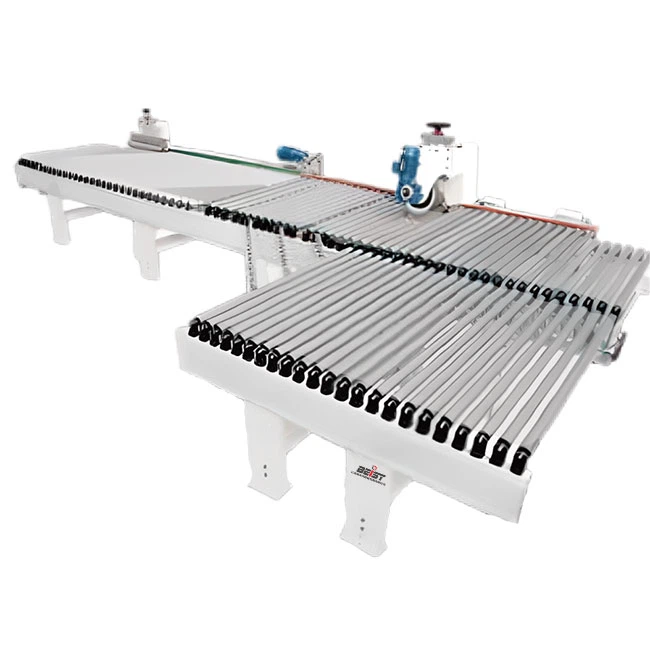
Conveyor Speed
Higher conveyor speeds generally call for a smaller gap. At high speeds, products are more likely to bounce or shift, and a smaller gap can help keep the products stable on the conveyor. For instance, in a high - speed sorting conveyor, a narrow gap may be necessary to prevent items from flying off or misaligning.
Step - by - Step Calculation Process
Step 1: Measure the Product Dimensions
Accurately measure the length, width, and height of the products, as well as any irregular features. If you have a variety of products, use the smallest dimensions among them for the initial calculation.
Step 2: Consider the Product Weight
Determine the weight of the products. If the weight varies widely, consider the heaviest product in the range. You can use the material density and volume of the product to estimate its weight if it is not already known.
Step 3: Evaluate the Conveyor Speed
Find out the desired or expected speed of the conveyor. This information can be based on production requirements or existing system performance metrics.
Step 4: Calculate the Minimum Gap
Based on the product size, start by choosing a gap that is at least 10% - 20% smaller than the smallest dimension of the product. For example, if the smallest dimension of a product is 100 mm, a gap in the range of 80 - 90 mm could be a good starting point.
However, if the product is heavy or the conveyor speed is high, further reduce the gap. You may need to conduct some tests to find the optimal gap. Place a sample of the products on the conveyor with different gap settings and observe their movement.
Step 5: Account for Other Factors
There are other factors to consider, such as the type of packaging the product is in. If the product has a soft or flexible packaging, it may deform more easily and require a smaller gap. Additionally, if the conveyor is used in a wet or dirty environment, a slightly larger gap may be needed to prevent debris from getting stuck between the rollers.
Examples of Applications and Gap Calculations
Application 1: Conveying Small Electronic Components
Suppose you are conveying small electronic components with dimensions of 10 mm x 15 mm x 5 mm. Since the smallest dimension is 5 mm, a safe starting gap could be around 3 - 4 mm. Given the small size and light weight of these components, and assuming a moderate conveyor speed, this gap will prevent the components from falling through and ensure smooth movement.
Application 2: Moving Heavy Boxes
If you are dealing with heavy boxes that weigh over 50 kg and have dimensions of 500 mm x 400 mm x 300 mm, a smaller gap is required due to the weight. Start with a gap of around 100 - 120 mm, even though the smallest side of the box is 300 mm. Test the conveyor with the actual boxes to see if any further adjustment is needed.
Our Products and Their Suitability
As a powered roller conveyor - gap supplier, we offer a wide range of solutions to meet different application needs. Our products are designed with precision to ensure the optimal gap for various types of products.
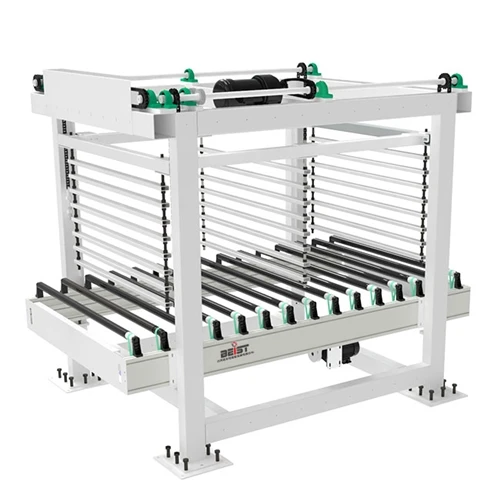
We have Carbon Steel Belt Conveyor which is suitable for heavy - duty applications. The strong structure of the carbon steel can withstand high - weight products, and we can customize the roller gap according to your product requirements.
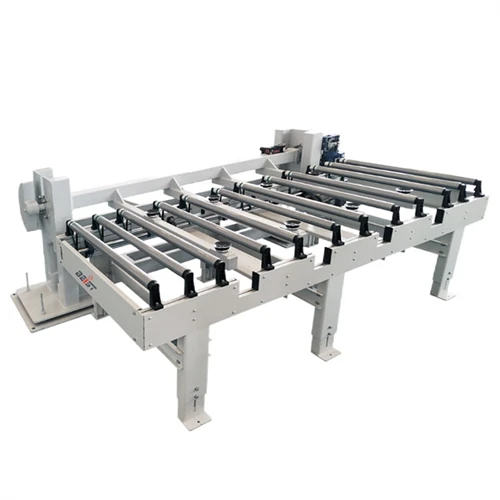
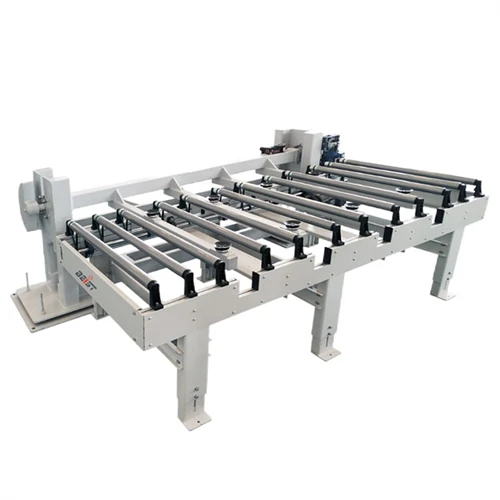
Our 90 Degree Cone - roller Type Turning Machine is a great choice when you need to change the direction of your conveyor. The cone - roller design allows for smooth turning, and we can adjust the gap to accommodate different product sizes during the turning process.
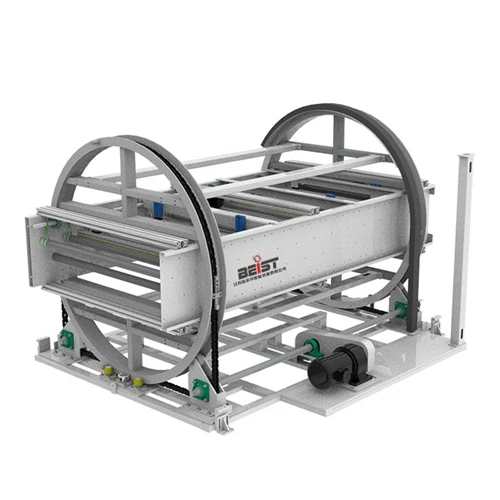
For applications where product orientation needs to be changed, our Turnover Conveyor is an excellent option. We can set the appropriate roller gap to ensure that the products are turned over safely and efficiently.
Conclusion
Calculating the required powered roller conveyor gap is a multi - faceted process that requires careful consideration of product size, weight, conveyor speed, and other environmental factors. By following the steps outlined in this blog post, you can determine the optimal gap for your specific application.
If you are in the process of setting up a new conveyor system or looking to upgrade an existing one, we are here to help. Our team of experts can provide you with in - depth advice and solutions tailored to your needs. We invite you to contact us to discuss your requirements and start the procurement process. We are confident that our powered roller conveyor - gap solutions will enhance the efficiency and reliability of your material handling operations.
References
- "Material Handling Handbook" by the Material Handling Institute
- Industry standards and guidelines for conveyor systems