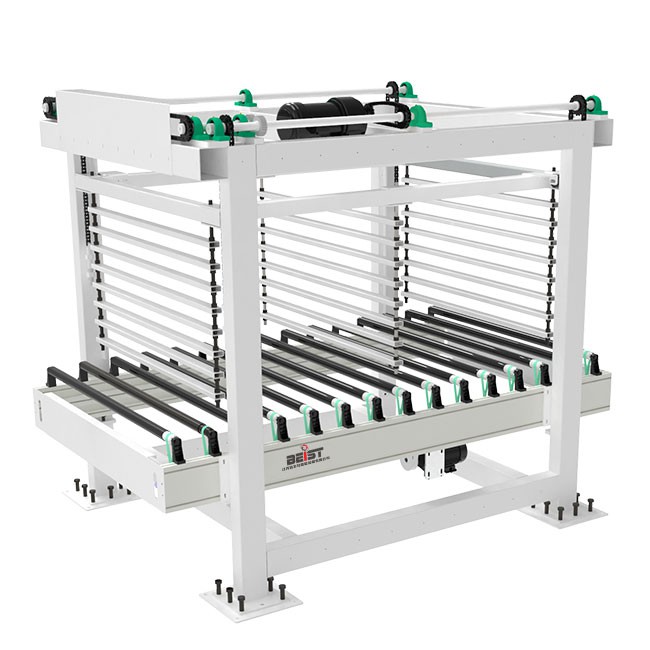
The minimum turning radius of a gravity roller conveyor is a critical parameter that significantly influences its performance, efficiency, and application scope. As a leading supplier of gravity roller conveyors, I've witnessed firsthand how understanding this aspect can make or break a material handling system. In this blog post, I'll delve into what the minimum turning radius is, the factors that affect it, and its implications for your operations.
Understanding the Minimum Turning Radius
The minimum turning radius of a gravity roller conveyor refers to the smallest radius at which the conveyor can smoothly guide materials around a curve. It's a fundamental characteristic that determines the conveyor's ability to navigate tight spaces and adapt to specific layout requirements. When materials move along a curved section of the conveyor, they need to follow a path that allows for continuous and stable movement without getting stuck or derailed.
Imagine a busy warehouse where space is at a premium. A conveyor with a smaller minimum turning radius can be configured in more compact layouts, maximizing the use of available floor space. This is especially important in facilities where efficient space utilization is crucial for cost - effectiveness and productivity.
Factors Affecting the Minimum Turning Radius
1. Roller Diameter
The diameter of the rollers plays a significant role in determining the minimum turning radius. Larger diameter rollers generally allow for a smaller minimum turning radius. This is because larger rollers provide a smoother surface for materials to roll on, reducing the friction and resistance that can impede movement around a curve. For example, if you're using a conveyor with 50mm diameter rollers, you may need a larger turning radius compared to a conveyor with 100mm diameter rollers.
2. Roller Spacing
The spacing between the rollers also affects the minimum turning radius. Closer roller spacing can provide better support for materials as they move around a curve, allowing for a smaller turning radius. However, if the spacing is too close, it can increase the cost of the conveyor and may also limit the types of materials that can be transported. On the other hand, wider roller spacing may require a larger turning radius to ensure that materials don't fall through the gaps between the rollers.
3. Material Characteristics
The size, shape, and weight of the materials being transported are important factors. Irregularly shaped or heavy materials may require a larger minimum turning radius to ensure stable movement. For instance, a large and bulky item may need more space to navigate a curve compared to a small, lightweight box. Additionally, materials with low friction surfaces may require a different turning radius compared to those with high - friction surfaces.
4. Conveyor Design
The design of the conveyor itself, including the type of frame and the way the rollers are mounted, can impact the minimum turning radius. A well - designed conveyor with a sturdy frame and proper roller mounting can handle smaller turning radii more effectively. For example, a conveyor with a flexible frame may be able to achieve a smaller turning radius compared to a rigid - framed conveyor.
Implications of the Minimum Turning Radius
1. Space Utilization
As mentioned earlier, a smaller minimum turning radius allows for more efficient use of space. In a warehouse or manufacturing facility, this can translate into increased storage capacity and improved workflow. For example, you can create more compact conveyor loops, reducing the overall footprint of the material handling system.
2. Material Handling Efficiency
The minimum turning radius affects the speed and reliability of material handling. A conveyor with an appropriate turning radius ensures that materials can move smoothly around curves, minimizing the risk of jams and delays. This leads to increased throughput and reduced downtime, which is essential for maintaining high - productivity levels.
3. Compatibility with Other Equipment
The turning radius of the gravity roller conveyor needs to be compatible with other equipment in the material handling system. For example, if the conveyor is connected to a Conveyor Crossover Bridge or a Roller Conveyor Cart, the turning radius should be such that materials can transfer seamlessly between the different components.
Applications and Solutions
1. Warehouse Operations
In warehouses, gravity roller conveyors with small minimum turning radii are ideal for sorting and distribution systems. They can be used to create complex conveyor networks that can handle a large volume of packages efficiently. For example, a curved section of the conveyor can be used to divert packages to different storage areas based on their destination.
2. Manufacturing Plants
In manufacturing plants, conveyors with appropriate turning radii are used to transport parts and components between different workstations. A Curved Roller Conveyor can be customized to fit the layout of the plant, ensuring smooth and continuous material flow.


3. Retail Distribution Centers
Retail distribution centers often deal with a wide variety of products, each with different size and weight characteristics. Gravity roller conveyors with adjustable minimum turning radii can be used to handle these diverse products effectively, improving the efficiency of the distribution process.
How to Determine the Right Minimum Turning Radius for Your Needs
When choosing a gravity roller conveyor, it's essential to consider your specific requirements. First, analyze the materials you'll be transporting, including their size, shape, and weight. Then, evaluate the available space in your facility and the layout of your material handling system. You may also want to consult with a professional conveyor supplier to get expert advice on the optimal turning radius for your application.
As a gravity roller conveyor supplier, we have extensive experience in designing and manufacturing conveyors with different minimum turning radii. We can work closely with you to understand your needs and provide customized solutions that meet your specific requirements. Whether you need a conveyor for a small - scale operation or a large - scale industrial facility, we have the expertise and resources to deliver high - quality products.
Conclusion
The minimum turning radius of a gravity roller conveyor is a key factor that can have a significant impact on your material handling operations. By understanding the factors that affect it and choosing the right conveyor for your needs, you can improve space utilization, enhance material handling efficiency, and ensure compatibility with other equipment.
If you're in the market for a gravity roller conveyor and need help determining the appropriate minimum turning radius for your application, don't hesitate to contact us. Our team of experts is ready to assist you in finding the best solution for your business. Let's work together to optimize your material handling system and take your operations to the next level.
References
- "Material Handling Handbook" by the Material Handling Institute
- "Conveyor Systems Design Handbook" by CEMA (Conveyor Equipment Manufacturers Association)