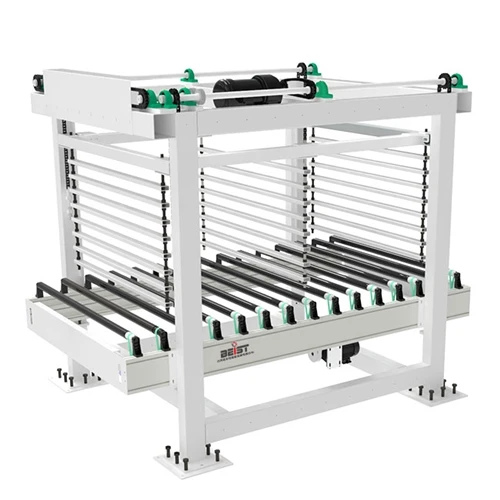
Selecting the appropriate size of an unpowered roller conveyor is a critical decision that can significantly impact the efficiency and effectiveness of your material handling operations. As a trusted supplier of unpowered roller conveyors, I understand the complexities involved in this process and am here to guide you through the key considerations to ensure you make the right choice.
Understanding Your Material Handling Requirements
The first step in choosing the right size of an unpowered roller conveyor is to thoroughly understand your material handling requirements. This includes considering the type, size, weight, and shape of the items you will be transporting. For instance, if you are handling small, lightweight packages, a conveyor with a smaller roller diameter and narrower width may be sufficient. On the other hand, if you are dealing with large, heavy items, you will need a conveyor with a larger roller diameter and wider width to provide adequate support and stability.
It is also important to consider the volume of items you will be transporting and the frequency of movement. If you have a high volume of items moving continuously, you may need a longer conveyor to accommodate the flow. Conversely, if the movement is intermittent or the volume is low, a shorter conveyor may be more appropriate.
Determining the Conveyor Width
The width of the unpowered roller conveyor is a crucial factor that directly affects the stability and handling of the items being transported. A conveyor that is too narrow may cause the items to tip over or fall off, while a conveyor that is too wide can be wasteful and inefficient.
To determine the appropriate conveyor width, measure the widest dimension of the items you will be transporting and add a few inches for clearance. This will ensure that the items can move smoothly along the conveyor without getting stuck or damaged. As a general rule of thumb, the conveyor width should be at least 2 - 3 inches wider than the widest item.
Selecting the Roller Diameter
The roller diameter plays a significant role in the performance of the unpowered roller conveyor. Smaller roller diameters are suitable for lighter loads and applications where space is limited. They offer less resistance and can be more cost - effective. However, they may not provide sufficient support for heavier loads.
Larger roller diameters, on the other hand, are better suited for heavy - duty applications. They can handle greater weights and provide more stability. When selecting the roller diameter, consider the weight of the items and the distance they need to travel. For heavier loads or longer distances, a larger roller diameter (e.g., 2 - 3 inches) is recommended.
Calculating the Conveyor Length
The length of the unpowered roller conveyor depends on several factors, including the available space in your facility, the distance the items need to travel, and the layout of your material handling system. Measure the distance between the starting point and the ending point of the item's movement. You may also need to account for any bends, curves, or additional sections required for sorting or accumulation.
It is important to ensure that the conveyor length allows for proper loading and unloading of the items. If possible, add some extra length to the conveyor to provide a buffer zone at the beginning and end, which can help prevent items from falling off.
Considering the Incline and Decline
If your application requires the unpowered roller conveyor to be installed on an incline or decline, special considerations must be taken. The angle of the incline or decline affects the speed and stability of the items being transported.
For inclines, a steeper angle will increase the speed of the items, but it may also cause them to roll too quickly and potentially fall off. A gentle incline (less than 5 degrees) is usually recommended for most applications. On the other hand, declines can also pose challenges, as the items may gain too much speed. You may need to install speed - control devices or use a conveyor with a higher coefficient of friction to manage the speed.


Additional Considerations
- Load Capacity: Determine the maximum weight that the conveyor needs to support. This includes the weight of the items being transported as well as any additional forces, such as impact or vibration. Make sure the conveyor you choose has a load capacity that exceeds your requirements to ensure long - term reliability.
- Environmental Conditions: Consider the environmental conditions in which the conveyor will operate. If the conveyor will be exposed to dust, moisture, or extreme temperatures, you may need to choose a conveyor with appropriate corrosion - resistant materials or additional protection.
- Compatibility with Existing Systems: If you are integrating the unpowered roller conveyor into an existing material handling system, ensure that it is compatible with other equipment, such as conveyors, sorters, and storage systems. This may involve matching the conveyor height, speed, and control systems.
Our Product Offerings
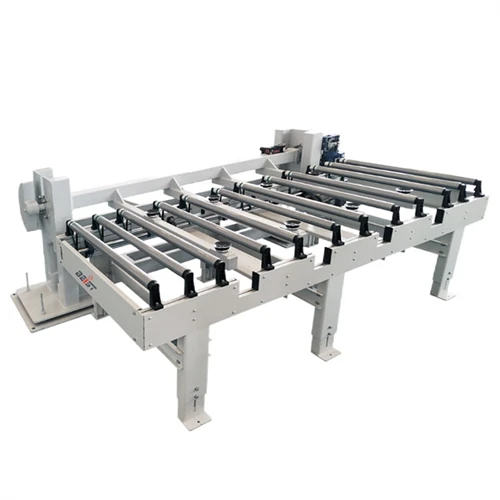
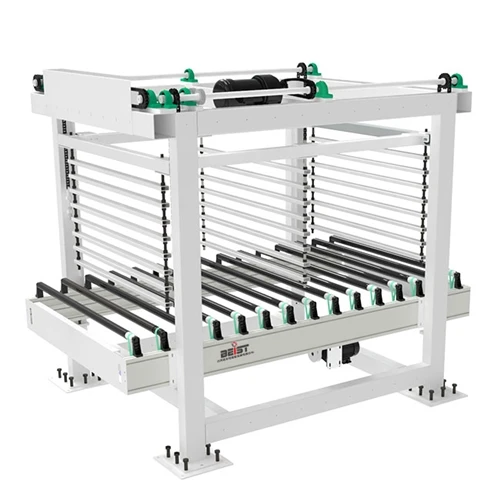
As a leading supplier of unpowered roller conveyors, we offer a wide range of products to meet your diverse needs. Our Pneumatic Roller Conveyor is designed for applications where precise control and efficient movement are required. It uses pneumatic technology to provide smooth and reliable operation.
Our Roller Conveyor Cart is a versatile and mobile solution that can be easily moved around your facility. It is ideal for temporary or flexible material handling applications.
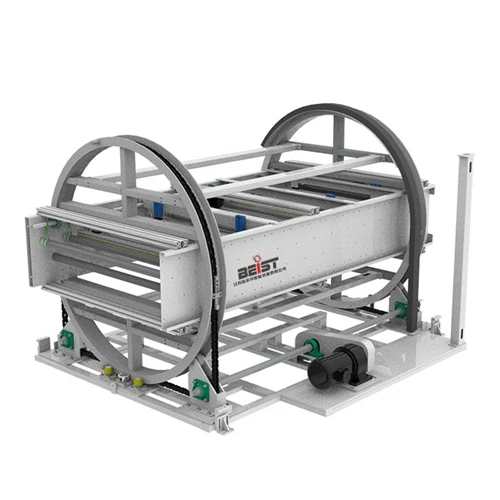
For more complex material handling requirements, our Transfer Cart with Turntable offers the ability to transfer items between different conveyor lines and rotate them as needed.
Contact Us for Purchase and Consultation
Choosing the right size of an unpowered roller conveyor is a complex process, but our team of experts is here to help. We have extensive experience in the material handling industry and can provide you with personalized advice and solutions based on your specific requirements.
If you are interested in learning more about our unpowered roller conveyors or need assistance in selecting the right size for your application, please feel free to contact us. We look forward to working with you to optimize your material handling operations.
References
- "Material Handling Handbook", Third Edition, edited by John A. White, John F. Meehan, and Theodore W. Bethea.
- "Conveyor Systems Design Manual", Fourth Edition, by CEMA (Conveyor Equipment Manufacturers Association).