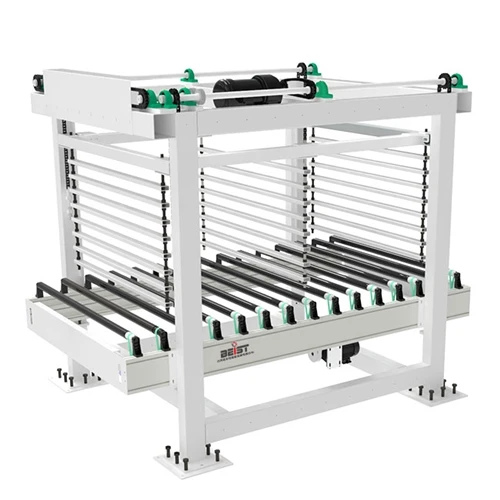
In the dynamic world of material handling and logistics, choosing the right conveyor system is crucial for optimizing operations and ensuring efficiency. Two commonly used conveyor types are the Air Flotation Table Conveyor and the belt conveyor. As a supplier of Air Flotation Table Conveyors, I am well - versed in the unique features and benefits of our product, as well as how it differs from the traditional belt conveyor. In this blog post, I will delve into the key differences between these two conveyor systems to help you make an informed decision for your business.
1. Working Principle
Air Flotation Table Conveyor
The Air Flotation Table Conveyor operates on the principle of air cushion technology. Compressed air is forced through a series of small holes on the surface of the table, creating a thin layer of air. This air layer acts as a cushion, allowing the conveyed objects to float with minimal friction. The objects can then be easily moved across the table surface with very little external force. This technology is especially useful for handling delicate or lightweight materials, as it reduces the risk of damage during transportation.
Belt Conveyor
A belt conveyor, on the other hand, consists of a continuous loop of belt that rotates around two or more pulleys. The belt is typically made of rubber, fabric, or a combination of materials. The objects to be conveyed are placed on the belt, and the movement of the belt transports them from one point to another. The driving force for the belt is usually provided by an electric motor connected to one of the pulleys.
2. Material Handling Capabilities
Air Flotation Table Conveyor
One of the significant advantages of an Air Flotation Table Conveyor is its ability to handle a wide range of materials, including those with irregular shapes or delicate surfaces. Since the objects float on an air cushion, there is no direct contact with the conveyor surface, which reduces the risk of scratching, denting, or other forms of damage. This makes it an ideal choice for industries such as electronics, glass manufacturing, and precision engineering, where the quality of the products must be maintained.
For example, in the electronics industry, Air Flotation Table Conveyors can be used to transport printed circuit boards (PCBs) without causing any damage to the delicate components on the boards. The air cushion ensures that the PCBs move smoothly and gently, minimizing the risk of component displacement or breakage.
Belt Conveyor
Belt conveyors are more suitable for handling heavier and bulkier materials. They can transport large quantities of materials such as coal, ore, and grains over long distances. The belt's surface provides a stable platform for the objects, and the conveyor can be designed to handle high - volume throughput. However, the direct contact between the objects and the belt may cause wear and tear on both the objects and the belt, especially if the materials are abrasive.
3. Speed and Accuracy
Air Flotation Table Conveyor
Air Flotation Table Conveyors offer high - speed and accurate material handling. The lack of friction between the objects and the conveyor surface allows for quick acceleration and deceleration, enabling fast movement of the materials. Additionally, the air cushion provides a stable and controlled environment for the objects, which makes it easier to achieve precise positioning. This is particularly important in applications where accurate placement of the objects is required, such as in assembly lines or sorting systems.
Belt Conveyor
While belt conveyors can also achieve relatively high speeds, the accuracy of positioning may be limited. The flexibility of the belt and the potential for slippage between the belt and the pulleys can make it more challenging to achieve precise control over the movement of the objects. However, with the use of advanced control systems and sensors, the accuracy of belt conveyors can be improved to some extent.


4. Maintenance and Durability
Air Flotation Table Conveyor
Air Flotation Table Conveyors generally require less maintenance compared to belt conveyors. Since there is no direct contact between the objects and the conveyor surface, there is less wear and tear on the components. The main maintenance tasks involve ensuring the proper functioning of the air supply system, such as checking the air pressure and cleaning the air holes. Additionally, the absence of a belt means that there is no need for belt replacement, which can be a time - consuming and costly process.
Belt Conveyor
Belt conveyors require regular maintenance to ensure their proper operation. The belt needs to be inspected for wear and tear, and tension adjustments may be necessary to prevent slippage. The pulleys and bearings also need to be lubricated and checked for damage. Over time, the belt may need to be replaced, which can disrupt the production process and incur significant costs.
5. Cost
Air Flotation Table Conveyor
The initial cost of an Air Flotation Table Conveyor may be higher than that of a belt conveyor, especially for large - scale applications. This is due to the complexity of the air supply system and the advanced technology involved. However, when considering the long - term costs, including maintenance and replacement of components, the total cost of ownership of an Air Flotation Table Conveyor may be lower.
Belt Conveyor
Belt conveyors are generally more affordable in terms of initial investment. They are widely available and come in a variety of sizes and configurations, which makes them a cost - effective option for many businesses. However, as mentioned earlier, the ongoing maintenance and replacement costs can add up over time.
6. Application Flexibility
Air Flotation Table Conveyor
Air Flotation Table Conveyors offer greater application flexibility. They can be easily integrated into existing production lines and can be customized to meet specific requirements. The modular design of the air flotation tables allows for easy expansion or modification of the conveyor system. Additionally, they can be used in a variety of environments, including clean rooms and laboratories, where low - particle generation is required.
Belt Conveyor
Belt conveyors are also flexible in terms of application, but they may be more limited in certain environments. For example, in clean room applications, the belt may generate dust and particles, which can contaminate the products. However, there are specialized belt conveyors available that are designed for clean room use, but they may be more expensive.
Related Conveyor Systems
If you are interested in exploring other types of conveyors, you may want to check out our Ball Transfer Table Conveyor, Curved Roller Conveyor, and Pneumatic Roller Conveyor. These conveyors offer unique features and benefits that may suit your specific material handling needs.
Conclusion
In conclusion, both Air Flotation Table Conveyors and belt conveyors have their own advantages and disadvantages. The choice between the two depends on various factors, including the type of materials to be handled, the required speed and accuracy, the maintenance requirements, and the budget. As a supplier of Air Flotation Table Conveyors, I believe that our product offers a superior solution for many applications, especially those that require gentle handling of delicate materials and high - precision positioning.
If you are considering upgrading your material handling system or are in the market for a new conveyor, I encourage you to contact us for a consultation. Our team of experts can help you evaluate your needs and determine the most suitable conveyor system for your business. We are committed to providing high - quality products and excellent customer service to ensure that you get the best value for your investment.
References
- "Material Handling Handbook", Third Edition, John A. White, John Wiley & Sons, Inc.
- "Conveyor Technology Handbook", Second Edition, William C. Hustrulid, SME Publishing.