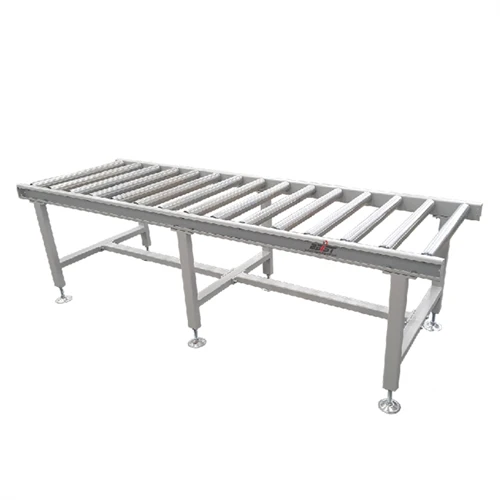
Hey there! I'm a supplier of unpowered roller conveyors, and I've been in this game for quite a while. One of the most common issues I hear from customers is how to reduce the friction of an unpowered roller conveyor. Well, you've come to the right place! In this blog, I'll share some practical tips and tricks to help you minimize friction and make your conveyor work more efficiently.


Understanding Friction in Unpowered Roller Conveyors
Before we dive into the solutions, let's first understand what causes friction in unpowered roller conveyors. Friction occurs when two surfaces rub against each other. In the case of a roller conveyor, friction can happen between the rollers and the items being transported, as well as between the rollers and the conveyor frame. High friction can lead to several problems, such as increased energy consumption, wear and tear on the rollers and conveyor components, and slower throughput.
Choose the Right Rollers
One of the most effective ways to reduce friction is to choose the right rollers for your conveyor. There are several factors to consider when selecting rollers, including the material, diameter, and surface finish.
- Material: Rollers can be made from a variety of materials, such as steel, plastic, and aluminum. Steel rollers are durable and can handle heavy loads, but they can also be prone to rust and corrosion. Plastic rollers are lightweight and resistant to chemicals, but they may not be as strong as steel rollers. Aluminum rollers are a good compromise between strength and weight, and they are also resistant to corrosion.
- Diameter: The diameter of the rollers can also affect friction. Larger diameter rollers generally have less friction than smaller diameter rollers because they have a larger contact area with the items being transported. However, larger diameter rollers may also be more expensive and require more space.
- Surface Finish: The surface finish of the rollers can also play a role in reducing friction. Smooth rollers have less friction than rough rollers because they have a smaller contact area with the items being transported. You can also choose rollers with a special coating or treatment to reduce friction even further.
Lubricate the Rollers
Another way to reduce friction is to lubricate the rollers. Lubrication helps to reduce the friction between the rollers and the items being transported, as well as between the rollers and the conveyor frame. There are several types of lubricants available, including oil, grease, and dry lubricants.
- Oil: Oil is a common lubricant for roller conveyors because it is easy to apply and provides good lubrication. However, oil can also attract dirt and debris, which can increase friction over time.
- Grease: Grease is a thicker lubricant than oil and provides better protection against wear and tear. However, grease can also be more difficult to apply and may require more maintenance.
- Dry Lubricants: Dry lubricants, such as graphite and PTFE, are a good alternative to oil and grease because they do not attract dirt and debris. Dry lubricants also provide good lubrication and can help to reduce friction.
Maintain the Conveyor
Regular maintenance is essential for reducing friction in unpowered roller conveyors. By keeping the conveyor clean and well-maintained, you can prevent dirt and debris from building up on the rollers and conveyor frame, which can increase friction. Here are some maintenance tips to help you reduce friction:
- Clean the Rollers: Regularly clean the rollers to remove dirt and debris. You can use a brush or a cloth to clean the rollers, or you can use a pressure washer to clean the conveyor frame.
- Check the Alignment: Make sure the rollers are properly aligned to prevent uneven wear and tear. You can use a straightedge or a laser alignment tool to check the alignment of the rollers.
- Tighten the Bolts: Check the bolts and nuts on the conveyor frame regularly to make sure they are tight. Loose bolts and nuts can cause the conveyor to vibrate, which can increase friction.
- Replace Worn Rollers: Replace any worn or damaged rollers as soon as possible. Worn rollers can cause increased friction and can also lead to damage to the conveyor frame.
Use Conveyor Accessories
There are several conveyor accessories available that can help to reduce friction in unpowered roller conveyors. Here are some examples:
- Conveyor Crossover Bridge: A Conveyor Crossover Bridge is a device that allows items to be transferred from one conveyor to another at a different level. By using a conveyor crossover bridge, you can reduce the need for manual handling, which can help to reduce friction.
- Transfer Cart with Turntable: A Transfer Cart with Turntable is a device that allows items to be transferred from one conveyor to another at a different angle. By using a transfer cart with turntable, you can reduce the need for manual handling, which can help to reduce friction.
- Pneumatic Roller Conveyor: A Pneumatic Roller Conveyor is a type of conveyor that uses air pressure to move items along the conveyor. By using a pneumatic roller conveyor, you can reduce the need for manual handling, which can help to reduce friction.
Conclusion
Reducing the friction of an unpowered roller conveyor is essential for improving efficiency and reducing maintenance costs. By choosing the right rollers, lubricating the rollers, maintaining the conveyor, and using conveyor accessories, you can minimize friction and make your conveyor work more efficiently. If you have any questions or need more information about reducing friction in unpowered roller conveyors, please don't hesitate to contact me. I'd be happy to help you find the right solution for your needs.