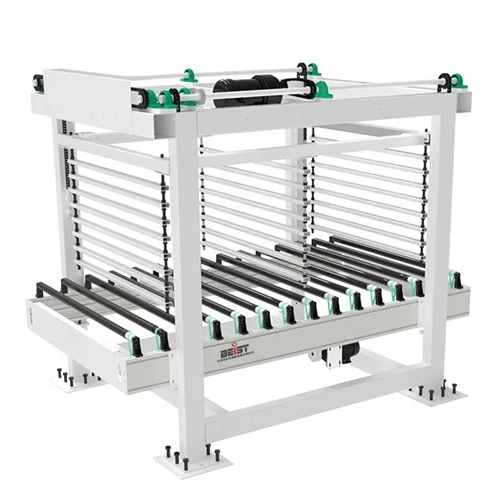
Hey there! As a supplier of Gravity Roller Conveyors, I've seen firsthand how crucial it is to measure the performance of these conveyors accurately. In this blog, I'll share some practical ways to evaluate the performance of a gravity roller conveyor, which can help you make the most out of your investment.
1. Throughput Rate
One of the most straightforward ways to measure the performance of a gravity roller conveyor is by looking at its throughput rate. This refers to the number of items the conveyor can move within a specific time frame, like an hour or a day.
To calculate the throughput rate, you first need to determine the average time it takes for an item to travel from the start to the end of the conveyor. You can do this by timing several items and then taking the average. Once you have the average travel time, you can figure out how many items can pass through the conveyor in a given period.
For example, if it takes an average of 30 seconds for an item to move through the conveyor, then in one minute, two items can pass through. In an hour, that would be 120 items. A high throughput rate indicates that the conveyor is efficient and can handle a large volume of goods. If you notice a low throughput rate, it could be due to issues like misaligned rollers, excessive friction, or overloading.
2. Item Movement Smoothness
The smoothness of item movement on the conveyor is another important performance indicator. You want your items to move along the conveyor without any jerks, stops, or getting stuck.
You can visually inspect the conveyor to check for smooth movement. Walk alongside the conveyor and observe how the items are traveling. If you see items bouncing, tilting, or getting held up at certain points, it's a sign that there are problems.
Another way to measure smoothness is by using sensors. Some advanced sensors can detect vibrations and irregular movements. If the sensor readings show a lot of fluctuations, it means the item movement is not smooth. This could be caused by uneven roller surfaces, damaged rollers, or improper installation. For a smoother operation, you might want to consider our Gravity Skate Wheel Conveyor, which is designed to provide a more fluid movement for lightweight items.
3. Energy Efficiency
Even though gravity roller conveyors don't require external power to operate, there are still energy - related aspects to consider. The energy here is mainly in the form of potential energy converted into kinetic energy as the items move down the slope.
A well - performing gravity roller conveyor should use the minimum amount of slope to move the items. If you have to set a very steep slope to get the items moving, it might indicate that there is too much friction in the system. High friction means more energy is being wasted in overcoming it.
To measure energy efficiency, you can calculate the amount of potential energy at the start of the conveyor (based on the height of the slope and the weight of the items) and compare it with the kinetic energy of the items at the end of the conveyor. If there is a large difference, it could mean that a significant amount of energy is being lost due to friction.
Reducing friction can improve energy efficiency. You can do this by regularly lubricating the rollers, ensuring proper alignment, and using high - quality bearings. Our Unpowered Roller Conveyor is designed with energy efficiency in mind, using high - quality materials to minimize friction.
4. Roller Wear and Tear
The condition of the rollers is a key factor in the performance of a gravity roller conveyor. Over time, the rollers will experience wear and tear, which can affect the conveyor's efficiency.
You can conduct a physical inspection of the rollers. Look for signs of wear such as flat spots, cracks, or excessive corrosion. If the rollers are worn out, they can cause the items to move unevenly or even get stuck.
To measure the wear of the rollers, you can use calipers to measure the diameter of the rollers at different points. A significant difference in diameter indicates wear. You can also check the rotation of the rollers by manually spinning them. If they don't spin freely, it could be due to wear or damage in the bearings.
Regular maintenance, such as replacing worn - out rollers and bearings, can extend the lifespan of the conveyor. Our company offers high - quality replacement parts for our conveyors, ensuring that your conveyor stays in top - notch condition.
5. Noise Level
The noise level of the conveyor can also be an indicator of its performance. A well - functioning gravity roller conveyor should operate quietly. Excessive noise can be a sign of problems such as misaligned rollers, loose parts, or worn - out bearings.
You can use a decibel meter to measure the noise level of the conveyor. Place the meter at a consistent distance from the conveyor, usually about a meter away. A normal operating noise level for a gravity roller conveyor should be relatively low, around 60 - 70 decibels.
If the noise level is higher than normal, it's time to investigate. Check for loose bolts, misaligned rollers, or damaged parts. Tightening loose parts and replacing damaged components can often reduce the noise level. Our Roller Transfer Cart On Rail is engineered to operate quietly, providing a more comfortable working environment.
Conclusion
Measuring the performance of a gravity roller conveyor is essential for ensuring its efficiency, reliability, and longevity. By keeping an eye on throughput rate, item movement smoothness, energy efficiency, roller wear and tear, and noise level, you can identify and address any issues before they become major problems.


If you're in the market for a high - quality gravity roller conveyor or need help with measuring and improving the performance of your existing conveyor, don't hesitate to reach out. We're here to provide you with the best solutions and support.
References
- Conveyor Handbook, Industry Standard Publication
- Practical Guide to Conveyor Maintenance, Professional Conveyor Association