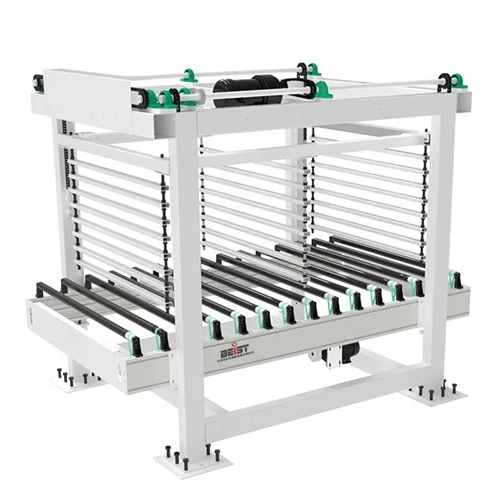
Hey there! As a supplier of Ball Transfer Table Conveyors, I often get asked about how these nifty gadgets work. So, I thought I'd take a few minutes to break down the working principle of a ball transfer table conveyor for you.
Let's start with the basics. A ball transfer table conveyor is a type of conveyor system that uses a series of small balls mounted in a sheet or frame to move objects in multiple directions. These balls are usually made of materials like steel, plastic, or ceramic, and they're designed to rotate freely in their sockets. This allows them to transfer loads smoothly and efficiently, regardless of the direction of travel.
So, how does it actually work? Well, it all comes down to the principle of low friction and omnidirectional movement. When a load is placed on a ball transfer table conveyor, the weight of the load causes the balls to rotate. This rotation creates a rolling motion that allows the load to move freely across the surface of the table. Because the balls can rotate in all directions, the load can be easily maneuvered and repositioned as needed.
One of the key advantages of a ball transfer table conveyor is its flexibility. Unlike traditional conveyors that are limited to moving loads in a single direction, ball transfer tables can move loads in any direction. This makes them ideal for applications where loads need to be rotated, repositioned, or diverted. For example, in a manufacturing plant, a ball transfer table conveyor can be used to move parts from one workstation to another, or to rotate and position parts for assembly.
Another advantage of ball transfer table conveyors is their low maintenance requirements. Because the balls are designed to rotate freely, there's very little friction between the load and the table surface. This means that there's less wear and tear on the conveyor components, which reduces the need for frequent maintenance and replacement. Additionally, ball transfer tables are typically easy to clean and sanitize, making them suitable for use in food processing, pharmaceutical, and other industries where hygiene is a top priority.
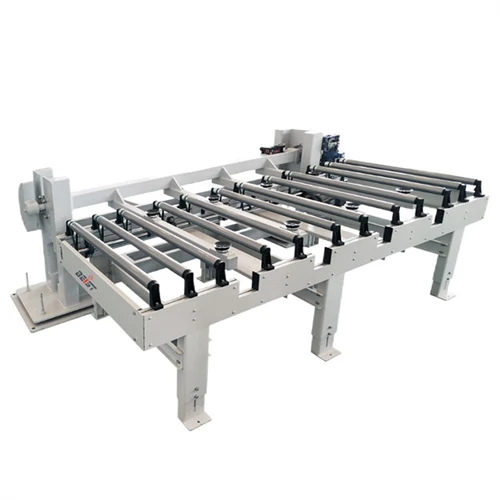
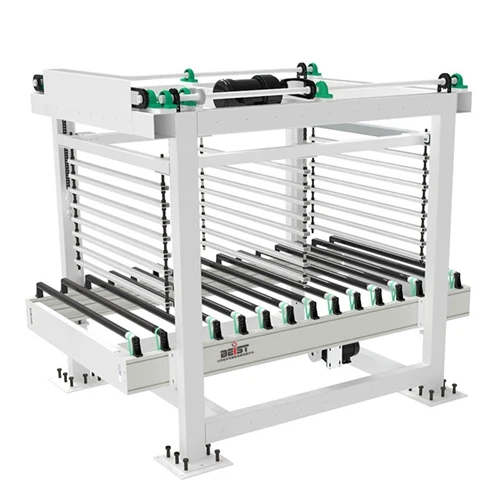
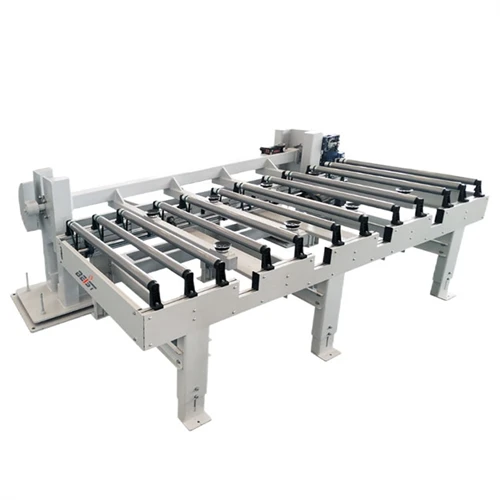
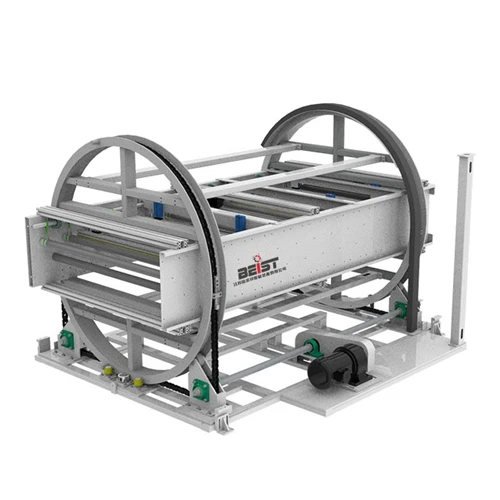
Now, let's take a closer look at the components of a ball transfer table conveyor. The main components of a ball transfer table conveyor include the ball transfer units, the frame, and the support structure. The ball transfer units are the heart of the conveyor system, and they're responsible for transferring the load across the table surface. These units are typically made up of a ball, a socket, and a housing, and they're available in a variety of sizes and configurations to suit different applications.
The frame of the ball transfer table conveyor provides the structural support for the ball transfer units and the load. It's usually made of steel or aluminum, and it's designed to be strong and durable. The support structure of the conveyor, such as legs or brackets, is used to mount the frame to the floor or other surfaces.
In addition to these basic components, ball transfer table conveyors may also include additional features and accessories to enhance their performance and functionality. For example, some conveyors may include side rails or guides to help keep the load centered on the table surface. Others may include sensors or controls to automate the movement of the load or to provide feedback to the operator.
Now, let's talk about some of the applications of ball transfer table conveyors. As I mentioned earlier, ball transfer tables are commonly used in manufacturing plants to move parts and assemblies between workstations. They're also used in warehouses and distribution centers to move boxes, pallets, and other items from one location to another. In the automotive industry, ball transfer tables are used to position car bodies and components during the assembly process.
Another popular application of ball transfer table conveyors is in the retail industry. They're often used in stores and supermarkets to display products and to make it easy for customers to move items around. For example, a ball transfer table conveyor can be used to display clothing racks or to create a self-service section where customers can pick up products.
Ball transfer table conveyors are also used in the medical and laboratory industries to move delicate equipment and specimens. The low friction and omnidirectional movement of the ball transfer units make them ideal for handling sensitive materials without causing damage.
In conclusion, ball transfer table conveyors are a versatile and efficient solution for moving loads in multiple directions. Their low friction, omnidirectional movement, and flexibility make them suitable for a wide range of applications in various industries. If you're in the market for a conveyor system that can handle your specific needs, I encourage you to consider a ball transfer table conveyor.


And if you're looking for other types of conveyor systems, we also offer Curved Roller Conveyor, Conveyor Crossover Bridge, and Pneumatic Roller Conveyor. These are just as reliable and efficient, and they might be a better fit for your particular requirements.
If you're interested in purchasing a ball transfer table conveyor or any of our other conveyor products, feel free to get in touch with us. We're more than happy to discuss your needs, provide a quote, and answer any questions you might have. Just reach out, and we'll start a conversation about how we can help streamline your operations with our top-notch conveyor solutions.
References:
- "Conveyor Systems Handbook", various industry - published materials on conveyor technology.
- Professional experience in the conveyor manufacturing and supply industry.