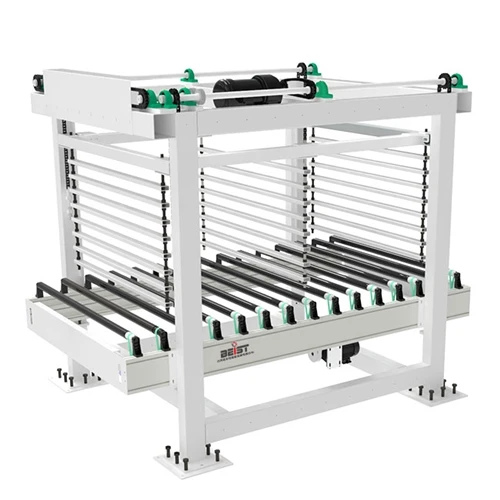
Hey there! As a supplier of Ball Transfer Table Conveyors, I often get asked about the ideal temperature range for these conveyors to operate smoothly. In this blog, I'll break down the science behind it and share some practical insights to help you understand what temperature conditions are best for your Ball Transfer Table Conveyor.
Understanding the Basics of Ball Transfer Table Conveyors
Before we dive into the temperature range, let's quickly go over what a Ball Transfer Table Conveyor is. These conveyors are super handy in moving loads in multiple directions with ease. They consist of small balls housed in a plate, allowing items to glide smoothly across the surface. They're used in all sorts of industries, from manufacturing to warehousing, because they're so versatile and efficient.
Why Temperature Matters
Temperature can have a big impact on how well a Ball Transfer Table Conveyor works. Extreme temperatures, whether too hot or too cold, can cause a bunch of problems. For instance, high temperatures can make the materials in the conveyor expand. This expansion can lead to parts rubbing against each other more than they should, increasing friction and wear. On the other hand, low temperatures can make materials contract. This contraction might cause parts to become loose or brittle, which can lead to malfunctions or even breakages.
The Ideal Temperature Range
Based on our experience and industry standards, the ideal temperature range for a Ball Transfer Table Conveyor to operate normally is between 10°C (50°F) and 40°C (104°F). This range is considered optimal because it keeps the materials in the conveyor in a stable state.
In this temperature range, the lubricants used in the conveyor work as they should. Lubricants are crucial for reducing friction between the moving parts. At temperatures within 10°C - 40°C, the lubricants maintain their viscosity, which means they can effectively coat the parts and prevent excessive wear.
The materials used in the construction of the conveyor, such as metals and plastics, also behave predictably within this range. Metals don't expand or contract too much, and plastics don't become too soft or brittle. This stability ensures that the conveyor operates smoothly and efficiently, with minimal risk of breakdowns.
Operating Outside the Ideal Range
But what happens if you need to operate the conveyor outside this ideal temperature range? Well, it's not the end of the world, but you need to take some precautions.
High Temperatures (Above 40°C)
If you're operating in a hot environment, say in a factory with high - heat processes, you need to make sure the conveyor is well - ventilated. You can install fans or cooling systems to keep the temperature down. Also, you might need to use high - temperature lubricants that can withstand the heat without breaking down. These special lubricants have a higher viscosity index, which means they can maintain their lubricating properties even at elevated temperatures.
Low Temperatures (Below 10°C)
In cold environments, like in a refrigerated warehouse, you need to protect the conveyor from the cold. You can use insulation to keep the heat in. Additionally, you should use low - temperature lubricants that don't thicken or freeze at low temperatures. These lubricants ensure that the moving parts can still move freely even in the cold.
Real - World Examples
Let me share a couple of real - world examples to illustrate the importance of temperature control.
One of our clients had a Ball Transfer Table Conveyor in a manufacturing plant where the temperature often reached 45°C. At first, they didn't notice any major issues. But over time, they started to experience more frequent breakdowns. The lubricant was breaking down, and the increased friction was causing the balls to wear out faster. Once they installed a cooling system to bring the temperature back within the ideal range, the breakdowns reduced significantly, and the conveyor's lifespan increased.
Another client had a conveyor in a cold storage facility where the temperature was around 5°C. The conveyor was starting to make strange noises, and some of the parts seemed to be sticking. After we recommended using low - temperature lubricants and adding some insulation, the conveyor started to operate smoothly again.
Related Conveyor Products
If you're looking for other types of conveyors, we also offer some great alternatives. Check out our Air Flotation Table Conveyor, which uses air to move loads, providing a smooth and gentle transfer. Our Curved Roller Conveyor is perfect for changing the direction of your loads. And if you need to move heavy loads on a fixed path, our Roller Transfer Cart On Rail is a great option.


Conclusion
In conclusion, the ideal temperature range for a Ball Transfer Table Conveyor to operate normally is between 10°C and 40°C. But with the right precautions, you can still use the conveyor outside this range. If you're having any issues with temperature and your conveyor, or if you're interested in purchasing a new Ball Transfer Table Conveyor or any of our other conveyor products, don't hesitate to reach out. We're here to help you find the best solution for your needs. Whether you're in a hot factory or a cold warehouse, we can provide you with the knowledge and products to keep your operations running smoothly.
References
- Industry standards for conveyor operation temperatures
- Internal records of our company's Ball Transfer Table Conveyor performance in different temperature conditions