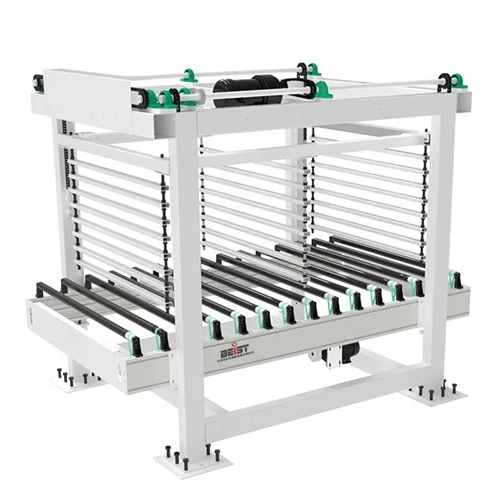
An E Shape Lift Table is a versatile and essential piece of equipment in various industrial and commercial settings. It provides a stable and efficient way to lift and position heavy loads, facilitating tasks such as material handling, assembly, and maintenance. Understanding the power source of an E Shape Lift Table is crucial for users to make informed decisions about its selection, operation, and maintenance. As a reputable E Shape Lift Table supplier, I am delighted to shed light on this important topic.
Electric Power Sources
One of the most common power sources for E Shape Lift Tables is electricity. Electric-powered lift tables offer several advantages, including clean operation, precise control, and ease of use. They are suitable for indoor applications where noise and emissions need to be minimized.
Electric Motors
Electric motors are the heart of an electrically powered E Shape Lift Table. These motors convert electrical energy into mechanical energy, which is then used to drive the lifting mechanism. There are two main types of electric motors used in lift tables: AC (alternating current) motors and DC (direct current) motors.
AC motors are widely used in industrial lift tables due to their high power, reliability, and efficiency. They are typically powered by the standard electrical supply in industrial facilities, which is usually 220V or 440V. AC motors can provide a smooth and continuous lifting motion, making them suitable for applications that require precise positioning. For more information on electric-powered lift tables, you can visit our Electric Hydraulic Lift Table page.
DC motors, on the other hand, are commonly used in mobile or battery-powered lift tables. They are powered by rechargeable batteries, which provides the flexibility to operate the lift table in areas without access to a power outlet. DC motors are known for their compact size, lightweight, and easy installation. They are ideal for applications such as small workshops, warehouses, and retail stores.
Electric Hydraulic Systems
Another popular option for electric-powered E Shape Lift Tables is the electric hydraulic system. In this system, an electric motor drives a hydraulic pump, which generates hydraulic pressure to lift the table. Electric hydraulic lift tables combine the advantages of electric power and hydraulic lifting technology, offering high lifting capacity, smooth operation, and precise control.
The hydraulic pump draws hydraulic fluid from a reservoir and pressurizes it before sending it to the hydraulic cylinder. The pressurized fluid then acts on the piston inside the cylinder, causing it to extend and lift the table. When the table needs to be lowered, the hydraulic fluid is released back into the reservoir through a control valve. Electric hydraulic lift tables are commonly used in heavy-duty applications where high lifting capacity and stability are required.
Hydraulic Power Sources
Hydraulic power is another popular choice for E Shape Lift Tables, especially in applications where high lifting capacity and durability are essential. Hydraulic systems use hydraulic fluid to transmit power and control the movement of the lift table.
Hydraulic Pumps
Hydraulic pumps are the key component of a hydraulic lift table system. They are responsible for generating the hydraulic pressure needed to lift and lower the table. There are several types of hydraulic pumps used in lift tables, including gear pumps, vane pumps, and piston pumps.
Gear pumps are the most commonly used type of hydraulic pump in lift tables due to their simplicity, reliability, and cost-effectiveness. They consist of two meshing gears that rotate inside a housing, creating a vacuum that draws hydraulic fluid into the pump. As the gears rotate, the fluid is trapped between the teeth and the housing and is forced out of the pump at high pressure.
Vane pumps are another type of hydraulic pump that is commonly used in lift tables. They use a series of vanes that slide in and out of a rotor to create a pumping action. Vane pumps are known for their high efficiency, low noise level, and smooth operation.
Piston pumps are the most powerful type of hydraulic pump and are typically used in heavy-duty lift tables. They use a series of pistons that move back and forth inside cylinders to create a pumping action. Piston pumps can generate high pressure and flow rates, making them suitable for applications that require high lifting capacity and fast lifting speed.
Hydraulic Cylinders
Hydraulic cylinders are the actuators that convert hydraulic pressure into linear motion to lift and lower the E Shape Lift Table. They consist of a cylinder barrel, a piston, a piston rod, and seals. When hydraulic fluid is pumped into the cylinder, it acts on the piston, causing it to move in one direction. The piston rod is attached to the piston and extends out of the cylinder, providing the lifting force.
Hydraulic cylinders are available in various sizes and configurations to meet the specific requirements of different lift table applications. They can be single-acting or double-acting, depending on whether they can generate force in one direction or both directions. Single-acting cylinders are typically used in applications where the weight of the load is sufficient to lower the table, while double-acting cylinders are used in applications where the table needs to be lowered under power.
Pneumatic Power Sources
Pneumatic power is a less common but still viable option for E Shape Lift Tables. Pneumatic systems use compressed air to generate power and control the movement of the lift table.
Air Compressors
Air compressors are the power source for pneumatic lift tables. They compress air from the atmosphere and store it in a tank at high pressure. The compressed air is then released through a control valve to actuate the lifting mechanism of the lift table.
Air compressors are available in various sizes and capacities to meet the specific requirements of different lift table applications. They can be powered by electricity, gasoline, or diesel engines. Electric air compressors are the most commonly used type in industrial settings due to their clean operation, quiet performance, and ease of use.
Pneumatic Cylinders
Pneumatic cylinders are the actuators that convert compressed air into linear motion to lift and lower the E Shape Lift Table. They are similar in design to hydraulic cylinders but use compressed air instead of hydraulic fluid. Pneumatic cylinders are available in various sizes and configurations to meet the specific requirements of different lift table applications.
Pneumatic lift tables offer several advantages, including fast operation, low cost, and easy maintenance. They are suitable for applications where the lifting capacity is relatively low and the need for precise control is not critical. However, pneumatic lift tables are not as powerful as hydraulic or electric lift tables and may not be suitable for heavy-duty applications.
Factors to Consider When Choosing a Power Source
When choosing a power source for an E Shape Lift Table, several factors need to be considered, including the application requirements, the lifting capacity, the operating environment, and the cost.
Application Requirements
The application requirements are the most important factor to consider when choosing a power source for an E Shape Lift Table. Different applications have different requirements in terms of lifting capacity, lifting speed, precision, and control. For example, if the lift table is used for heavy-duty material handling, a hydraulic or electric hydraulic power source may be the best choice. On the other hand, if the lift table is used for light-duty assembly work, a pneumatic or electric power source may be sufficient.
Lifting Capacity
The lifting capacity of the lift table is another important factor to consider when choosing a power source. Different power sources have different lifting capacities, and it is important to choose a power source that can meet the specific lifting requirements of the application. For example, hydraulic lift tables are typically capable of lifting heavier loads than pneumatic or electric lift tables.
Operating Environment
The operating environment is also an important factor to consider when choosing a power source for an E Shape Lift Table. Different power sources have different requirements in terms of temperature, humidity, and dust. For example, electric lift tables are suitable for indoor applications where the environment is clean and dry, while hydraulic lift tables can be used in both indoor and outdoor applications.
Cost
The cost is another important factor to consider when choosing a power source for an E Shape Lift Table. Different power sources have different costs in terms of initial purchase price, installation cost, and operating cost. It is important to choose a power source that provides the best value for money based on the specific requirements of the application.
Conclusion
In conclusion, the power source of an E Shape Lift Table is an important factor to consider when choosing a lift table for your application. Electric, hydraulic, and pneumatic power sources each have their own advantages and disadvantages, and the choice of power source depends on the specific requirements of the application, the lifting capacity, the operating environment, and the cost.

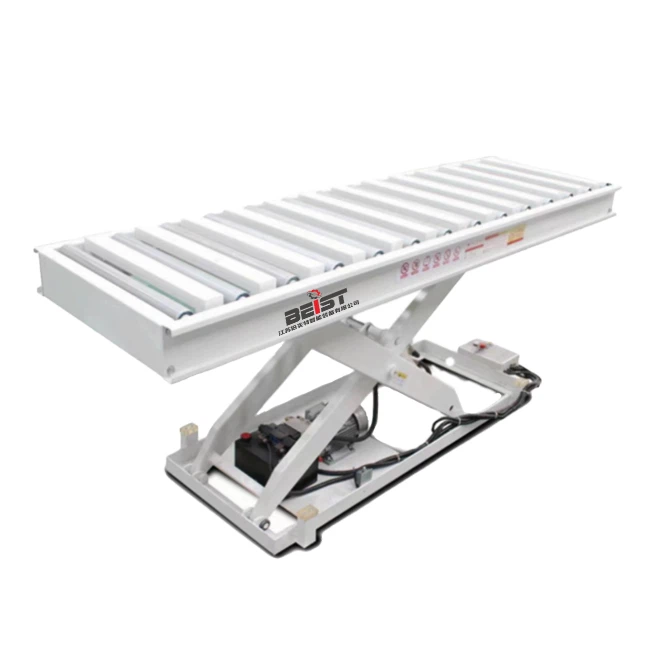
As a trusted E Shape Lift Table supplier, we offer a wide range of lift tables with different power sources to meet the diverse needs of our customers. Whether you need a lift table for heavy-duty material handling, light-duty assembly work, or any other application, we have the right solution for you. If you are interested in learning more about our E Shape Lift Tables or have any questions about power sources, please feel free to contact us. We look forward to discussing your requirements and providing you with the best possible solution.
For more information on our lift tables with different features, you can visit our Lift Table with Conveyor Top and Lifting Table with Roller Conveyor pages.