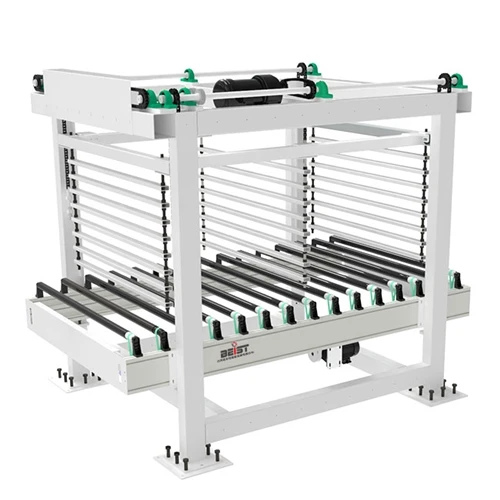
Hey there! As a supplier of Gravity Roller Conveyors, I often get asked about the installation space required for these nifty pieces of equipment. So, I thought I'd take a deep dive into this topic and share some insights with you.
First off, let's understand what a gravity roller conveyor is. It's a simple yet effective material handling system that uses gravity to move items along a series of rollers. These conveyors are widely used in warehouses, distribution centers, and manufacturing facilities because they're cost - effective, easy to install, and require minimal maintenance.
When it comes to the installation space, several factors come into play. The size and shape of the items you're going to convey are crucial. If you're dealing with large, bulky items, you'll need a wider and longer conveyor. For example, if you're moving furniture pieces, the conveyor needs to be wide enough to accommodate the width of the furniture and long enough to allow for a smooth flow of movement. On the other hand, if you're transporting small, lightweight items like boxes of jewelry, you can get away with a narrower and shorter conveyor.
Another factor is the throughput or the number of items you need to move per unit of time. If you have a high - volume operation, you'll need a longer conveyor with more rollers to ensure that the items can keep moving without getting congested. Let's say you're running an e - commerce fulfillment center where hundreds of packages need to be sorted and shipped out every hour. In this case, you'll need a conveyor system that can handle this high volume, which might mean a larger installation space.
The layout of your facility also matters. You need to consider the available floor space and how the conveyor will fit into your existing workflow. For instance, if you have limited space, you might need to opt for a curved conveyor. A Curved Roller Conveyor can be a great solution as it allows you to change the direction of the items without taking up too much straight - line space. This is especially useful in facilities where space is at a premium.
Now, let's talk about the actual measurements. For a basic straight gravity roller conveyor, you need to account for the length of the conveyor itself, plus some extra space at the ends for loading and unloading. A good rule of thumb is to add at least 1 - 2 feet of space at each end. The width of the conveyor depends on the width of the items you're conveying, plus a little extra for stability. Usually, adding 2 - 4 inches on each side is sufficient.


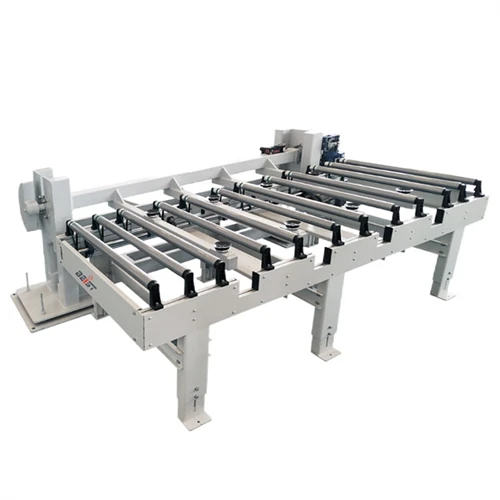
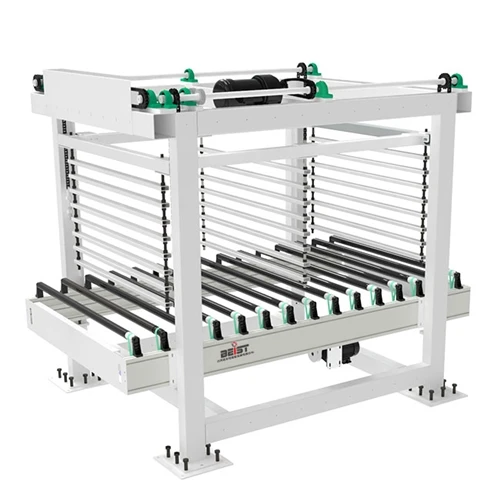
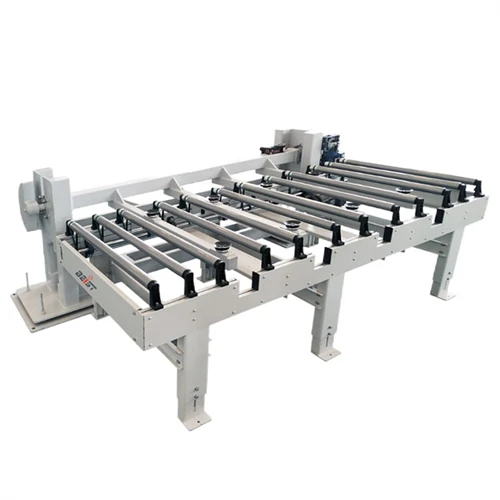
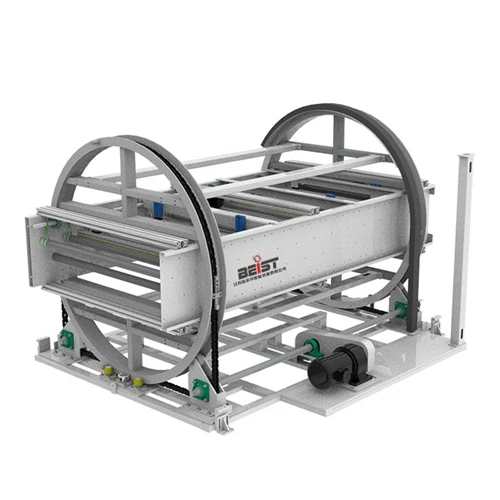
If you're using a conveyor with multiple sections or curves, you need to be even more careful with the space calculations. Each curve or transition section requires additional space to ensure that the items can move smoothly. And if you're integrating the conveyor with other equipment like a Roller Transfer Cart On Rail or a Conveyor Platform for Cold Press, you need to factor in the space required for these additional components.
Let's take a look at an example. Suppose you're running a small manufacturing plant where you need to move boxes of parts from one workstation to another. The boxes are about 18 inches wide and 24 inches long. You estimate that you need to move about 50 boxes per hour. For this operation, a straight gravity roller conveyor that's about 10 feet long and 2 feet wide should do the trick. You'll also need to add about 2 feet of space at each end for loading and unloading, so in total, you'll need an installation space that's about 14 feet long and 2 feet wide.
But what if your facility has a more complex layout? Maybe you need to change the direction of the boxes or integrate the conveyor with other machinery. In this case, you might need to use a combination of straight and curved conveyors. A curved conveyor can help you navigate around obstacles or make better use of the available space. Just make sure to leave enough space for the curve radius, which can vary depending on the size of the items and the speed of the conveyor.
In addition to the physical space, you also need to consider the height of the conveyor. The conveyor should be at a comfortable working height for the operators. Usually, a height of 36 - 42 inches is ideal for most applications. This allows the operators to load and unload the items easily without having to bend too much or reach too high.
When planning the installation space, it's also a good idea to think about future expansion. If your business is growing, you might need to add more sections to the conveyor or increase the throughput. So, leave some extra space around the conveyor for future modifications.
To sum it up, the installation space required for a gravity roller conveyor depends on several factors, including the size and shape of the items, the throughput, the layout of your facility, and whether you're using straight or curved conveyors. By carefully considering these factors and doing the proper calculations, you can ensure that you have enough space for a smooth - running conveyor system.
If you're in the market for a gravity roller conveyor and need help with space planning or have any other questions, don't hesitate to reach out. We're here to help you find the best solution for your specific needs. Whether you're a small business or a large corporation, we can provide you with high - quality conveyors that are tailored to your requirements. So, let's start a conversation and see how we can make your material handling process more efficient.
References:
- General knowledge in the field of material handling and conveyor systems.
- Industry best practices for gravity roller conveyor installation.