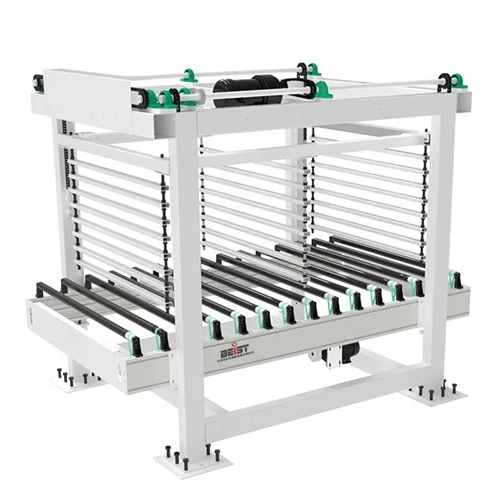
As a seasoned supplier of Curved Roller Conveyors, I often encounter inquiries regarding the conveying angle range of these essential pieces of industrial equipment. Understanding the optimal conveying angle range is crucial for ensuring efficient and reliable material handling operations. In this blog post, I will delve into the factors that influence the conveying angle range of a curved roller conveyor and provide insights to help you make informed decisions for your specific application.


Understanding Curved Roller Conveyors
Curved roller conveyors are designed to transport materials around corners or along curved paths, providing flexibility in layout and space utilization. They consist of a series of rollers mounted on a frame, which can be powered or unpowered depending on the application requirements. The rollers are typically arranged in a curved configuration to guide the materials smoothly along the desired path.
Factors Influencing the Conveying Angle Range
Several factors influence the conveying angle range of a curved roller conveyor, including the type of material being conveyed, the speed of the conveyor, the roller diameter, and the coefficient of friction between the material and the rollers. Let's take a closer look at each of these factors:
1. Type of Material
The type of material being conveyed is one of the most significant factors affecting the conveying angle range. Different materials have different physical properties, such as weight, shape, and surface texture, which can impact their ability to move smoothly along the curved path. For example, lightweight and flexible materials, such as plastic bags or cardboard boxes, may require a smaller conveying angle to prevent them from tipping over or sliding off the rollers. On the other hand, heavy and rigid materials, such as metal parts or wooden pallets, can typically tolerate a larger conveying angle without experiencing significant issues.
2. Conveyor Speed
The speed of the conveyor also plays a crucial role in determining the conveying angle range. As the conveyor speed increases, the centrifugal force acting on the materials also increases, which can cause them to slide off the rollers or tip over if the conveying angle is too large. Therefore, it is essential to consider the conveyor speed when selecting the appropriate conveying angle range for your application. In general, slower conveyor speeds allow for a larger conveying angle, while faster speeds require a smaller angle to maintain stability.
3. Roller Diameter
The diameter of the rollers used in the curved roller conveyor can also affect the conveying angle range. Larger roller diameters provide a smoother and more stable surface for the materials to move along, which can allow for a larger conveying angle. Conversely, smaller roller diameters may require a smaller conveying angle to prevent the materials from getting stuck or jamming between the rollers.
4. Coefficient of Friction
The coefficient of friction between the material and the rollers is another important factor to consider. A higher coefficient of friction means that the materials will have a better grip on the rollers, which can allow for a larger conveying angle. Conversely, a lower coefficient of friction may require a smaller conveying angle to prevent the materials from sliding off the rollers. The coefficient of friction can be influenced by several factors, such as the surface texture of the rollers and the material being conveyed.
Typical Conveying Angle Range
Based on the factors discussed above, the typical conveying angle range for a curved roller conveyor is between 15 and 45 degrees. However, this range can vary depending on the specific application requirements and the characteristics of the materials being conveyed. In some cases, it may be possible to achieve a larger conveying angle by using specialized rollers or by adjusting the conveyor speed and other parameters. On the other hand, applications that require a high level of precision or stability may require a smaller conveying angle.
Applications of Curved Roller Conveyors
Curved roller conveyors are widely used in various industries, including manufacturing, warehousing, logistics, and distribution. They are particularly useful in applications where materials need to be transported around corners or along curved paths, such as in automated assembly lines, sorting systems, and conveyor networks. Here are some common applications of curved roller conveyors:
1. Sorting Systems
Curved roller conveyors are often used in sorting systems to direct materials to different destinations based on their size, shape, or other characteristics. Sorting Roller Conveyor can be integrated with sensors and controllers to ensure accurate and efficient sorting operations.
2. Assembly Lines
In manufacturing plants, curved roller conveyors are used to transport parts and components along the assembly line, allowing for a continuous and efficient production process. They can be customized to fit the specific layout and requirements of the assembly line, providing flexibility and versatility.
3. Warehousing and Distribution
Curved roller conveyors are also commonly used in warehousing and distribution centers to move goods between different storage areas, shipping docks, and other locations. Unpowered Roller Conveyor can be used to create a seamless flow of materials, reducing manual handling and improving overall efficiency.
4. Retail and E-commerce
In the retail and e-commerce industries, curved roller conveyors are used in order fulfillment centers to process and sort orders quickly and accurately. They can be integrated with barcode scanners, label printers, and other automated equipment to streamline the order processing workflow.
Choosing the Right Curved Roller Conveyor
When choosing a curved roller conveyor for your application, it is essential to consider several factors, including the conveying angle range, the type of material being conveyed, the conveyor speed, and the overall layout of your facility. Here are some tips to help you make the right choice:
1. Consult with a Professional
Working with a professional conveyor supplier or engineer can help you determine the optimal conveying angle range and other specifications for your application. They can provide valuable insights and recommendations based on their experience and expertise.
2. Consider the Material Characteristics
As mentioned earlier, the type of material being conveyed is one of the most significant factors affecting the conveying angle range. Make sure to choose a conveyor that is suitable for the specific characteristics of your materials, such as weight, shape, and surface texture.
3. Evaluate the Conveyor Speed
The conveyor speed can also impact the conveying angle range and the overall performance of the conveyor. Consider the required throughput and the speed at which the materials need to be transported when selecting the conveyor speed.
4. Optimize the Layout
The layout of your facility can also affect the performance of the curved roller conveyor. Make sure to design the layout in a way that minimizes the number of turns and bends, as this can reduce the risk of materials getting stuck or jamming.
Conclusion
In conclusion, the conveying angle range of a curved roller conveyor is influenced by several factors, including the type of material being conveyed, the conveyor speed, the roller diameter, and the coefficient of friction. The typical conveying angle range for a curved roller conveyor is between 15 and 45 degrees, but this can vary depending on the specific application requirements. By understanding these factors and choosing the right conveyor for your application, you can ensure efficient and reliable material handling operations.
If you are in the market for a curved roller conveyor or have any questions about our products, please do not hesitate to contact us. Our team of experts is ready to assist you in finding the perfect solution for your material handling needs.
References
- Conveyor Equipment Manufacturers Association (CEMA). "CEMA Standards for Conveyor Equipment."
- ASME B20.1 - Safety Standard for Conveyors and Related Equipment.
- Material Handling Industry of America (MHIA). "Guidelines for the Design and Operation of Conveyor Systems."