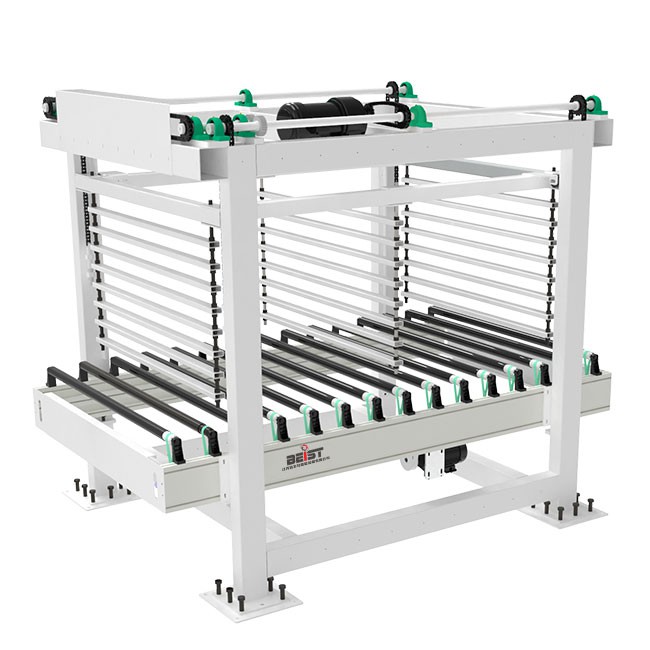
In the dynamic landscape of industrial automation, powered conveyors stand as a cornerstone technology, facilitating the efficient movement of materials across various sectors. As a seasoned powered conveyor supplier, I've witnessed firsthand the transformative trends shaping this industry. This blog post delves into the key developments in powered conveyor technology, highlighting how these trends are revolutionizing the way businesses handle and transport goods.
Integration of Smart Technologies
One of the most significant trends in powered conveyor development is the integration of smart technologies. The rise of the Internet of Things (IoT) has enabled conveyors to become more intelligent and connected than ever before. Smart sensors can now be embedded within conveyor systems to monitor a wide range of parameters, including speed, temperature, vibration, and load capacity. These sensors collect real - time data that can be analyzed to optimize conveyor performance, predict maintenance needs, and prevent costly breakdowns.
For example, by continuously monitoring the vibration levels of conveyor components, predictive maintenance algorithms can detect early signs of wear and tear. This allows maintenance teams to schedule repairs or replacements before a major failure occurs, minimizing downtime and ensuring uninterrupted production. Moreover, smart conveyors can communicate with other machines and systems within the factory, enabling seamless coordination and automation of the entire production line.
Energy Efficiency
In an era of increasing environmental awareness and rising energy costs, energy efficiency has become a top priority for powered conveyor manufacturers. Newer conveyor models are being designed with advanced motor technologies and energy - saving features to reduce power consumption without sacrificing performance.
Variable frequency drives (VFDs) are now commonly used in powered conveyors. VFDs allow the conveyor motor to adjust its speed according to the actual load requirements, consuming less energy during periods of low demand. Additionally, the use of high - efficiency motors and lightweight materials in conveyor construction helps to further reduce energy consumption. Some conveyors are also equipped with regenerative braking systems, which capture and reuse the energy generated during braking, further enhancing overall energy efficiency.
Customization and Modularity
Every industry has unique requirements when it comes to material handling, and powered conveyors are no exception. As a result, there is a growing demand for customized conveyor solutions that can be tailored to specific applications. Manufacturers are now offering a wide range of modular conveyor components that can be easily combined and configured to meet the exact needs of different customers.
This modular approach allows for greater flexibility in conveyor design and installation. Customers can choose from a variety of conveyor types, such as belt conveyors, roller conveyors, and chain conveyors, and select the appropriate length, width, and height to fit their production space. Additionally, modular conveyors can be easily expanded or reconfigured in the future as business needs change, providing a cost - effective long - term solution.


Safety Enhancements
Safety is always a critical concern in industrial settings, and powered conveyors are no exception. Recent developments in conveyor technology have focused on improving safety features to protect workers and prevent accidents.
Advanced safety sensors are now standard in many modern conveyors. These sensors can detect the presence of objects or people in the conveyor's path and automatically stop the conveyor to prevent collisions. Emergency stop buttons are also more accessible and clearly marked, allowing workers to quickly halt the conveyor in case of an emergency.
In addition, conveyor guards and enclosures are being designed to be more robust and user - friendly. They not only protect workers from moving parts but also prevent debris and dust from entering the conveyor system, reducing the risk of mechanical failures.
High - Speed and High - Capacity Conveyors
As industries strive to increase productivity and throughput, there is a growing demand for high - speed and high - capacity powered conveyors. New conveyor designs are capable of moving materials at much faster speeds while maintaining accuracy and reliability.
For example, in the e - commerce and logistics industries, high - speed sorting conveyors are used to quickly and efficiently sort packages based on their destination. These conveyors can handle a large volume of packages per hour, reducing processing times and improving order fulfillment rates. Similarly, in the manufacturing sector, high - capacity conveyors are used to transport heavy and bulky materials, such as automotive parts and industrial equipment, with ease.
Automation and Robotics Integration
The integration of powered conveyors with automation and robotics is another major trend in the industry. Automated guided vehicles (AGVs) and robotic arms can now be seamlessly integrated with conveyor systems to create fully automated material handling solutions.
AGVs can be used to transport materials between different conveyor sections or to other parts of the factory, eliminating the need for manual labor. Robotic arms can be used to load and unload materials from the conveyor, perform quality inspections, and even assemble products. This integration of automation and robotics not only increases productivity but also improves the accuracy and consistency of material handling processes.
Examples of Related Products
As a powered conveyor supplier, we offer a range of innovative products that incorporate these trends. For instance, our Fully Automatic Gantry Manipulator is a state - of - the - art solution that combines high - speed operation with precise control. It can be integrated with our powered conveyors to automate the handling of heavy and large - sized materials.
Our Single Arm Panel Over Turner is another example of a specialized product. It is designed to efficiently turn panels during the production process, improving workflow and reducing manual labor.
The Powered Roller Conveyor - Centre is a versatile conveyor option that offers high - speed and high - capacity material handling. It can be customized with various features to meet the specific needs of different industries.
Conclusion
The development of powered conveyors is being driven by a combination of technological advancements, changing industry requirements, and a focus on efficiency and safety. As a powered conveyor supplier, we are committed to staying at the forefront of these trends and providing our customers with the most innovative and reliable conveyor solutions.
If you are looking for a powered conveyor solution for your business, we invite you to contact us for a consultation. Our team of experts can help you select the right conveyor system based on your specific needs and requirements. Whether you need a simple conveyor for a small - scale operation or a complex automated system for a large - scale production facility, we have the expertise and experience to deliver a solution that meets your expectations.
References
- "Industrial Conveyor Technology Handbook" by John A. McKee
- "Automation in Material Handling" by Peter R. Dempsey
- Industry reports from leading market research firms such as Grand View Research and MarketsandMarkets