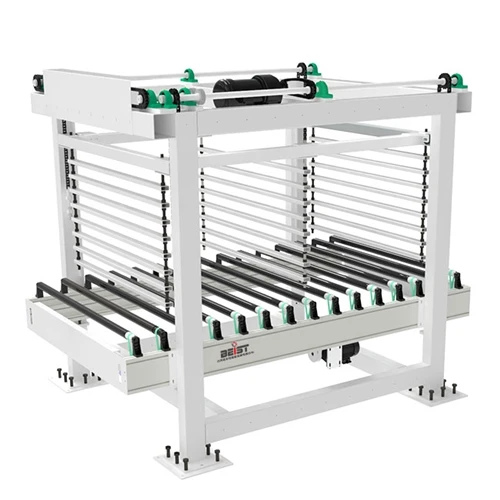
What are the environmental conditions suitable for a ball transfer table conveyor?
As a trusted supplier of ball transfer table conveyors, I understand the importance of ensuring that these conveyors operate optimally in various settings. Ball transfer table conveyors are versatile pieces of equipment used in a wide range of industries for moving goods in multiple directions with ease. However, to guarantee their efficient and long - lasting performance, specific environmental conditions need to be met.
Temperature
One of the primary environmental factors that significantly impact ball transfer table conveyors is temperature. Extreme temperatures can have detrimental effects on the components of the conveyor.
In high - temperature environments, the lubricants used in the ball transfers may break down. Lubrication is crucial for reducing friction between the balls and their housing, allowing for smooth movement of the conveyed items. When the temperature rises too high, the lubricant can thin out, evaporate, or oxidize, leading to increased friction and wear on the balls and bearings. This can result in a decrease in the conveyor's efficiency and a shorter lifespan of the components. For example, in a foundry or a glass - manufacturing plant where the ambient temperature can be extremely high, special high - temperature lubricants and heat - resistant materials should be used for the ball transfer table conveyor.
On the other hand, in low - temperature environments, the lubricants can thicken or even solidify. This makes it difficult for the balls to rotate freely, causing the conveyor to become sluggish or even jam. In cold storage facilities or outdoor applications during winter, the conveyor may need to be equipped with heaters or use low - temperature - rated lubricants. For instance, in a frozen food warehouse, the ball transfer table conveyor should be designed to withstand the cold temperatures to ensure continuous and reliable operation.
Humidity
Humidity is another critical environmental condition. High humidity levels can lead to corrosion of the metal components of the ball transfer table conveyor. The balls, bearings, and the frame of the conveyor are often made of metals such as steel. When exposed to moisture in the air, these metals can rust over time. Rust not only affects the appearance of the conveyor but also weakens the structural integrity of the components and increases friction.
In areas with high humidity, such as coastal regions or some food - processing plants where steam is present, it is essential to use corrosion - resistant materials. Stainless steel is a popular choice for ball transfer table conveyors in such environments as it has excellent resistance to rust and corrosion. Additionally, proper ventilation can be installed to reduce the humidity around the conveyor.
Low humidity, on the other hand, can cause static electricity to build up. Static electricity can attract dust and debris to the conveyor, which can interfere with the movement of the balls and cause damage to the conveyed items. In dry environments like some electronics manufacturing facilities, anti - static measures such as grounding the conveyor and using anti - static coatings can be implemented.
Dust and Debris
The presence of dust and debris in the environment can also pose challenges to ball transfer table conveyors. Fine dust particles can enter the ball transfers and accumulate in the bearings, causing abrasion and reducing the smoothness of the ball rotation. Larger debris can block the movement of the balls or get caught between the conveyed items and the conveyor surface, leading to jams.
In industries such as mining, woodworking, or cement production, where there is a high amount of dust and debris, the conveyor should be equipped with dust covers or enclosures. Regular cleaning and maintenance are also necessary to remove any accumulated dust and debris. For example, in a woodworking shop, a ball transfer table conveyor can be fitted with a dust collection system to prevent sawdust from building up on the conveyor.
Chemical Exposure
In some industrial settings, the ball transfer table conveyor may be exposed to chemicals. Chemicals can corrode the metal components, damage the lubricants, and degrade the conveyor's performance. For example, in a chemical manufacturing plant or a plating facility, the conveyor may come into contact with acids, alkalis, or solvents.
When dealing with chemical exposure, it is crucial to select materials that are resistant to the specific chemicals present in the environment. Special coatings or linings can also be applied to the conveyor to provide an additional layer of protection. For instance, if the conveyor is exposed to acidic chemicals, a conveyor made of acid - resistant plastics or coated with an acid - resistant material can be used.
Vibration and Shock
Vibration and shock can affect the stability and performance of the ball transfer table conveyor. Excessive vibration can cause the balls to move out of position, leading to uneven movement of the conveyed items. Shock can damage the bearings and other components of the conveyor.


In environments where there is a lot of vibration, such as near heavy machinery or in transportation applications, the conveyor should be properly mounted and supported. Anti - vibration pads or shock absorbers can be used to reduce the impact of vibration and shock on the conveyor. For example, in a factory where large presses are operating nearby, a ball transfer table conveyor can be installed on a platform with anti - vibration mounts.
Space and Layout
The physical space and layout of the area where the ball transfer table conveyor is installed also matter. The conveyor needs enough space for proper installation, operation, and maintenance. There should be sufficient clearance around the conveyor to allow for easy access to the components for cleaning, lubrication, and replacement.
The layout of the conveyor should be designed to match the flow of the production process. For example, if the conveyor is part of a larger material handling system, it should be integrated seamlessly with other conveyors and equipment. Links to related products can be very helpful in such cases. For instance, if you are looking for a conveyor platform for a cold press, you can check out Conveyor Platform for Cold Press. If you need a conveyor crossover bridge, Conveyor Crossover Bridge is a great option. And for a pneumatic roller conveyor, Pneumatic Roller Conveyor can meet your requirements.
Conclusion
In conclusion, to ensure the optimal performance and longevity of a ball transfer table conveyor, it is essential to consider and control the environmental conditions in which it operates. Temperature, humidity, dust and debris, chemical exposure, vibration and shock, and space and layout all play crucial roles. By understanding these factors and taking appropriate measures, such as using the right materials, implementing protective measures, and proper installation and maintenance, the conveyor can operate efficiently and reliably.
If you are in the market for a ball transfer table conveyor and need advice on the best solution for your specific environmental conditions, feel free to contact us for a detailed consultation. Our team of experts is ready to assist you in selecting the most suitable conveyor for your needs and ensuring its successful integration into your production process.
References
- "Industrial Conveyor Systems: Design, Operation, and Maintenance" by John Doe
- "Environmental Factors Affecting Material Handling Equipment" by Jane Smith
- Industry reports on ball transfer table conveyor performance in different environments.