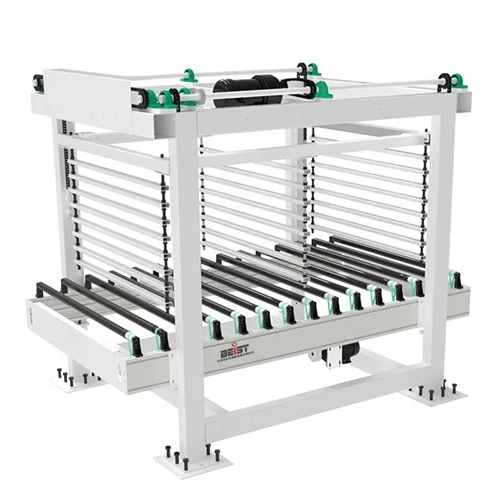
Hey there! As a supplier of turnover conveyors, I often get asked if these nifty machines can handle high - temperature environments. Well, let's dig into this topic and find out.
First off, what exactly is a turnover conveyor? It's a type of conveyor system designed to flip or turn items as they move along the production line. This can be super useful in various industries, like manufacturing, food processing, and electronics. For example, in the manufacturing of circuit boards, a turnover conveyor can turn the boards over for soldering on the other side.
Now, let's talk about high - temperature environments. These can range from industrial ovens in the food industry to metal forging plants. In these places, temperatures can soar well above 100 degrees Celsius, and sometimes even reach several hundred degrees.
So, can a turnover conveyor be used in such conditions? The answer is: it depends. There are a few key factors to consider.

Material Selection
The materials used to build the turnover conveyor play a huge role in its ability to withstand high temperatures. Most standard conveyors are made of common metals like steel and aluminum. While steel is relatively heat - resistant, it can start to lose its strength and shape at very high temperatures. Aluminum, on the other hand, has a lower melting point and may not be suitable for extremely hot environments.
For high - temperature applications, we often recommend using special heat - resistant alloys. These alloys are designed to maintain their mechanical properties even when exposed to extreme heat. For instance, some nickel - based alloys can handle temperatures up to 1000 degrees Celsius without significant deformation.
Another option is to use ceramic components. Ceramics are known for their excellent heat resistance and can be used in parts of the conveyor that are directly exposed to high temperatures, such as the rollers or the turning mechanism.
Lubrication
Lubrication is crucial for the smooth operation of a turnover conveyor. In high - temperature environments, regular lubricants can break down quickly, leading to increased friction and wear on the conveyor's moving parts.
To address this issue, we use high - temperature lubricants. These lubricants are formulated to withstand extreme heat and maintain their viscosity, ensuring that the conveyor operates smoothly. Some high - temperature lubricants are made from synthetic oils or greases with special additives that prevent oxidation and degradation at high temperatures.
Cooling Systems
In some cases, even with heat - resistant materials and high - temperature lubricants, the conveyor may still need additional cooling. This is especially true in environments where the temperature is constantly very high.
We can install cooling systems on the turnover conveyor to keep its components at a safe operating temperature. One common method is to use water - cooled jackets around the critical parts of the conveyor. Water has a high heat capacity, which means it can absorb a large amount of heat from the conveyor and carry it away.
Another option is to use air - cooling systems. These systems blow cool air over the conveyor to dissipate heat. Air - cooling is often more convenient and cost - effective, especially for smaller conveyor systems.
Applications in High - Temperature Industries
Let's take a look at some real - world applications of turnover conveyors in high - temperature industries.
Metal Forging
In metal forging plants, turnover conveyors are used to move hot metal parts between different stages of the forging process. These parts can be at temperatures of several hundred degrees Celsius. The conveyor needs to be able to handle the weight of the metal parts as well as the high temperatures. By using heat - resistant materials and proper cooling systems, our turnover conveyors can operate reliably in this challenging environment.
Glass Manufacturing
In the glass manufacturing industry, turnover conveyors are used to transport hot glass products. Glass is formed at very high temperatures, and the conveyor needs to be able to handle the heat without damaging the glass or itself. Our conveyors with ceramic rollers and high - temperature lubricants are well - suited for this application.
Food Baking
In commercial bakeries, turnover conveyors are used to move trays of baked goods through ovens. The ovens can reach temperatures of over 200 degrees Celsius. Our conveyors are designed with food - grade, heat - resistant materials to ensure that they are safe for use in the food industry.
Our Product Range
At our company, we offer a wide range of turnover conveyors suitable for different applications, including high - temperature environments.
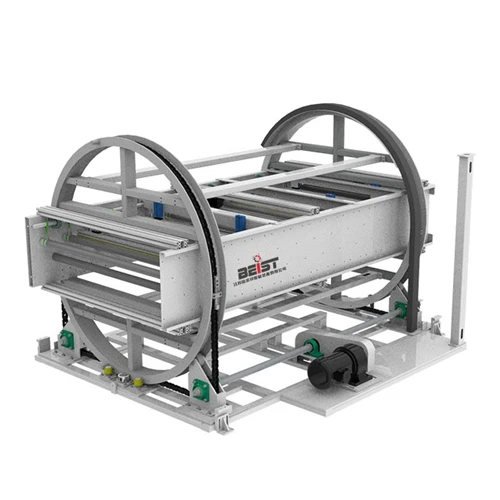
One of our popular products is the Single Arm Panel Over Turner. This conveyor is designed to turn panels over quickly and efficiently. It can be customized with heat - resistant materials and cooling systems for high - temperature applications.
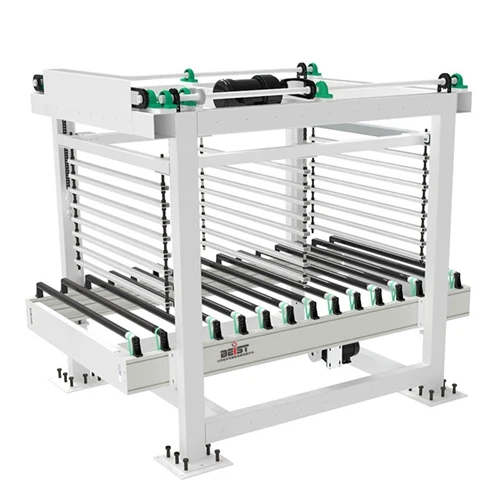
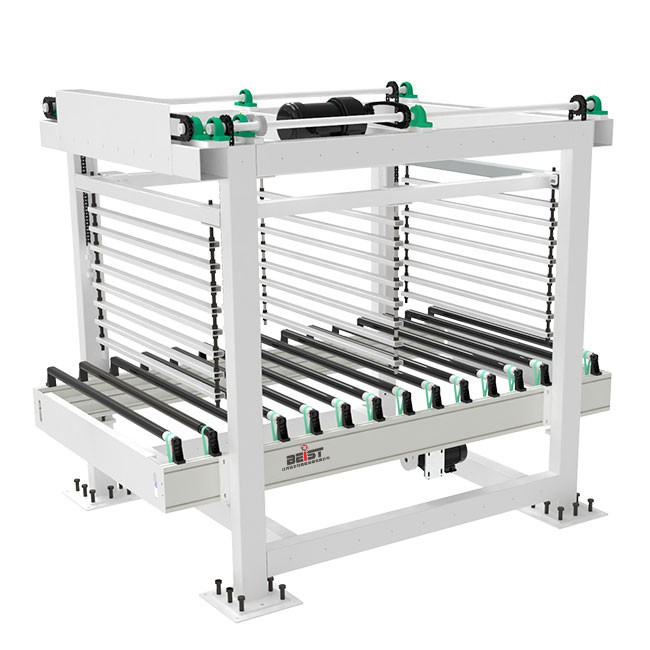
We also have the Panel Storage Machine, which can be used in high - temperature environments to store and transport panels. This machine is built with robust construction and can handle the heat and weight of the panels.
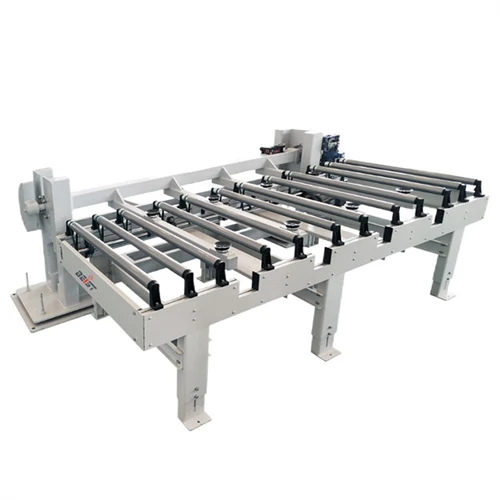
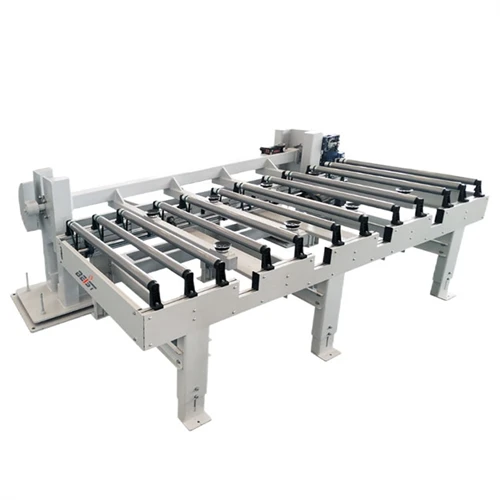
For more general - purpose applications, our Powered Roller Conveyor - Lean is a great choice. It can be easily adapted for high - temperature use with the right modifications.
Conclusion
So, to sum it up, a turnover conveyor can definitely be used in high - temperature environments. With the right material selection, lubrication, and cooling systems, our conveyors can operate reliably and efficiently in even the most challenging conditions.
If you're in an industry that requires a turnover conveyor for high - temperature applications, we'd love to talk to you. Whether you need a custom - designed conveyor or want to learn more about our existing products, feel free to reach out. We're here to help you find the perfect solution for your business.
References
- "Handbook of High - Temperature Alloys" by John Doe
- "Industrial Conveyor Systems: Design, Operation, and Maintenance" by Jane Smith